For most first-timers, the ryokan onsen decision comes down to one question about the people in your room, and one about where the night sits on your route. Book the shared baths if everyone is comfortable bathing nude with strangers of the same gender and nobody has visible tattoos. Book a private bath if you are a couple or family who want to soak together, if anyone has ink, or if communal bathing is a hard no. Then pick the town by the side of the route it sits on: Hakone from Tokyo, Kinosaki or Arima from Kyoto and Osaka.
Private bath or shared: the short answer
A shared ryokan onsen bath (the daiyokujo, or large public bath) comes with almost every onsen ryokan and costs nothing extra, but it is nude, gender-separated and subject to the inn's tattoo policy. A private ryokan bath, either a reservable kashikiri bath or a room with its own open-air tub, removes all three conditions, at a higher room rate or an added fee for the time slot.
Neither is the authentic choice. Japanese guests use both, and plenty of domestic couples book a kashikiri slot precisely because the shared baths split them up. The right answer depends on who is in the room, not on which feels more traditional.
The shared bath
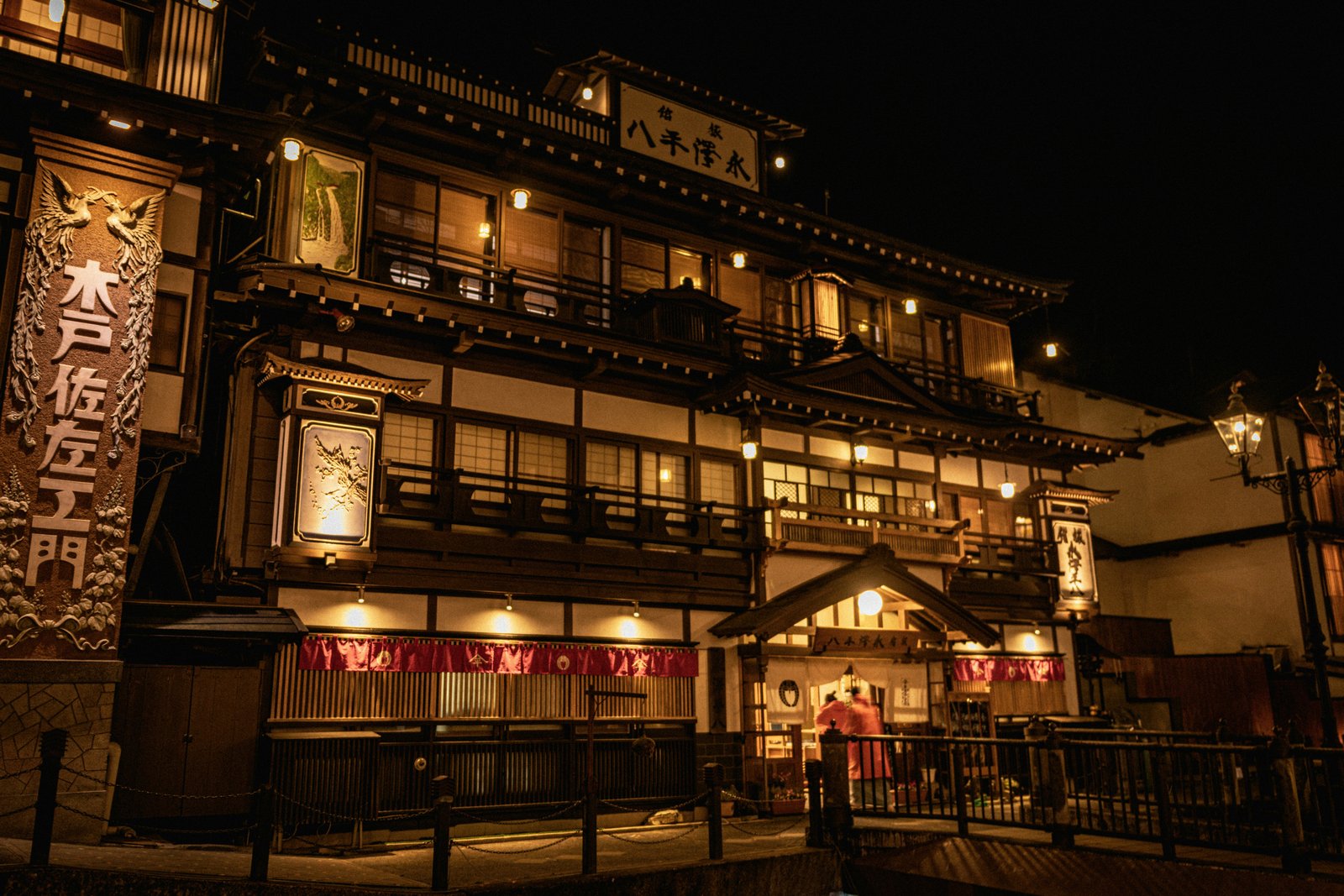
The shared baths are usually the inn's best water and best views: the large indoor pool, an outdoor rotenburo among rocks or trees, sometimes both. Men's and women's sides are marked by curtains, and at many inns the two sides swap at a set hour each day so both groups get both baths. You come and go as you like within opening hours, which often run late into the night and resume early in the morning. If you have never bathed communally, the etiquette is simple and worth reading once in our onsen etiquette guide.
The kashikiri bath
A kashikiri bath is a smaller private bath you lock for a fixed window, usually long enough for one unhurried soak. Some inns include it free on a first-come basis; others charge per slot and take bookings at check-in or in advance. The catch is availability: an inn with one or two private baths and a full house runs out of good evening slots fast, so ask how they are allocated when you book, not when you arrive.
The room with its own bath
A room with an attached open-air bath, often listed as rotenburo-tsuki, is the most private and the most expensive option. You can soak at midnight, at dawn and again before breakfast with nobody else involved. For a single, once-in-a-trip night this is where many couples choose to spend the money, and for tattooed travelers it is the one arrangement with no policy to check at all.
Who should pay for a private bath
A private ryokan bath is worth the extra cost for four kinds of party: couples or families who want to bathe together, travelers with tattoos, anyone uncomfortable with communal nudity, and anyone staying where the shared baths are small and busy. A solo traveler or same-gender friends with no tattoos usually lose nothing by using the shared baths, which are often the inn's finest.
Your situation
Book
Why
Couple wanting to soak together
Kashikiri slot or room with bath
Shared baths are separated by gender
Family with young children
Kashikiri slot
One bath, one time slot, no splitting up the parents
Anyone with visible tattoos
Room with bath, or a confirmed kashikiri
Shared-bath tattoo rules vary by inn
Solo, or same-gender friends
Shared baths
Usually the best water and views, at no extra cost
Nervous about nudity but curious
Shared baths plus one kashikiri slot
Try both; the private one is the safety net
Tattoos deserve a closer look than one table row. A tattoo-friendly claim on a booking site may cover only the private baths, so ask the inn directly. Our guide to tattoos and onsen covers cover patches, which places tend to be stricter, and how to phrase the question.
Which onsen town earns the night
The best onsen town for a ryokan night is the one already on your path. Hakone sits between Tokyo and Kyoto and fits a Tokyo-side stop with mountain scenery. Kinosaki Onsen, north of Kyoto, is the classic bath-hopping town and the most atmospheric overnight. Arima Onsen, behind Kobe, is the shortest detour from Kyoto or Osaka. Kusatsu and Kinugawa reward a longer detour north of Tokyo.
Town
Side of the route
What the night gives you
Private-bath angle
Hakone
Between Tokyo and Kyoto
Mountain inns, Mt Fuji views on clear days, a scenic transport loop
Huge range of rooms with their own baths, at every price level
Kinosaki Onsen
North of Kyoto
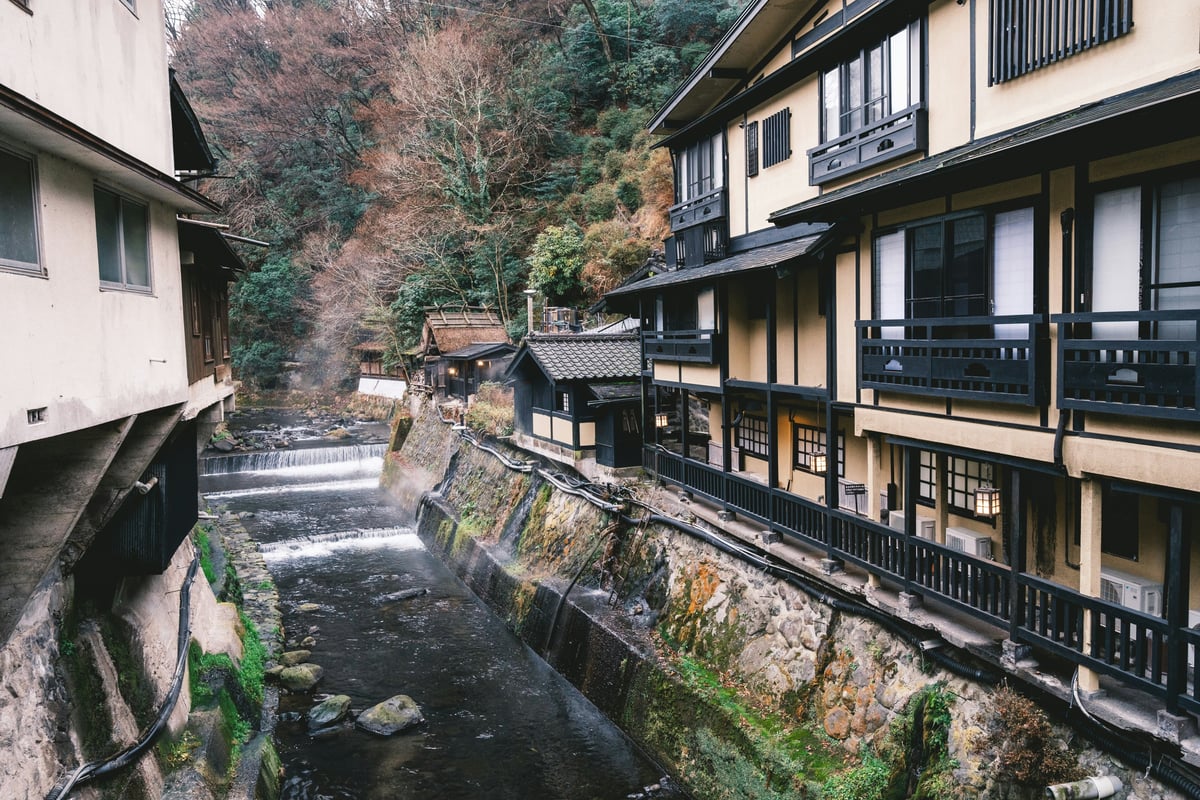
Seven public bathhouses along a willow-lined canal, strolled in yukata
The town is the point, so shared baths matter more here
Arima Onsen
Behind Kobe, near Osaka
Ancient town with distinctive gold and silver waters
Good for a short, private-bath splurge close to Kansai
Kusatsu / Kinugawa
North of Tokyo
Rustic, traditional onsen-town feel, fewer foreign visitors
Smaller inns; confirm private options early
A note on Kinosaki and tattoos
Kinosaki's charm is walking between its public bathhouses, and a guest pass for those is usually part of a ryokan stay there. If someone in your party cannot use communal baths, much of what makes Kinosaki special is out of reach, and a Hakone or Arima inn with an in-room bath is the better buy. More detail on each town is in our guide to onsen towns near Tokyo and Kyoto.
One night or two
One night at a ryokan onsen is enough for most first trips: you get the afternoon arrival, a bath before the kaiseki dinner, a late soak, a dawn soak and breakfast. A second night earns its place in Hakone, where the sightseeing loop fills a full day, or when the inn is the destination itself, such as a room with its own bath you want time to use.
The second night is harder to justify in a small town like Arima, which is easily seen in an afternoon, or when the ryokan rate includes dinner each night and the menu does not change much. Check-in at most ryokan is mid-afternoon and dinner runs at a set time, so arriving late wastes the part of the stay you paid for. Plan the travel day so you are at the inn with time to bathe before dinner.
Booking the bath you actually want
Booking a ryokan onsen means checking more than the room. Confirm whether dinner and breakfast are included, whether the private bath is free or charged, whether kashikiri slots are booked ahead or allocated on arrival, what the tattoo policy is for each bath, and whether the inn takes cards, since smaller rural inns can be cash-only.
Read the room type, not the photos. A listing photo of a private open-air bath may belong to a higher room category than the one you are booking.
Ask about slot times. If the kashikiri bath books in fixed windows, ask for one before dinner or late evening; the best slots go first.
Book early for popular inns. Well-regarded ryokan in Hakone and Kinosaki fill on weekends and holidays, and the rooms with their own baths are the first to go. When comparing options, ryokan in Hakone show the full range of room types on one search.
Know the format before you commit. Floor futons, set meal times and slipper etiquette are not for everyone, and a night spent wishing for a bed is a poor use of the money.
The ryokan night is a route decision too
The ryokan onsen night looks like a lodging choice, but the bath question and the town question decide each other. A tattoo in the party rules out Kinosaki's bathhouses and points toward an in-room bath; an in-room bath is easiest to find in Hakone; Hakone then fixes where the night falls on the way between Tokyo and Kyoto, and how much luggage comes with you.
Notice what happened across this whole article: every answer above was simple on its own, and each one quietly constrained the next. That is the real terrain. The inn that sells out first, the cash-only checkout in a town with few foreign-card ATMs, the night that has to land on a specific day of the trip: a first-timer meets these one at a time, usually after something is already booked. Japan, Worked Out lays the ryokan night out alongside the rest of the route, in the order the choices actually need to be made.
FAQ
Is a kashikiri bath the same as a private onsen?
A kashikiri bath is a private bath you reserve for a fixed time slot, usually fed by the same hot-spring water as the shared baths. A room with its own open-air bath is private for your whole stay.
Can couples bathe together at a ryokan onsen?
Not in the shared baths, which are separated by gender. Couples soak together by booking a kashikiri slot or a room with its own bath.
Which onsen town is best for travelers with tattoos?
No town is reliably tattoo-friendly; policies vary by inn. The dependable option is a room with its own bath, which is easiest to find in Hakone and Arima.
Is one night at a ryokan enough?
For most first trips, yes. One night covers the evening bath, the kaiseki dinner, a morning soak and breakfast. A second night suits Hakone or an inn that is the destination itself.
Keep planning
Not sure how it all fits together?
Pick your trip length and we’ll route a real day-by-day plan.