The eastern districts of Gion and Higashiyama are the postcard Kyoto — preserved wooden streets, major temples, and the historic geisha quarter, all walkable together along the base of the eastern hills. This is where most first-timers fall in love with the city, and where a single day on foot can feel like stepping back centuries. Here's how to explore it.
Higashiyama's old streets
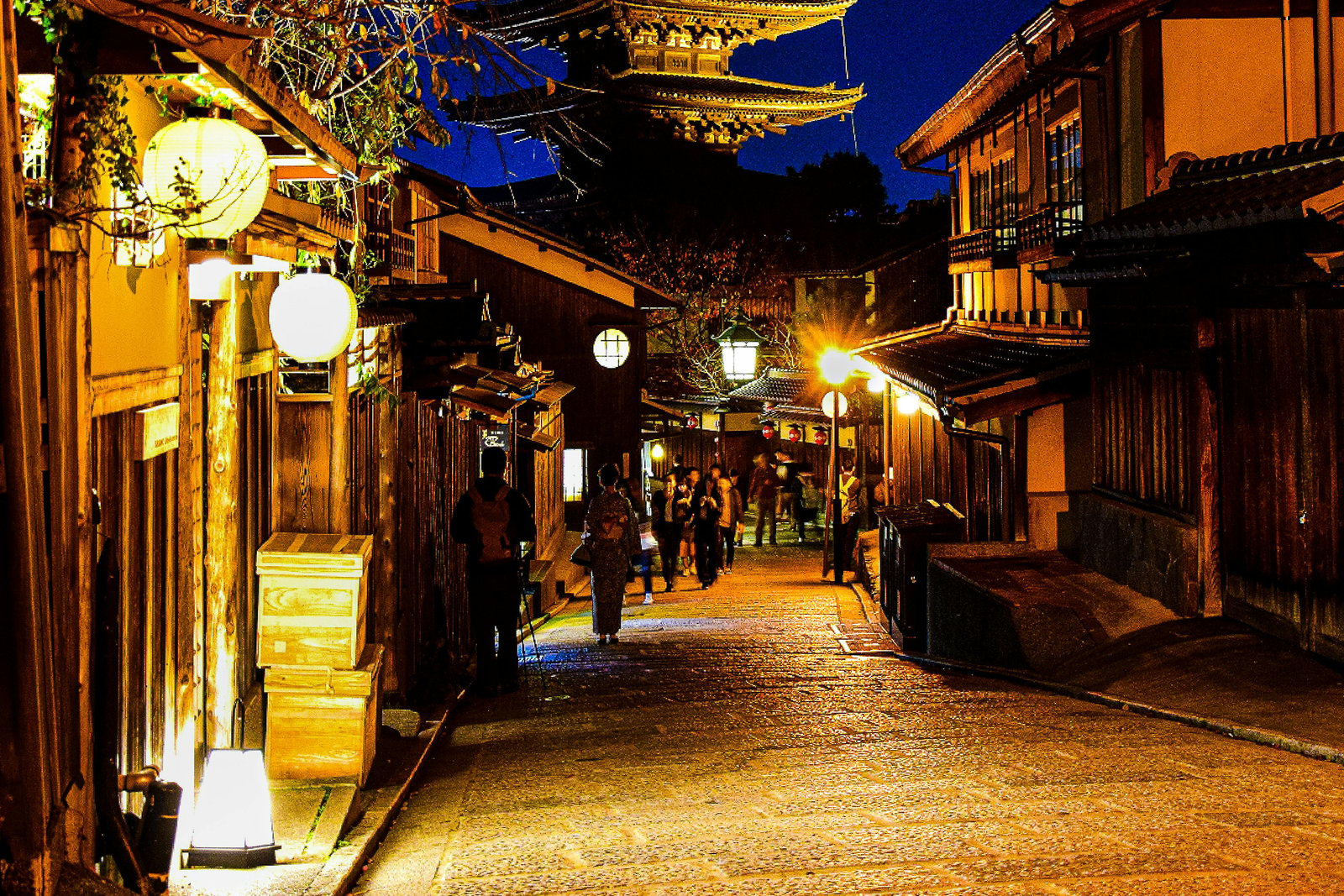
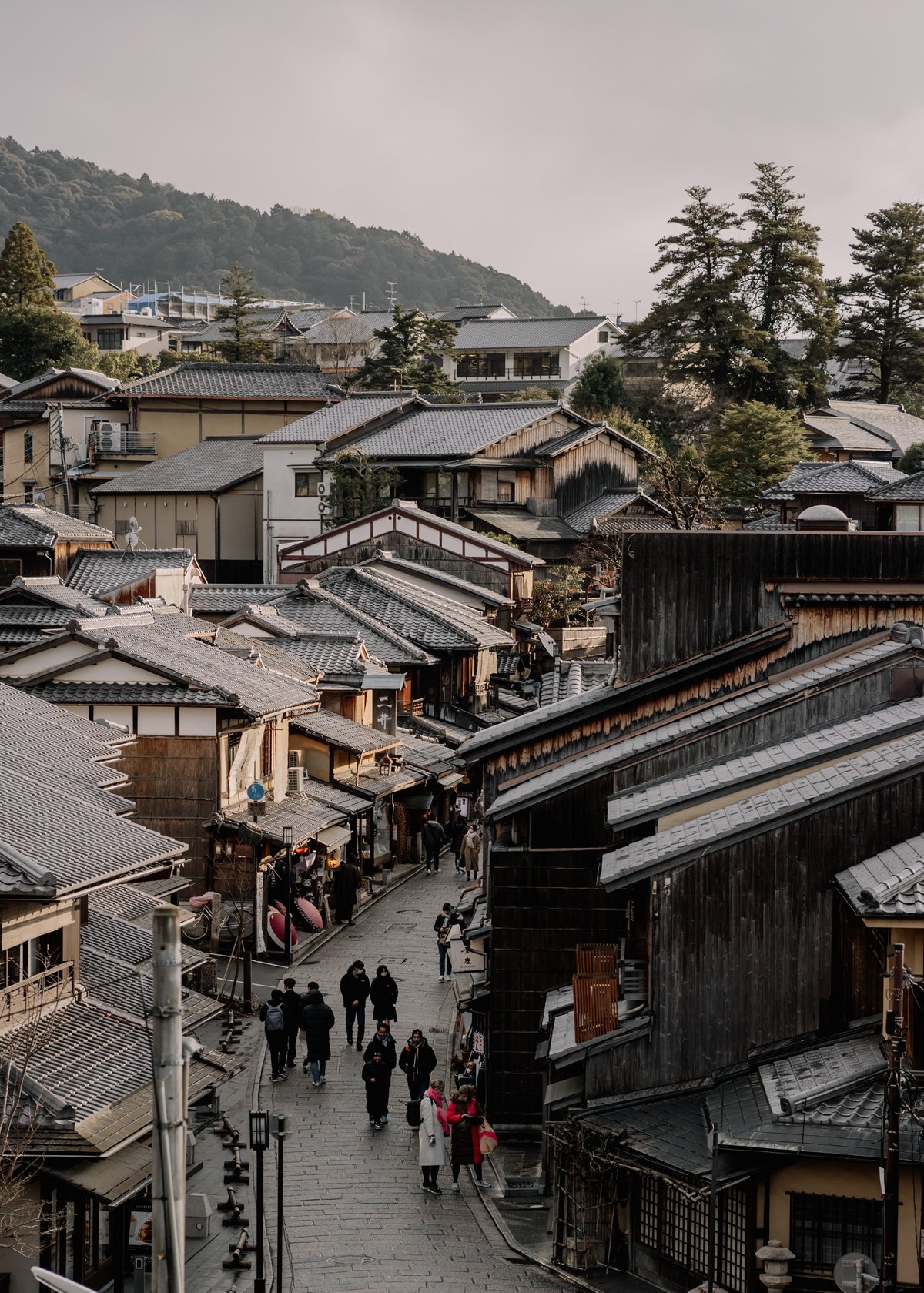
The Higashiyama district preserves the atmosphere of old Kyoto better than anywhere else in the city. The sloping stone lanes of Ninenzaka and Sannenzaka are lined with traditional wooden machiya shops, teahouses, craft stores, and street-food and souvenir stalls, climbing gently toward Kiyomizu-dera. Wandering these streets — ideally early in the morning before the crowds and tour groups arrive — is one of Kyoto's great pleasures, all the more so if you spot visitors in rented kimono adding to the timeless scene. Stop for matcha soft-serve, pickles, or a craft souvenir as you go.
The eastern hills, above the city: Kiyomizu-dera · Kyoto. (Enable JavaScript for the interactive map.)
Kiyomizu-dera
At the top of the slope sits Kiyomizu-dera, a magnificent wooden temple built into the hillside, famous for its enormous viewing veranda that juts out over the slope on tall wooden pillars (built without nails), offering sweeping views over Kyoto. It's spectacular in cherry blossom and autumn seasons, when the hillside blazes with color, and special evening illuminations are held in peak periods. The approach through the old streets makes the visit doubly rewarding — the journey is as memorable as the destination. A first-trip essential.
Gion, the geisha district
Gion is Kyoto's historic geisha quarter, full of traditional wooden machiya houses, exclusive teahouses (ochaya), and lantern-lit lanes that are especially atmospheric in the evening. The famous Hanamikoji street is its heart, lined with preserved buildings and high-end restaurants. If you're lucky, you may glimpse a geiko (Kyoto's word for a geisha) or a maiko (an apprentice) gliding to an evening appointment in full traditional dress — a fleeting, magical sight.
Gion etiquette
Be respectful: do not chase, block, surround, or grab at geiko or maiko — there have been real problems with tourists harassing them, and some private streets now restrict or ban photography entirely, with fines posted. They are working professionals hurrying to appointments, not tourist attractions. Quiet, courteous observation from a respectful distance is the only acceptable way, and following the posted rules keeps these streets open and welcoming.
More to see nearby
Yasaka Shrine: a colorful, lively shrine linking Gion and Higashiyama, beautiful when its lanterns are lit at night and a hub during festivals.
Maruyama Park: a popular green space behind Yasaka Shrine, one of Kyoto's most famous cherry-blossom viewing spots.
Kodai-ji: an elegant temple with gardens and seasonal night illuminations, plus other quieter temples dotted through the hills.
Kennin-ji: Kyoto's oldest Zen temple, near Gion, with striking painted screens and ceiling dragons.
Shirakawa area: a quieter, exceptionally pretty canal-side stretch of Gion, lined with willows and traditional restaurants.
How to do it
A great plan strings the area together on foot: start early at Kiyomizu-dera before the crowds, walk down through Sannenzaka and Ninenzaka, continue through the Higashiyama temples and Yasaka Shrine into Maruyama Park, and end in Gion as evening falls — for a stroll down Hanamikoji and Shirakawa, then dinner along the nearby riverside Pontocho Alley. It's a walkable, full day that captures Kyoto's most beautiful side from morning light to lantern-lit dusk. Wear comfortable shoes for the slopes and stone paths.
Why stay here
Staying in Gion or Higashiyama puts you right amid the charm and within walking distance of major temples, so you can enjoy the old streets in the quiet early mornings and evenings when day-trippers have gone. It can be pricier and busier during the day, but for travelers who came to Kyoto for old-Japan beauty, there's simply no more atmospheric base — a traditional machiya or ryokan stay here is the icing on the cake, and worth comparing against other Kyoto neighborhoods before you book. (This article contains affiliate links — if you book through them we earn a small commission at no extra cost to you.)
Where to eat
Gion and Higashiyama run from tourist-friendly to genuinely exclusive. Pontocho Alley, the narrow lantern-lit lane along the Kamo River just west of Gion, has everything from affordable yakitori counters to riverside kaiseki restaurants with summer terrace seating (kawadoko) overlooking the water — a good stretch to simply walk and pick something that looks right rather than plan in advance. The area's traditional teahouses and ochaya, by contrast, are largely invitation-only or require an introduction from a regular customer; a handful of restaurants in Gion offer a more accessible taste of kaiseki-style dining without that barrier, worth booking a few days ahead if a special dinner is part of the plan. For something simpler, the tea shops and dessert counters near Yasaka Shrine serve matcha parfaits and warabimochi that make a good mid-walk break between temples.
FAQ
What is the Higashiyama district?
The Higashiyama district preserves the atmosphere of old Kyoto better than anywhere else in the city. The sloping stone lanes of Ninenzaka and Sannenzaka are lined with traditional wooden machiya shops, teahouses, craft stores, and street-food and souvenir stalls, climbing gently toward Kiyomizu-dera. Wandering these streets — ideally…
What is Kiyomizu-dera?
At the top of the slope sits Kiyomizu-dera, a magnificent wooden temple built into the hillside, famous for its enormous viewing veranda that juts out over the slope on tall wooden pillars (built without nails), offering sweeping views over Kyoto. It's spectacular in cherry blossom and autumn seasons, when the hillside blazes with…
What is Gion?
Gion is Kyoto's historic geisha quarter, full of traditional wooden machiya houses, exclusive teahouses (ochaya), and lantern-lit lanes that are especially atmospheric in the evening. The famous Hanamikoji street is its heart, lined with preserved buildings and high-end restaurants. If you're lucky, you may glimpse a geiko (Kyoto's…
Keep planning
Not sure how it all fits together?
Pick your trip length and we’ll route a real day-by-day plan.