Arashiyama, on Kyoto's western edge, is a district of natural beauty — a famous bamboo grove, a scenic river, important temples, and a hillside monkey park. It has a relaxed, almost resort-like feel, especially once the day crowds thin in the late afternoon and evening. It's one of Kyoto's most rewarding half-days, and a refreshing change of scene from the temple-dense eastern districts. Here's what to see and how to do it.
The Bamboo Grove
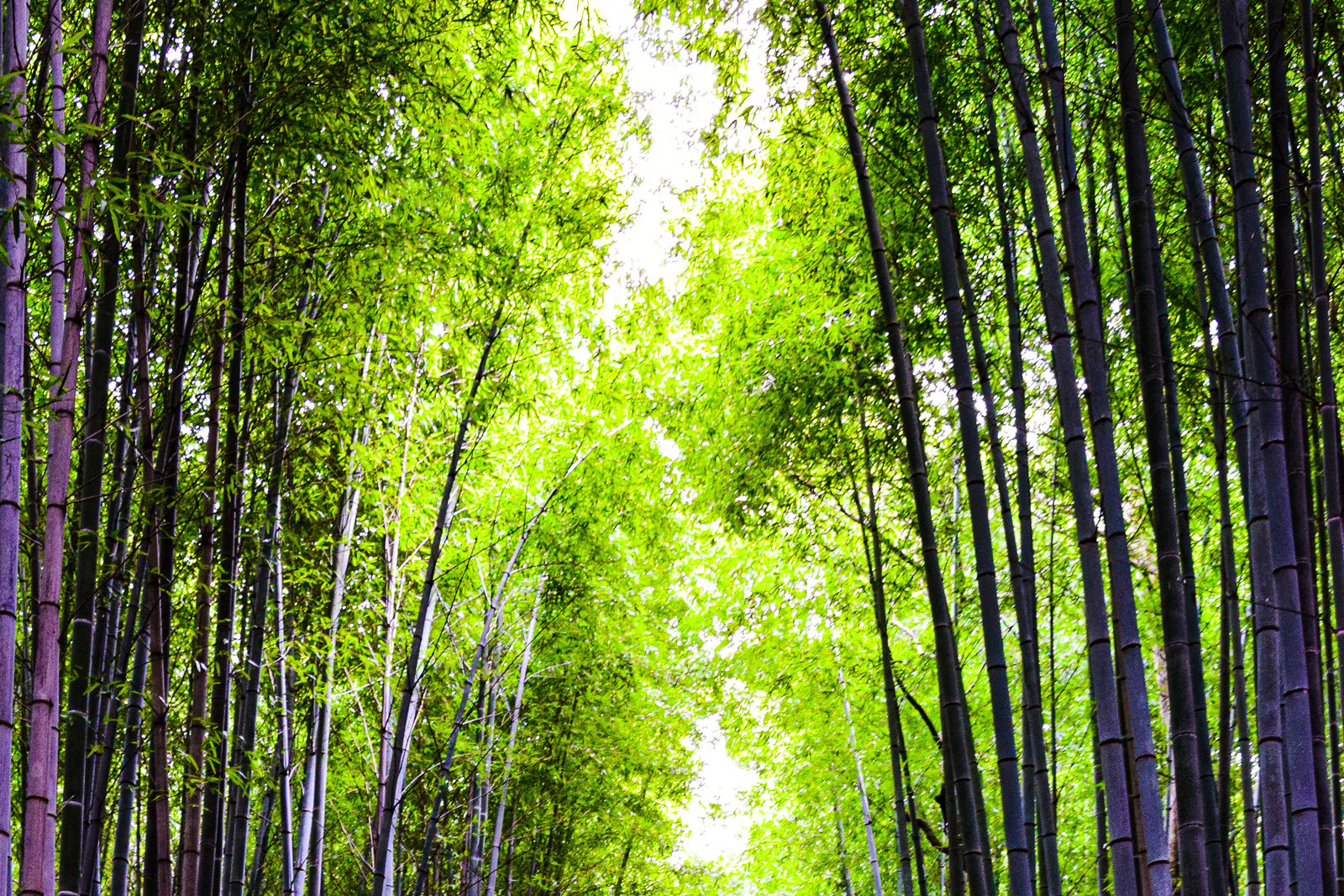
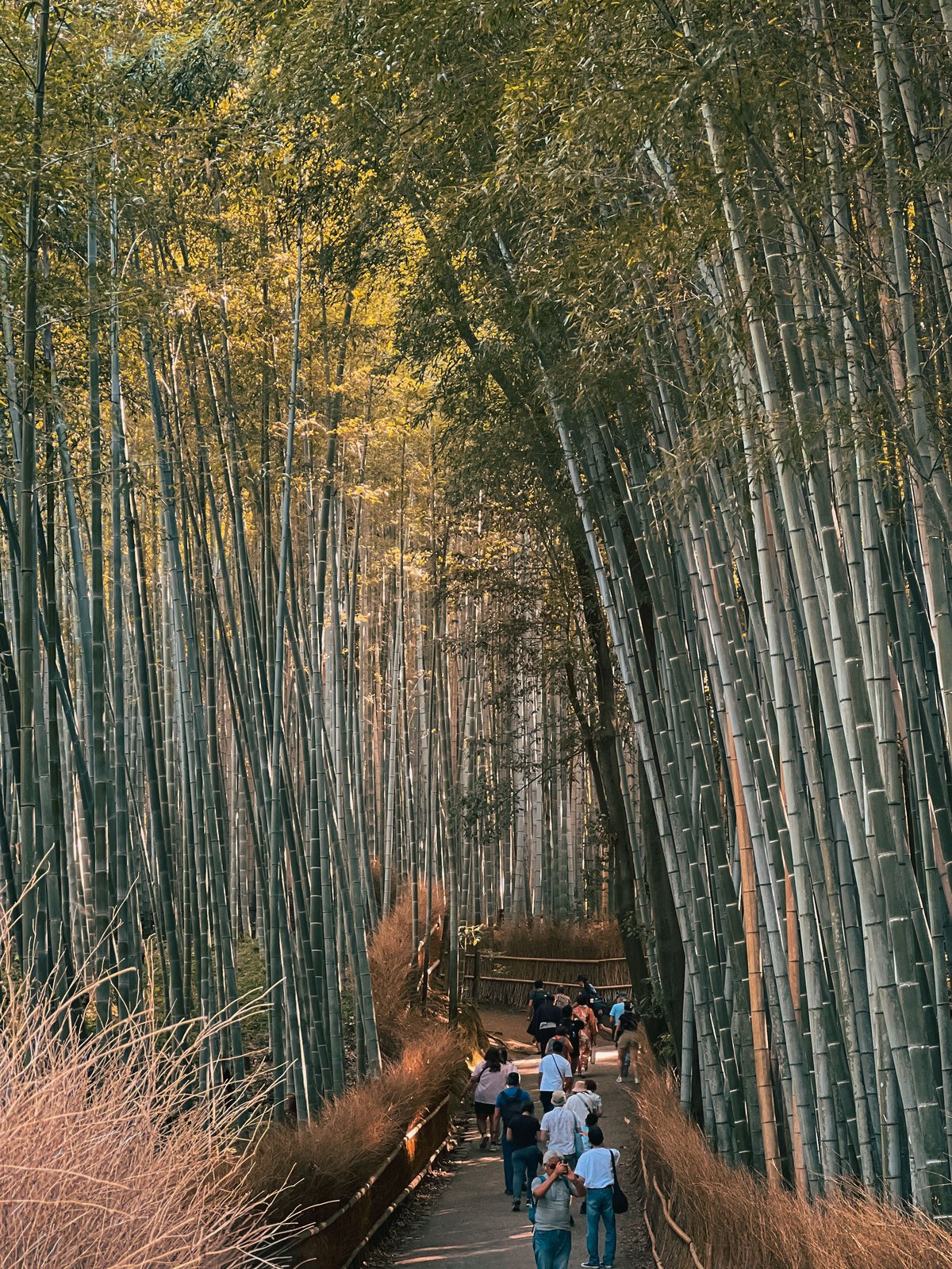
The signature sight is the Arashiyama Bamboo Grove, a path winding through towering stalks of bamboo that filter the sunlight into something soft and otherworldly. It's short — you can walk it in fifteen minutes — but genuinely striking and one of Japan's most photographed spots. The catch is its popularity: midday can be shoulder-to-shoulder, so go early in the morning (ideally right after sunrise) to experience the grove in relative peace, with the light at its most beautiful and the crowds still thin.
Arashiyama is on the western edge: Arashiyama · Kyoto. (Enable JavaScript for the interactive map.)
Tenryu-ji
Right beside the bamboo grove sits Tenryu-ji, one of Kyoto's most important Zen temples and a UNESCO World Heritage site. Its landscape garden, designed to "borrow" the backdrop of the surrounding hills, is considered among the finest in Japan and has survived largely intact for centuries. The temple pairs naturally with the bamboo walk — in fact, the grove's most famous stretch runs right along the temple's northern edge — so visiting both together is the obvious move. There's a small entry fee for the garden.
The river and bridge
The Togetsukyo Bridge ("Moon Crossing Bridge") spans the scenic river at the heart of Arashiyama and is the district's central landmark, with forested mountain backdrops that are spectacular in cherry blossom and autumn seasons. You can stroll the riverbanks, rent a rowboat, or take a traditional boat ride; in summer there's even cormorant fishing in the evenings. The whole riverside area is lovely for a relaxed wander, with cafes and shops nearby.
The Monkey Park
A short but steep hike up the hillside (about 20 minutes) leads to the Iwatayama Monkey Park, where over a hundred wild Japanese macaques roam freely and you can enjoy panoramic views over Kyoto from the top. You can buy food to feed the monkeys from inside a screened hut (the roles are reversed — you're in the enclosure, they're free outside). It's a fun, slightly unusual attraction, especially for families and animal lovers; follow the posted rules about not staring at or touching the monkeys.
More to explore
Okochi Sanso Villa: a beautiful garden estate (the former home of a film star) with strolling paths, moss gardens, and views, just beyond the bamboo grove; admission includes matcha and a sweet.
Temples and shrines: several quieter ones, such as Gio-ji with its moss garden and the rock-strewn Adashino Nenbutsu-ji, dot the area for peaceful visits away from the crowds.
Sagano Scenic Railway: a charming old-fashioned sightseeing train that trundles through the scenic river valley (seasonal, and popular in autumn — book ahead).
Katsura River boat rides and riverside dining round out a relaxed day.
How to visit
Arashiyama is on the western edge of Kyoto, so it takes a bit longer to reach from the center — but trains and buses connect it conveniently, and the journey is short. Plan a half-day to full day, ideally starting early for the bamboo grove before the crowds. A natural efficient pairing is to combine Arashiyama with Kinkaku-ji (the Golden Pavilion), since both sit on the western/northern side of the city. For those seeking tranquility and natural beauty, staying overnight in an Arashiyama ryokan is a peaceful, scenic alternative to basing in the central districts — you'll have the riverside and grove almost to yourself once the day-trippers leave, and it's worth comparing a stay here against a central Kyoto base if a quieter trip appeals to you. (This article contains affiliate links — if you book through them we earn a small commission at no extra cost to you.) From central Kyoto, the JR Sagano Line and the Randen (Keifuku) tram both reach Arashiyama in 15-25 minutes, and the walk from Arashiyama Station to the bamboo grove is under ten minutes.
Where to eat
Arashiyama's food leans toward what the area is known for: yudofu (simmered tofu) restaurants near Tenryu-ji serve a Buddhist-temple-adjacent specialty in a quiet, traditional setting, and the streets near the station have plenty of casual matcha sweets and soft-serve stands — a genuine local specialty, even though the tea itself is mostly grown in Uji, south of the city, rather than in Arashiyama. Riverside cafes along the Katsura River are pleasant for a slower lunch with a view of the bridge and hills.
Bottom line
Arashiyama blends Kyoto's natural beauty with major cultural sights — the ethereal bamboo grove, the celebrated Tenryu-ji garden, the scenic river and bridge, and the playful monkey park. Go early, take it slow, and it's one of the most enjoyable and varied days you can have in the city.
FAQ
What is the Arashiyama Bamboo Grove?
The signature sight is the Arashiyama Bamboo Grove, a path winding through towering stalks of bamboo that filter the sunlight into something soft and otherworldly. It's short — you can walk it in fifteen minutes — but genuinely striking and one of Japan's most photographed spots. The catch is its popularity: midday can be…
What is Tenryu-ji?
Right beside the bamboo grove sits Tenryu-ji, one of Kyoto's most important Zen temples and a UNESCO World Heritage site. Its landscape garden, designed to "borrow" the backdrop of the surrounding hills, is considered among the finest in Japan and has survived largely intact for centuries. The temple pairs naturally with the bamboo…
What is the Togetsukyo Bridge?
The Togetsukyo Bridge ("Moon Crossing Bridge") spans the scenic river at the heart of Arashiyama and is the district's central landmark, with forested mountain backdrops that are spectacular in cherry blossom and autumn seasons. You can stroll the riverbanks, rent a rowboat, or take a traditional boat ride; in summer there's even…
Keep planning
Not sure how it all fits together?
Pick your trip length and we’ll route a real day-by-day plan.