Japan's hot-spring baths have clear rules — wash first, no swimsuits, no towels in the water. Here's how to enjoy an onsen respectfully as a first-timer.
An onsen — a natural hot-spring bath — is one of Japan's great pleasures, but the etiquette can feel intimidating the first time, especially for Americans unused to communal bathing. The good news is that the rules are simple and logical once you know them, and following them shows respect and lets you relax. Here's exactly how it works, step by step.
The basics: wash before you soak
The single most important rule: you wash thoroughly before entering the bath. Onsen are for soaking in clean water, not for cleaning yourself. Inside the bathing area you'll find washing stations — usually a low stool, a handheld shower, a bucket, and provided soap and shampoo — where you sit, scrub down completely, and rinse off every trace of suds before getting into the communal bath. The shared water stays clean precisely because everyone washes first. This is the rule most worth getting right, and locals will notice if you skip it. Bathing is just one place where custom matters, and Japan's everyday etiquette basics cover queuing, shoes and the onsen tattoo rule as well.
No swimsuits — bathing is nude
Traditional onsen are enjoyed nude; swimsuits are not worn in the baths. Baths are almost always gender-separated (look for the curtains — typically red/blue or the kanji for man and woman), so you'll be among others of the same gender, and it's completely normal and matter-of-fact — nobody is paying attention to you. If communal nude bathing isn't for you, look for ryokan or facilities with private baths (kashikiri) you can reserve, or rooms with their own in-room onsen bath.
The small towel
You'll typically be given or bring a small towel. Use it for a bit of modesty while walking around and for washing, but don't put it in the bath water — the custom is to fold it and rest it on your head, or set it on the rocks at the edge of the bath. Bring it back out with you to dry off in the changing area (there's usually a separate larger towel for drying back at your room or locker).
Step by step, your first time
Remove your shoes/slippers before the changing room if you haven't already.
In the changing room, undress completely and store everything in a basket or locker.
Enter the bathing area with just your small towel.
Sit at a washing station and clean yourself thoroughly — scrub, shampoo, rinse fully.
Rinse the stool and area for the next person.
Enter the bath slowly (the water is hot), keeping your towel out of the water.
Soak, relax, and enjoy; step out to cool off if needed.
When done, you can rinse off or — as many do — leave the mineral water on your skin.
Other key rules
Tie up long hair so it doesn't touch the water.
Don't swim, splash, or be loud — onsen are for quiet relaxation, not play.
Stay hydrated and don't overdo it — the hot water can be intense; step out and cool down if you feel lightheaded, and rest between soaks.
No phones or cameras in the bathing area, ever, for everyone's privacy.
Don't bring your own soap into the bath or wash in the soaking pool.
Re-enter the changing room reasonably dry so you don't soak the floor.
A note on tattoos
Some onsen restrict guests with visible tattoos, due to historical associations with organized crime. Policies vary widely, and many places — especially in tourist areas and newer facilities — are increasingly relaxed; some allow covering a small tattoo with a patch, and others offer private baths. Because this varies by establishment and continues to change, it's worth checking the specific onsen's current policy ahead of time if you have tattoos (we cover this in detail in our dedicated guide).
A health note worth taking seriously
Onsen water often runs hot (40°C/104°F or higher), and the combination of heat, mineral content, and a long soak is a real strain on the body — not just a comfort issue. If you have heart or blood pressure conditions, are pregnant, or have been drinking alcohol, check with staff or skip the hottest bath, keep soaks short, and never soak alone if you're at all unsure how your body will react. Dizziness on standing up (known locally as "the onsen effect") is common enough that most facilities post warnings about it — take it as a genuine caution, not overcaution.
Relax and enjoy
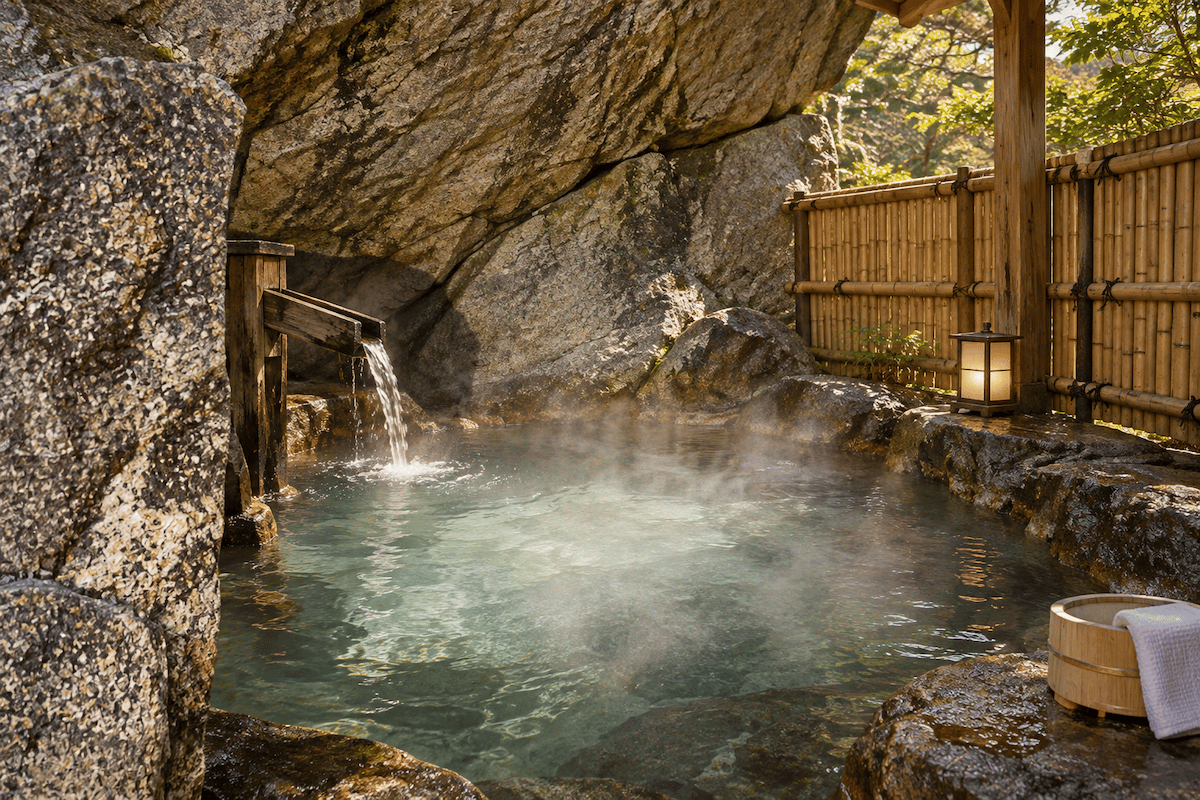
Once you've got the basics down — wash first, no swimsuit, towel out of the water, keep quiet — an onsen is pure bliss, especially an outdoor bath (rotenburo) in a scenic mountain or garden setting. Locals are forgiving of visitors making an honest effort, so don't be nervous about getting every detail perfect. It's a deeply relaxing, quintessentially Japanese experience, and one well worth seeking out at least once on your trip — enough so that choosing an onsen town as part of your route, rather than treating it as an afterthought, is worth real consideration, which is where Japan, Worked Out comes in.
FAQ
Do you wash before entering an onsen?
The single most important rule: you wash thoroughly before entering the bath. Onsen are for soaking in clean water, not for cleaning yourself. Inside the bathing area you'll find washing stations — usually a low stool, a handheld shower, a bucket, and provided soap and shampoo — where you sit, scrub down completely, and rinse off…
Can you wear a swimsuit in an onsen?
Traditional onsen are enjoyed nude; swimsuits are not worn in the baths. Baths are almost always gender-separated (look for the curtains — typically red/blue or the kanji for man and woman), so you'll be among others of the same gender, and it's completely normal and matter-of-fact — nobody is paying attention to you. If communal nude…
What is the small onsen towel for?
You'll typically be given or bring a small towel. Use it for a bit of modesty while walking around and for washing, but don't put it in the bath water — the custom is to fold it and rest it on your head, or set it on the rocks at the edge of the bath. Bring it back out with you to dry off in the changing area (there's usually a…