Luggage in Japan: forward it with takkyubin, reserve the oversized-bag seat, or carry it onto the Shinkansen
How to move a big suitcase between Japanese cities: reserve the Shinkansen oversized-baggage seat, forward it with takkyubin, or use a coin locker, and how to choose for each leg.
You have three ways to move a big suitcase between Japanese cities: carry it onto the Shinkansen, reserving the free oversized-baggage seat if the bag is large enough to need one; forward it with takkyubin and spend a night without it; or leave it in a coin locker for a few hours. None of them is the "right" answer. Which one fits comes down to three things: how big the bag is, how many nights you'll stay at the next stop, and whether that next stop has a front desk.
Here is how each option actually works, what it costs you in money and in hassle, and how to pick between them leg by leg.
Carrying a big suitcase onto the Shinkansen
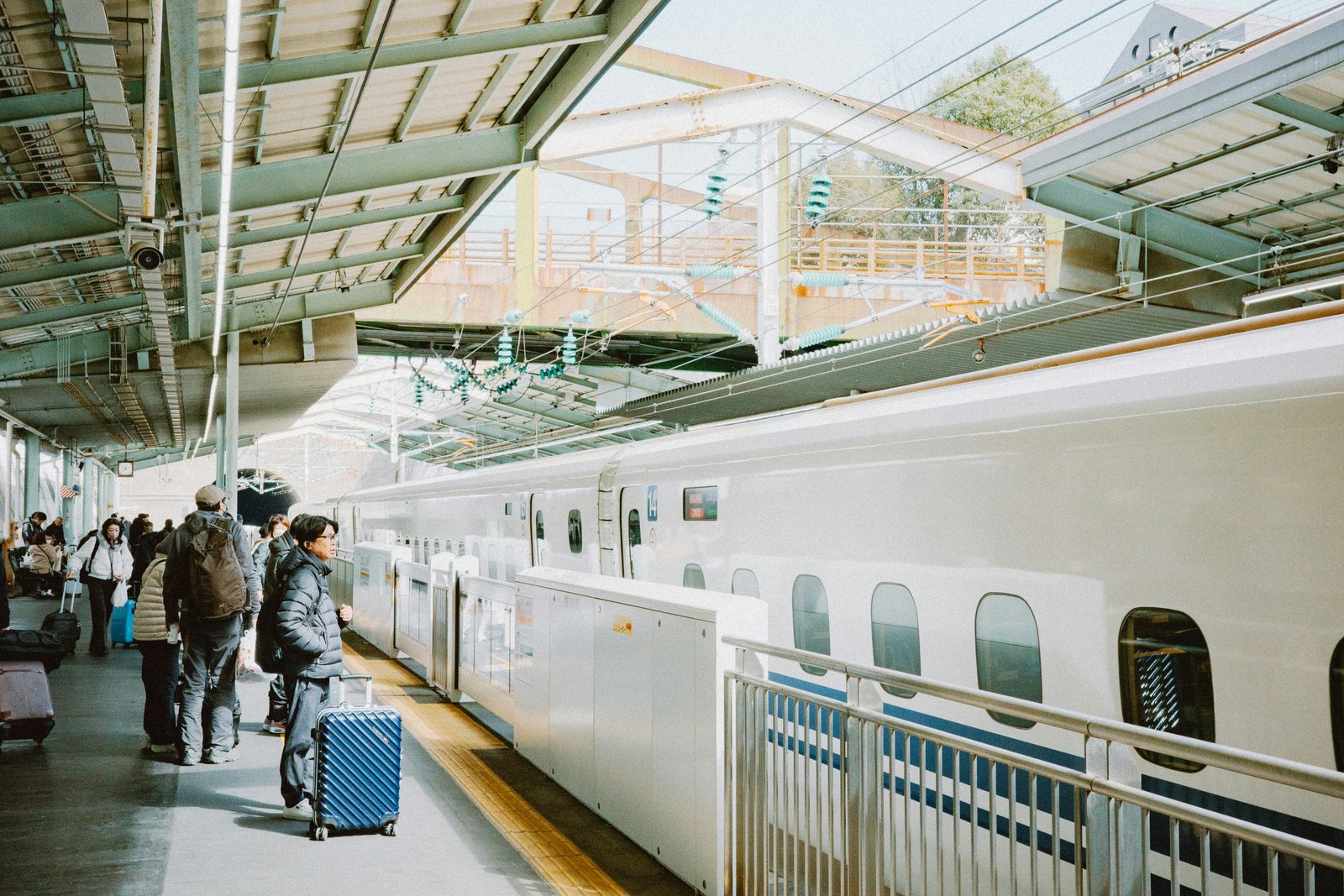
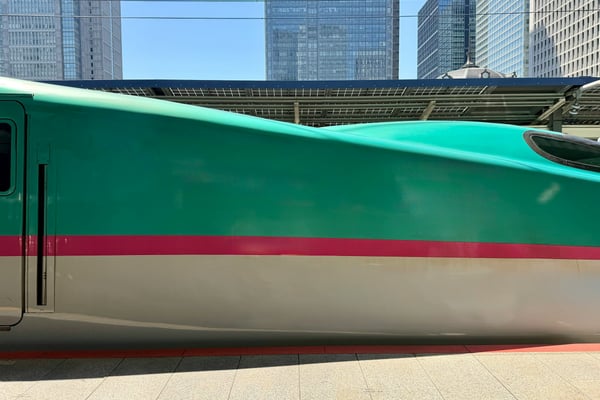
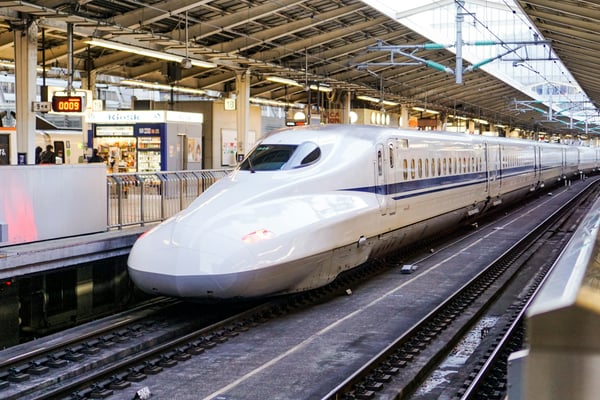
Carrying luggage onto the Shinkansen is free, but on the Tokaido, Sanyo and Kyushu lines a bag measuring over 160 cm in total (length plus width plus height) needs a reserved "seat with oversized baggage area" booked in advance. That reservation costs nothing extra: on Tokyo–Kyoto you pay the usual reserved fare of about ¥13,850 and the space behind the last row is yours.
How to tell whether your bag needs the reservation
Measure the bag with its wheels and handle included, then add the three sides together. A typical carry-on comes to well under the limit, and so does a medium checked case. The rule is aimed at the largest checked suitcases (the 29- and 30-inch hard-shells many Americans bring for two weeks) and at sports gear in big cases. If you're close to the line, assume you need the reservation. It is free, and finding out on the platform is the expensive way to learn.
Reserving it, with or without a rail pass
The oversized-baggage seats are the last row in certain cars, and the space behind that row is the only place a really large case fits. Book them on the JR online reservation sites, at a ticket machine (look for the luggage option when you choose your seat), or at a staffed ticket office. Japan Rail Pass holders reserve them the same way, at no charge. These seats sell out first on Friday evenings, at holiday weekends and during Golden Week, so book them when you book the train. If you board with an oversized bag and no reservation, you can be charged an on-board fee and asked to move the bag to wherever there's space.
What carrying still costs you
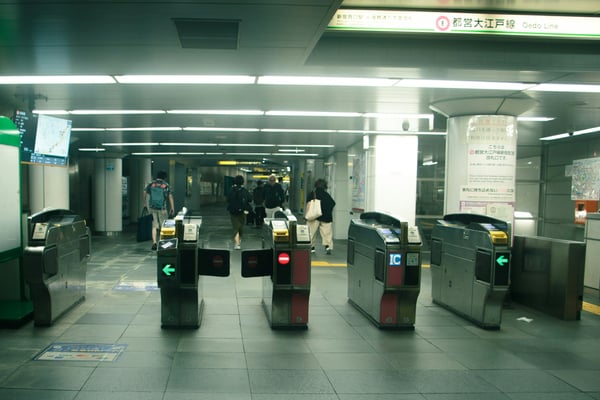
The train is the easy part. The hard parts are the walk from your hotel to the station, the transfer at a huge terminal, and the climb onto a crowded local train or bus at the other end. Kyoto's city buses are a poor place for a large suitcase, and so is any commuter line at rush hour. Our guide to navigating Japanese train stations covers the elevators and exits that make that walk easier.
Forwarding a suitcase with takkyubin
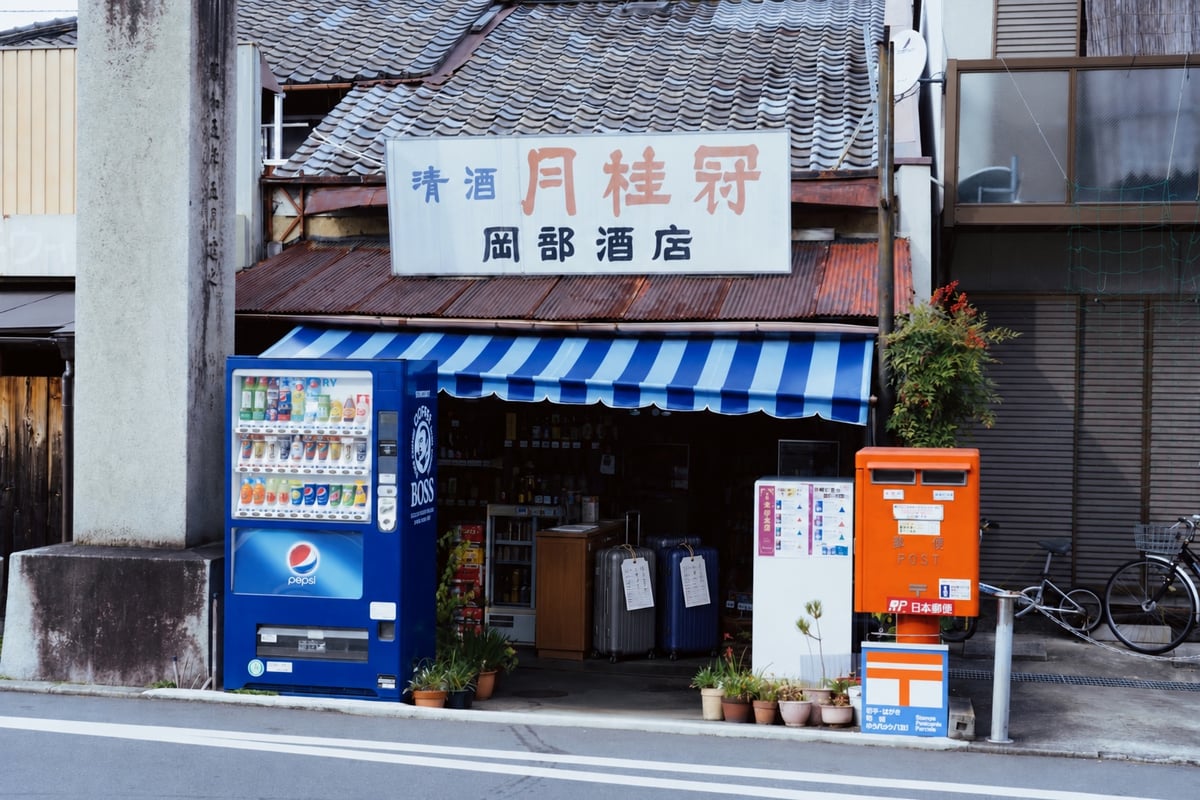
Takkyubin, the door-to-door courier service run by Yamato (Ta-Q-Bin) and Sagawa, collects your suitcase from a hotel front desk or a convenience store and delivers it to your next hotel, typically the next day. The fee is charged per bag and depends on the bag's size and the distance it travels. The counter quotes the exact price when you fill in the form.
How a forward works in practice
Ask at the front desk the evening before you leave. Staff hand you a waybill, help you write the next hotel's address (copy it from your booking in both Japanese and English), and you pay there or at collection. Write your own name exactly as it appears on the next booking, and tell that hotel you are sending a bag ahead; most are used to it. Then you travel with a daypack. Because delivery is usually next-day, the honest price of a forward is a night without your suitcase, not just the fee. Pack that night's clothes, chargers, medication and toiletries in the bag you keep.
Where forwarding is the best answer
Forwarding is at its best around a short stop. The classic case is a night in Hakone between Tokyo and Kyoto: you send the suitcase straight from your Tokyo hotel to your Kyoto hotel, ride the 80 minutes from Shinjuku to Hakone-Yumoto with only an overnight bag, and find the suitcase waiting when you reach Kyoto. Hakone's switchback railway, cable car and ropeway are no fun with a large case, and a ryokan room has little floor space for one.
The same logic works for an onsen night out of Kyoto. Kinosaki is about 2 hr 20 min away by train, and a guest there spends the evening in a yukata walking between bathhouses, so a suitcase is dead weight. Our list of onsen towns near Tokyo and Kyoto shows which other overnights follow the same pattern.
Where forwarding fails
Same-day moves. If you check out in the morning and need the bag that night in a new city, a normal intercity forward won't arrive in time.
Rentals with no front desk. Someone has to accept the delivery. Check with the host first, or send the bag to a staffed hotel.
The last morning. Bags can be forwarded to the airport counters too, but they need sending a day or more ahead, which means your last night is out of a daypack.
Coin lockers at Japanese stations
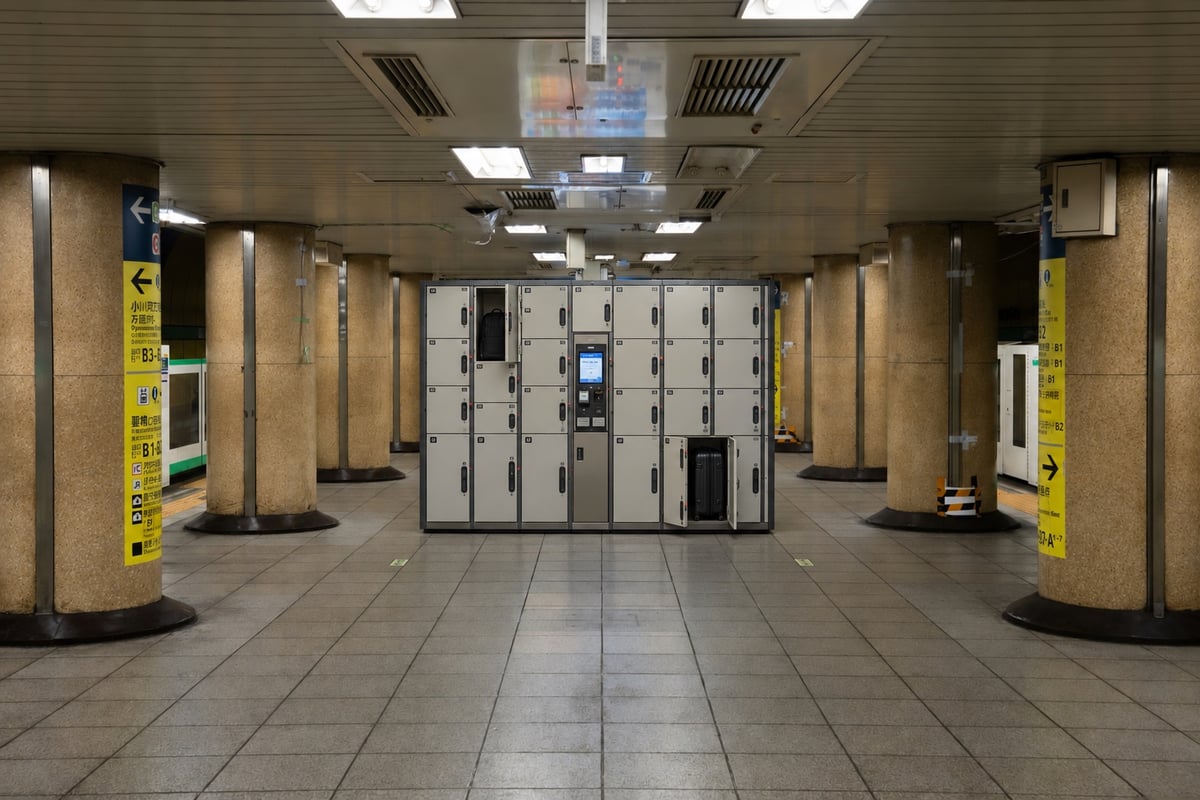
Coin lockers at Japanese railway stations hold a bag for hours, not nights. They're the right tool when you have a gap between checkout and a train, or between arriving and check-in. Most major stations have banks of them in several sizes, and many accept an IC card such as Suica in place of coins. The price for each size is printed on the locker itself.
The catch: the large lockers go first
Each bank has only a few lockers big enough for a full-size suitcase. At Tokyo, Kyoto and Shin-Osaka stations they're often all taken by late morning, especially at weekends. Look for a staffed baggage room or a luggage-storage counter nearby as the fallback. Hotels will also hold bags for guests before check-in and after checkout, free, and this is often the simplest option when your hotel is close to the station.
A locker is not a forward
A locker solves a gap of a few hours inside one city. It doesn't move the bag. If you'll be away from the bag overnight, you need a forward or a hotel hold, not a locker.
Which luggage option fits which leg
The right luggage option in Japan changes from one leg of the trip to the next. Use the Shinkansen oversized-baggage seat for a direct move between two multi-night hotels with a large case. Forward with takkyubin around a one-night stop such as Hakone. Use a coin locker or a hotel hold for a gap of a few hours. The Tokyo–Kyoto reserved fare of about ¥13,850 buys the seat either way.
Your situation
Best option
What it costs you
Bag over 160 cm, moving straight to your next multi-night base
Oversized-baggage seat
Nothing extra, but you carry it door to door
Bag under 160 cm, easy walk at both ends
Just carry it
Nothing
A one-night stop (Hakone, an onsen town, a ryokan) between two bases
Forward to the base after the stop
A per-bag fee and a night out of a daypack
Same-day move to a new city
Carry it (reserve the seat if needed)
The station walk
A few hours between checkout and a train
Hotel hold or coin locker
A locker fee, or nothing at the hotel
Last morning, flying out
Forward to the airport a day or more ahead, or carry it
A daypack night, or the airport train with the bag
Look back over the table and a pattern shows up. Your luggage method is decided by where the suitcase sleeps and where you sleep, and that depends on the order of your stops. A forward only works if you know where you'll be two nights from now. A one-night stop only works without a suitcase if the base after it is a hotel that will receive one.
That's why the same Tokyo–Hakone–Kyoto trip can be effortless or miserable depending only on the order. Put Hakone between the two cities and one forward handles everything. Put it at the end, before an early flight from Tokyo, and you're carrying a 30-inch case up a mountain railway or paying to send it twice. Luggage is one of several things that ride on the sequence, along with the rail pass window and which nights fall on a weekend. Japan, Worked Out lays out that sequencing as one connected plan, so the bag question has an obvious answer before you book anything.
FAQ
Do I need to reserve a seat for my suitcase on the Shinkansen?
Only if the bag measures over 160 cm in total (length plus width plus height) and you're riding the Tokaido, Sanyo or Kyushu Shinkansen. Then you book a seat with an oversized-baggage area, which costs nothing beyond the normal reserved fare. Smaller bags go in the overhead racks with no reservation.
How long does takkyubin take between cities?
Intercity forwards typically arrive the next day, so plan on one night without the suitcase. The counter gives you the delivery date when you hand the bag over. Pack that night's essentials in the bag you carry.
Can I leave my suitcase in a coin locker overnight?
Coin lockers are built for stays of a few hours, and the large ones are scarce at the busiest stations. For an overnight separation, forward the bag or ask a hotel to hold it.
Keep planning
Not sure how it all fits together?
Pick your trip length and we’ll route a real day-by-day plan.