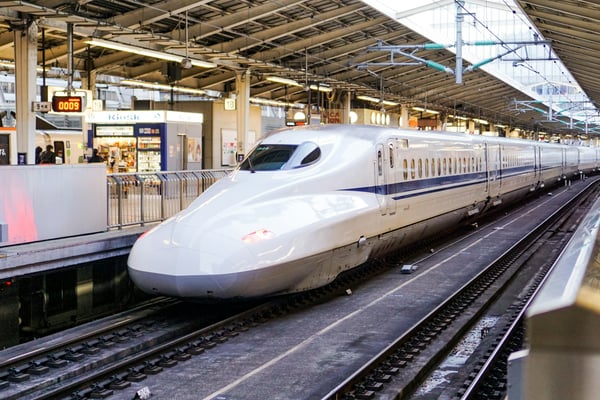
Riding the Shinkansen — Japan's famous bullet train — is one of the great pleasures of a trip: fast, smooth, punctual, and remarkably comfortable. It's also far easier to use than first-timers expect once you know the basics. Here's a complete first-timer's guide, from buying your ticket to enjoying an ekiben cruising along at close to 200 mph.
Why the Shinkansen is special
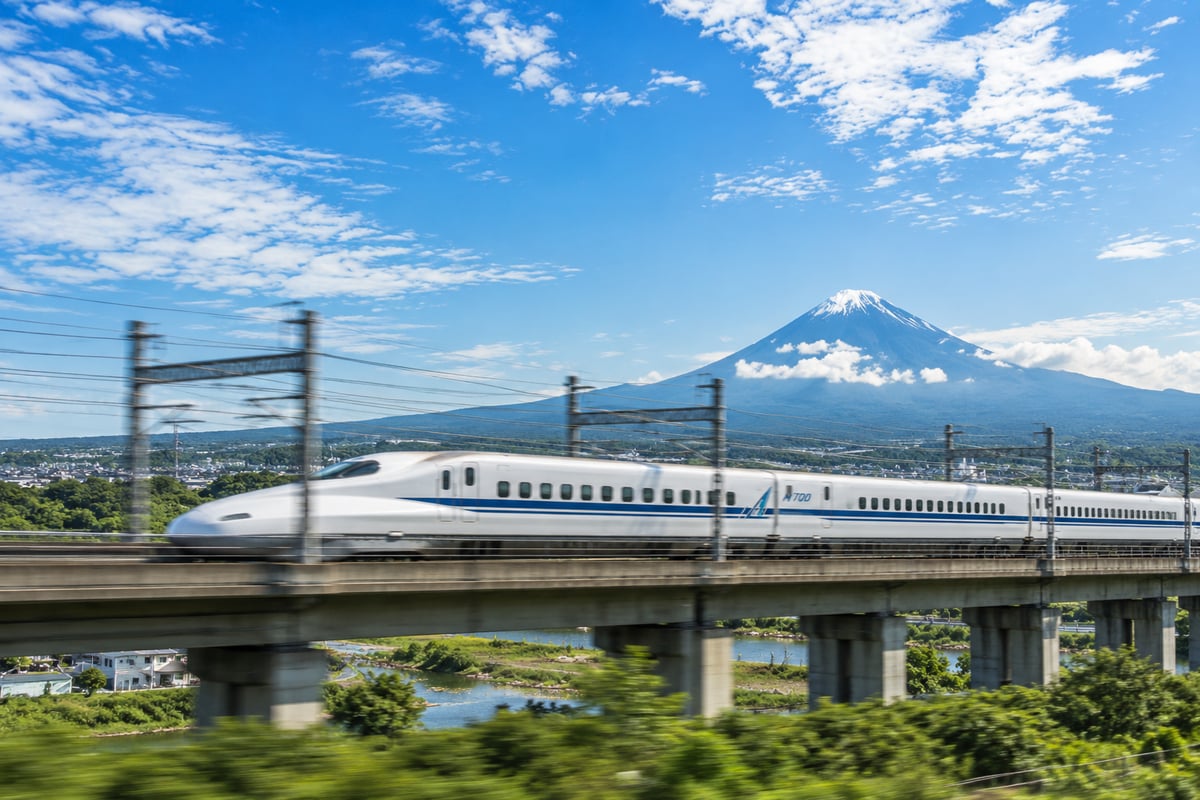
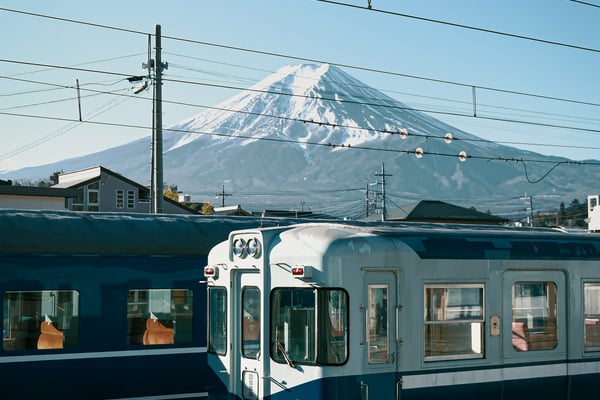
The Shinkansen whisks you between cities at high speed, city center to city center, with none of the airport-style hassle of security lines and distant terminals. The classic Tokyo–Kyoto run takes only about two and a quarter hours and is punctual almost to the second — the Tokaido line's average delay has run well under a minute for two decades running, a level of reliability that would be unthinkable for a US train (or, often, a US flight). Beyond being superb transport, the ride itself is a bucket-list experience: gliding past countryside, rice paddies, and, on clear days, a glimpse of Mt Fuji from the window (sit on the right-hand side heading from Tokyo toward Kyoto/Osaka for the best chance).
City centre to city centre: Tokyo → Kyoto → Osaka → Hiroshima. (Enable JavaScript for the interactive map.)
Buying tickets
With a Japan Rail Pass: the pass covers most Shinkansen (with exceptions for the very fastest Nozomi/Mizuho services, which need a supplement) — reserve seats for free at JR ticket offices or machines, or simply ride the non-reserved cars.
Without a pass: buy a ticket at JR ticket machines (English menus available) or ticket offices for your route. You'll typically get a base fare ticket plus a limited-express (Shinkansen) ticket — feed both through the gate together.
Reserved vs non-reserved: a reserved seat (shitei-seki) guarantees you a spot and is worth it in busy periods and holidays; non-reserved cars (jiyu-seki) are first-come and cheaper, fine off-peak. You can also book some routes online in advance.
At the station
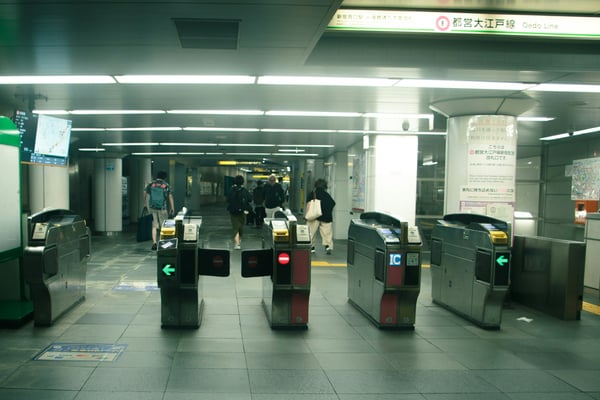
Look for the dedicated Shinkansen gates and platforms — they're separate from regular train gates and clearly signed in English.
Insert your ticket(s) into the gate together (with a pass, use the staffed gate or tap as directed).
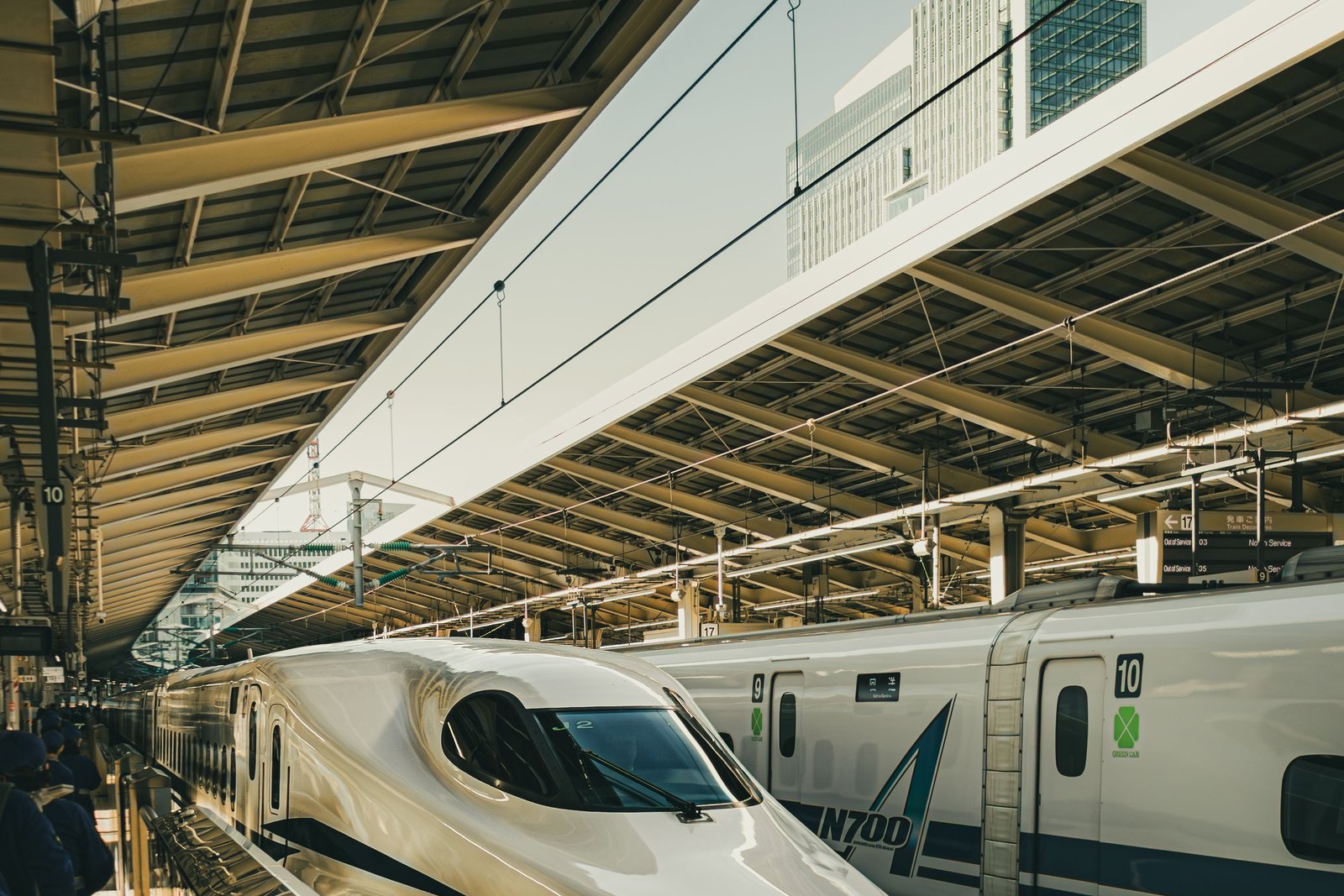
Platform displays show your train, its exact departure time, and where each car stops — line up at your car number marked on the platform floor.
Trains stop only briefly, so be ready to board promptly at your marked spot.
Finding and using your seat
Cars are numbered; a reserved ticket shows your car and seat number.
Non-reserved seating is in specific cars (shown on signage, often cars 1–3) — board those and take any free seat.
There's generous legroom, fold-down trays, power outlets at most seats, and overhead racks for smaller bags.
Seats can often be rotated to face your group — there's a foot pedal or lever, or staff will help.
Luggage: the oversized-baggage rule
One rule worth knowing in advance: on the Tokaido, Sanyo, and Kyushu Shinkansen lines (the main routes including Tokyo–Kyoto–Osaka–Hiroshima–Fukuoka), large luggage with total dimensions over 160 cm (length + width + height) requires a free reservation for an "oversized baggage" seat — a regular reserved seat with dedicated space behind it. Reserving it costs nothing, but boarding with such a bag without the reservation can incur a fee. Most normal suitcases are fine in the overhead racks or the space behind the last row; this rule targets the biggest bags. If you're traveling with large luggage, just request the oversized-baggage seat when you reserve.
Onboard etiquette and tips
Keep quiet — conversations are low, phones on silent, and calls taken standing in the vestibules between cars, not at your seat.
It's customary and delightful to enjoy an ekiben (a station bento box) on board — buy one at the station beforehand along with a drink; it's part of the experience.
Recline considerately (a glance back is polite) and keep aisles clear.
Trains depart exactly on time — be on the platform a few minutes early.
There are restrooms, and on some trains a trolley service or vending.
Practical notes
Arrive with a few minutes to spare to find your car's queue spot on the platform.
The fastest Nozomi and Mizuho services aren't covered by the standard nationwide JR Pass without paying a supplement — the slightly slower Hikari and Sakura are covered and only a few minutes longer on most routes.
Keep all ticket pieces until you've exited the gate at your destination.
Reserve the oversized-baggage spot in advance if you're carrying a large suitcase.
Bottom line
The Shinkansen is fast, effortless, and a genuine joy to ride. Buy your ticket (or use your pass), find the Shinkansen platform, line up at your car number, grab an ekiben, mind the luggage rule if your bag is large, and settle in for one of the smoothest, most iconic train journeys in the world — and once you've ridden it once, deciding how many more times to ride it (versus flying or bussing between cities) becomes part of the bigger route-planning picture that Japan, Worked Out works through in detail.
FAQ
Why is the Shinkansen better than flying within Japan?
The Shinkansen whisks you between cities at high speed, city center to city center, with none of the airport-style hassle of security lines and distant terminals. The classic Tokyo–Kyoto run takes only about two and a quarter hours and is punctual almost to the second — the Tokaido line's average delay has run well under a minute for…
What is the Shinkansen oversized-baggage rule?
One rule worth knowing in advance: on the Tokaido, Sanyo, and Kyushu Shinkansen lines (the main routes including Tokyo–Kyoto–Osaka–Hiroshima–Fukuoka), large luggage with total dimensions over 160 cm (length + width + height) requires a free reservation for an "oversized baggage" seat — a regular reserved seat with dedicated space…
Is riding the Shinkansen complicated?
The Shinkansen is fast, effortless, and a genuine joy to ride. Buy your ticket (or use your pass), find the Shinkansen platform, line up at your car number, grab an ekiben, mind the luggage rule if your bag is large, and settle in for one of the smoothest, most iconic train journeys in the world — and once you've ridden it once,…