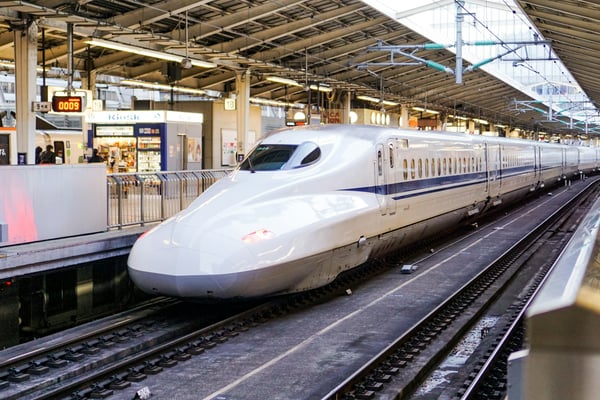
Tokyo's rail network is one of the most extensive and efficient on earth — and, at first glance, one of the most intimidating maps you'll ever see, a tangle of colored lines run by multiple companies. But it's logical, exceptionally well-signed in English, and genuinely easy once you grasp a few basics. Here's how to navigate it without stress.
The key players
Tokyo's network is run by several different operators, which is why the map looks so busy:
JR (Japan Railways) East: runs the above-ground lines, most famously the Yamanote loop that circles central Tokyo, plus other useful lines like the Chuo and Sobu.
Tokyo Metro and Toei: the two subway systems that web the city underground (Tokyo Metro is the larger; Toei the other).
Private railways: several companies (Keio, Odakyu, Tokyu, Keisei, Keikyu, and more) reaching the suburbs, the airports, and day-trip destinations.
The crucial point for travelers: your IC card (Suica/Pasmo) works across all of them with a single tap, so you rarely need to think about which company runs a given line — just tap in and out.
The Yamanote line: your anchor
The JR Yamanote line is the green loop that connects most major districts — Tokyo Station, Shinjuku, Shibuya, Harajuku, Ikebukuro, Ueno, and more — in a big circle around the city center. It's the mental map that makes Tokyo click: many of the sights and hotels you'll care about are on or near it, and you can simply ride the loop around to them. For getting across the middle of the circle, the Metro subway lines cut through. Yamanote loop plus Metro covers the vast majority of a first-timer's needs.
How to navigate
Use a mapping or transit app — it gives you exact routes, transfer points, platforms, travel times, fares, and which exit to use. This is by far the single biggest help; trust it and follow step by step.
Follow the color-coded lines and station numbers — each line has a color and letter, and each station a number (e.g. G-09), which makes following routes and transfers easy even without reading Japanese.
Signs, maps, and announcements are in English on all major lines.
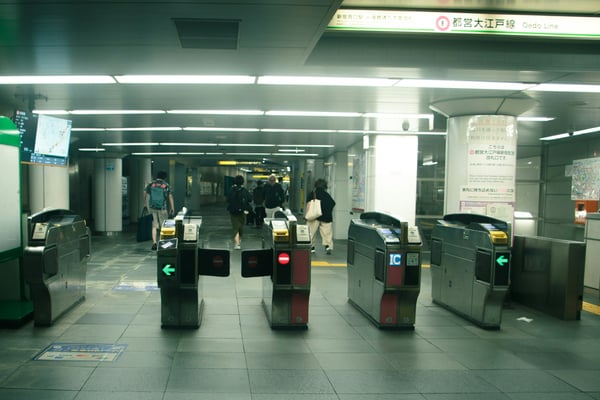
Tap in and out with your IC card; fares are automatic, so you don't pre-calculate anything.
Tips for big stations
Major hubs like Shinjuku (the world's busiest station), Tokyo, and Shibuya are enormous, multi-level, and have many exits. The trick: know your exit name or number before you arrive (your app will tell you), since choosing the right one can save a long detour. Allow extra time for transfers, as walking between lines can take several minutes. If you get turned around, follow signs toward a known landmark or simply surface and reorient with your map — it happens to everyone at first.
Rush hour
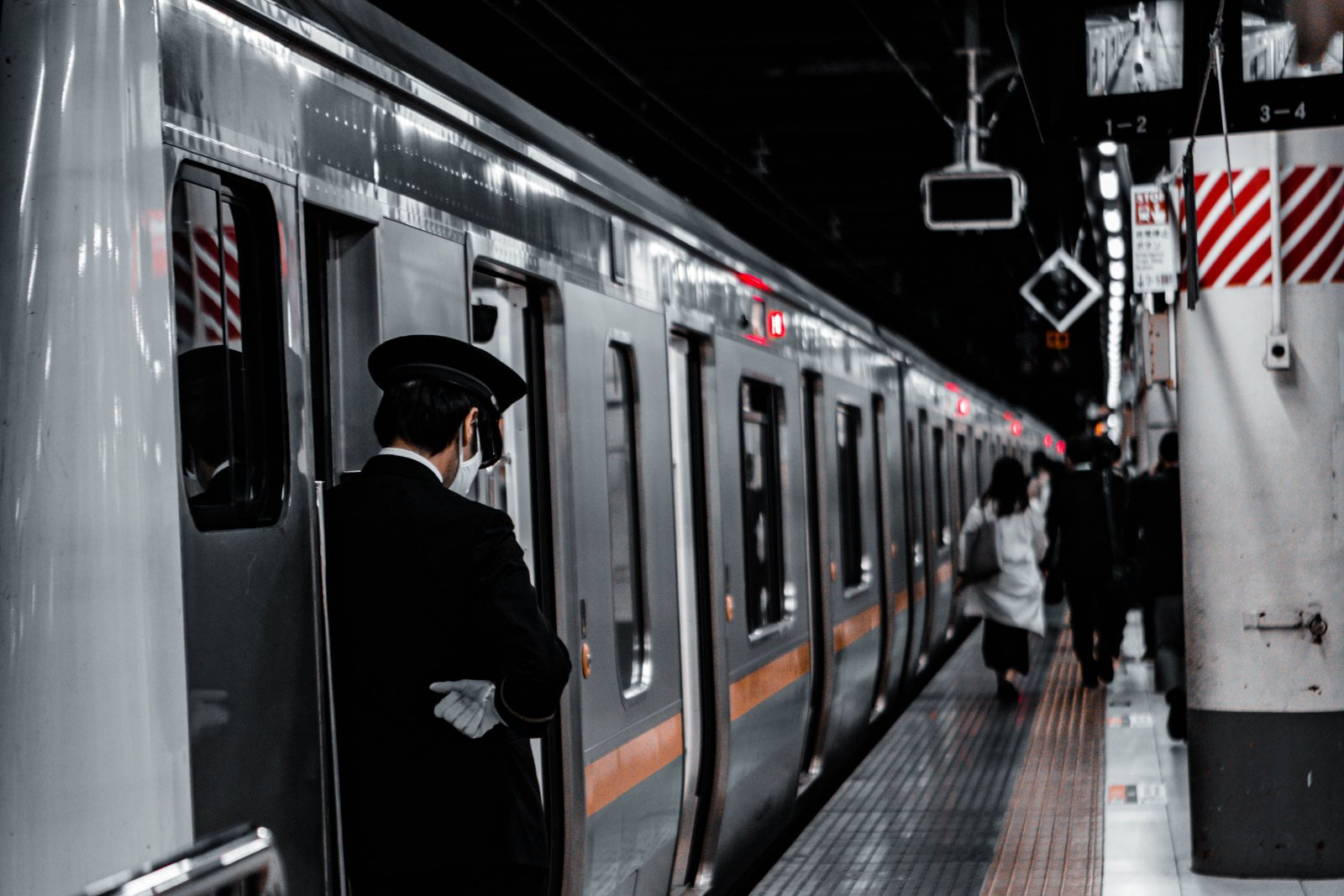
Trains are punctual and frequent but get extremely crowded during rush hours — roughly 8–9am and 6–7pm on weekdays, when the busiest lines are famously packed (you've seen the videos). Avoid traveling with large luggage at these times if you can, and be prepared to be pressed in shoulder-to-shoulder on the worst stretches. Off-peak and weekends are far more comfortable, and there are sometimes women-only cars during rush hour (marked on the platform).
Practical notes
Trains generally stop running around midnight and resume early morning — plan late nights around the last train, or budget for a taxi.
Keep quiet, set your phone to silent (manner mode), and don't take calls on the train.
Queue on the platform markings and let passengers off before boarding.
Priority seats are for the elderly, pregnant, injured, or those with small children — leave them free if you don't need them.
Eating is generally avoided on local/commuter trains (it's fine on long-distance/Shinkansen).
Fares and passes for a short stay
For most first-time visitors, paying per ride with an IC card works out simpler and often cheaper than a multi-day subway pass, since a mixed day of Yamanote + Metro + occasional private-line trips doesn't map cleanly onto any single pass's coverage. Tokyo Metro and Toei each sell their own day passes, plus a combined one covering both, but they only pay off if you're riding many short subway hops in a single day and rarely touching JR lines — check the math against your actual planned stops before buying one instead of just tapping as you go.
Bottom line
Don't let the map scare you. With an IC card in your pocket, a transit app in your hand, and the Yamanote loop as your mental anchor, Tokyo's trains are fast, spotless, reliable, and surprisingly easy to use. A little practice on day one and you'll be zipping around the city like a local by day two — and once Tokyo clicks, the same tap-and-go logic carries over to every other city on a well-sequenced route, which Japan, Worked Out maps out beyond just Tokyo.
FAQ
Who operates the Tokyo subway?
Tokyo's network is run by several different operators, which is why the map looks so busy:
JR (Japan Railways) East: runs the above-ground lines, most famously the Yamanote loop that circles central Tokyo, plus other useful lines like the Chuo and Sobu.
Tokyo Metro and Toei: the two subway systems that web the city underground (Tokyo Metro is the larger; Toei the other).
Private railways: several companies (Keio, Odakyu, Tokyu, Keisei, Keikyu, and more) reaching the suburbs, the airports, and day-trip destinations.
What is the Yamanote line?
The JR Yamanote line is the green loop that connects most major districts — Tokyo Station, Shinjuku, Shibuya, Harajuku, Ikebukuro, Ueno, and more — in a big circle around the city center. It's the mental map that makes Tokyo click: many of the sights and hotels you'll care about are on or near it, and you can simply ride the loop…
How do you handle Tokyo's biggest stations?
Major hubs like Shinjuku (the world's busiest station), Tokyo, and Shibuya are enormous, multi-level, and have many exits. The trick: know your exit name or number before you arrive (your app will tell you), since choosing the right one can save a long detour. Allow extra time for transfers, as walking between lines can take several…