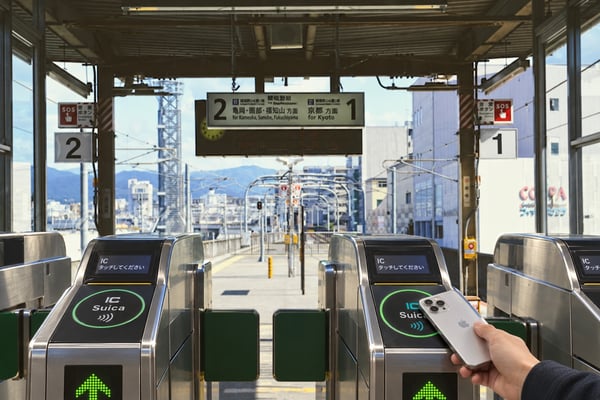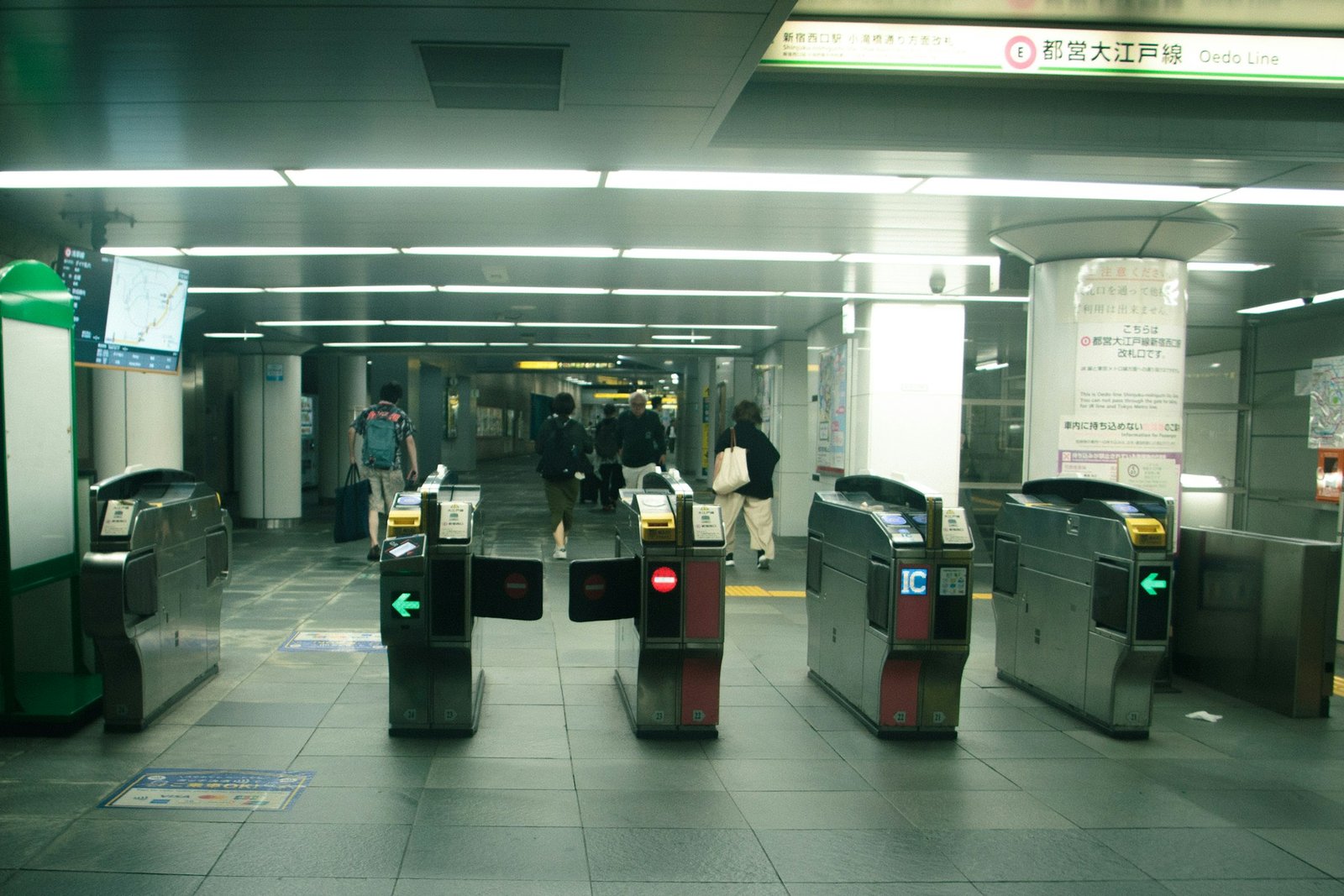
The gate panels snap shut, a buzzer sounds, and a queue forms behind you. It is the single most stressful thirty seconds of a first trip on Japanese transit, and it is also completely routine — the machines that fix it stand a few metres away and the staff deal with it hundreds of times a day. This guide covers why the gate refuses you, how to clear it, and how to stop it happening again.
Why the gate refuses you
An insufficient balance causes most refusals, and Japanese gates deduct the fare on exit rather than on entry — so a Suica holding ¥120 will let you through at the start of a ¥300 journey and stop you dead at the other end. The card was never checked against the fare at the entry gate, because at that point the system did not know where you were going.
The other common causes
A card that was never tapped on entry produces the same result, which happens when a gate stands open during quiet periods and you walk through behind someone else. The system has no entry record, so it cannot compute a fare and refuses on principle. A card left unresolved from a previous journey — tapped in somewhere and never tapped out — does the same.
Read failures are the third category, and they are usually the wallet's fault rather than the card's. A tap that produces no beep at all, rather than a rejection buzz, is a reading problem.
The fare adjustment machine
Every station has a fare adjustment machine, and it sits on the platform side of the gates rather than beyond them — usually within a few metres of the barrier that just rejected you, often marked in English as well as Japanese. It exists precisely for this situation and using it takes well under a minute.
How to use it
Insert or tap the card, and the screen shows the shortfall. Feed in coins or a note, take the card back, and walk to the gate again. Most machines carry an English button in the corner of the screen, and the ones that do not still show the amount owed as a number, which is all you actually need to understand.
A standard top-up machine does the same job by a different route. If you would rather add a useful amount than pay an exact shortfall, top the card up normally and the gate will then deduct the fare and open.
If you have no cash
The staffed window beside the gates is the answer, and at any major station in Tokyo or Kyoto one attendant sits there whenever trains are running. Show the card, and the attendant resolves it — settling the fare, correcting a missing entry record, or waving you through if the fault was clearly the system's. It is an ordinary transaction rather than an escalation.
This is also the route for anything unusual: a card that will not read at all, a journey that crossed operators in a way the machine will not resolve, or a balance dispute. The counter has authority the machine does not.
The bus rule that catches people out
City buses in Kyoto do not all work the way the trains do, and the difference produces a fare that looks wrong rather than a gate that closes. On most Kyoto city routes you tap once on boarding and pay one flat fare; elsewhere, and on longer suburban routes, you tap on entry and again on exit so the distance can be calculated. Missing the second tap leaves the journey open.
What an open journey does
An unresolved bus or rail journey can charge the maximum fare for the line, or leave the card in a state the next gate refuses. The fix is the same as any other adjustment — the driver resolves it on the bus, or a station machine or counter clears it afterwards — but the cause is invisible if you did not know a second tap existed.
When in doubt, watch what the person ahead of you does. Japanese transit is full of small local conventions like this, and the queue demonstrates them for free.
The two-card problem
Carrying two contactless cards in one wallet is the most common cause of a Suica tap that produces no response at all. The reader sees two cards, cannot decide which to charge, and reads neither. A hotel key card, an office badge or a contactless bank card sitting against a Suica will all do it.
The fix
Take the card out of the wallet and tap it on its own. If that works, the wallet was the problem. Travellers who tap a whole wallet for a fortnight without incident sometimes hit this on day twelve because a new card went in that morning, which is why the symptom feels random.
A phone in a case with cards tucked behind it produces the same failure, and it is worth knowing before you are standing at a gate trying to work out whether your phone has broken.
Keeping it from happening
Keep about ¥2,000 on the card as a working floor rather than running it to zero, because that clears any single city journey without thought, and topping up at that point costs nothing but a machine stop you were going to make anyway. The maximum a card holds is ¥20,000, so there is plenty of headroom.
Why not simply load the maximum
Because the balance is easier to spend down than to recover. An unregistered card can be refunded at the issuing operator's stations with the ¥500 deposit returned, but a handling fee applies and the process takes a counter visit on a day you would rather be doing something else. Load enough to be comfortable, not enough to strand money.
Tap deliberately rather than quickly — a flat, firm contact for a full second, held rather than swiped. Most read failures on a working card are a tap that moved.
If the card is lost
An unregistered Suica is cash: losing it loses the balance and the ¥500 deposit with no recourse, because the card carries no name and the operator cannot connect it to you. A registered card, by contrast, can be cancelled and reissued with the remaining balance transferred, which is the practical argument for registering one if the option is offered at purchase.
A card held in a phone sits in a different category again, protected by the device's own lock and recoverable through the account it was created under. For most visitors on a short trip the unregistered card is still the sensible choice; the point is simply to treat it like the cash it is rather than like a bank card that can be frozen.
The thirty seconds in perspective
A refused gate is a routine event that Japanese commuters clear several times a year without embarrassment, and the infrastructure assumes it will happen. Step aside, use the machine, and rejoin — nobody behind you is surprised and the staff have seen it all morning.
Getting the card right at the start removes most of these moments before they occur, and where that sits in the order of everything else to set up before arrival is something the complete Japan trip guide works through.