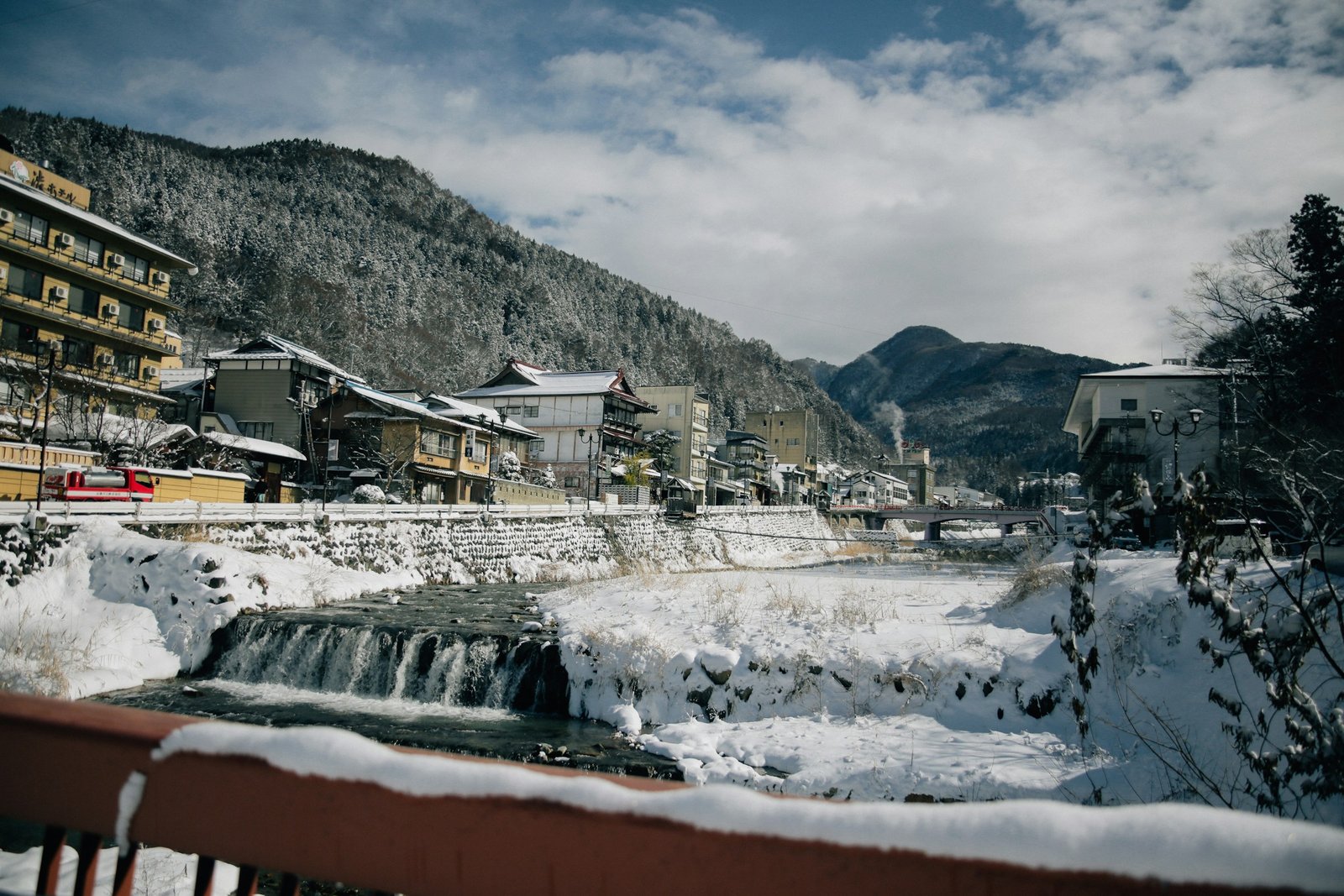
Winter is the season most first-time visitors skip, and the one that rewards them most if they do not. Outside a single fortnight around the New Year, it is the quietest and cheapest stretch of the Japanese year, with clear skies and short queues at places that are impossible in spring. This guide covers where the snow actually falls, what the cities are like in the cold, and the one period to plan around.
Where the snow actually is
Reliable snow in Japan falls in Hokkaido, in Tohoku, and along the Japan Sea side of the main island — Niigata, Toyama and Nagano — broadly from December through March. Tokyo and Kyoto get very little. Kyoto snow is an occasional event that photographs beautifully and lasts a morning, not a season you can book.
The expectation worth correcting
A great many people book Kyoto in January expecting the temples under snow they have seen photographed. Those photographs are real and they are rare, taken on a handful of mornings a year. If snow is the point of the trip, the Japan Sea side and the north deliver it reliably and the old capital does not.
What Kyoto does deliver in winter is cold, dry, bright weather and its famous sites at a fraction of their usual density — which is arguably the better prize.
Why the onsen makes sense now
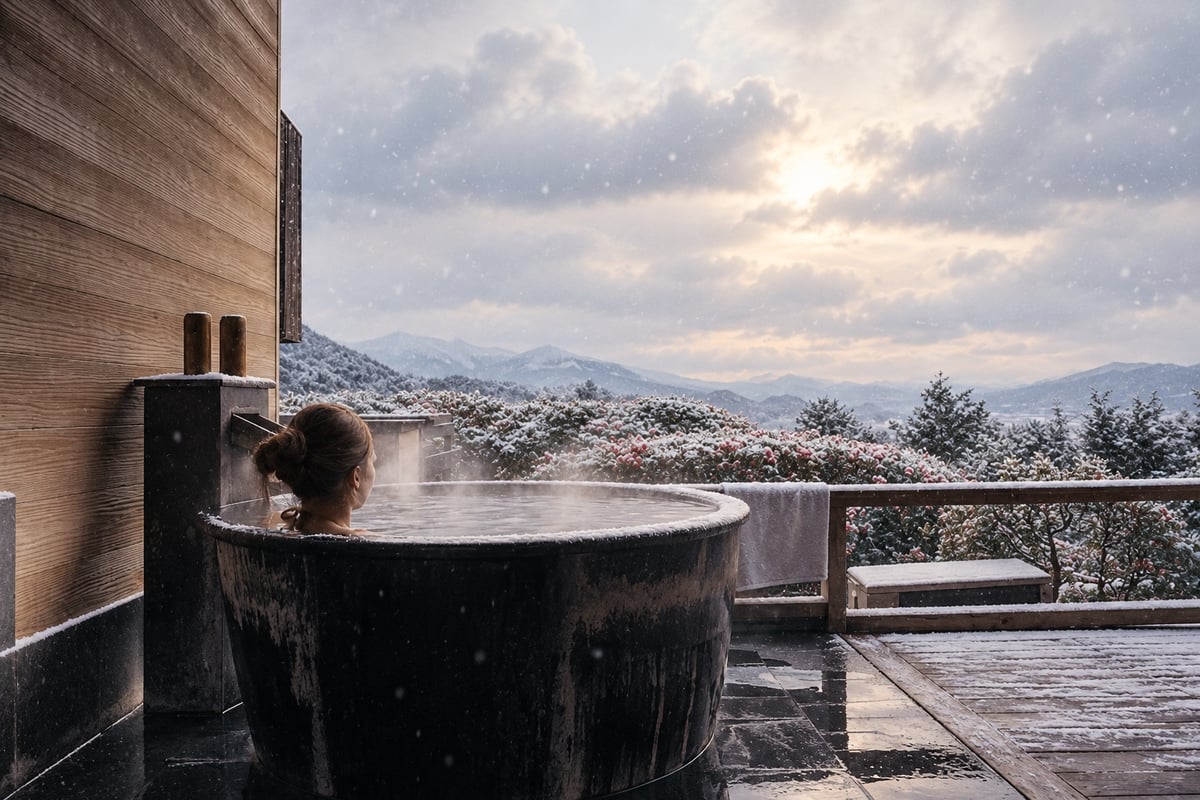
A Japanese hot spring is a year-round institution, but sitting in an outdoor bath at around 40C while snow falls on the surrounding rocks is the version everyone pictures, and winter is when it exists. Onsen towns in the snow country run through the coldest months and are the single strongest argument for a winter trip.
Winter is also when the traditional inns are least booked outside the holiday period, which means the rooms that are impossible to get in November are available and cheaper. If a night at a traditional inn is on the list, this is the season to do it.
What the cities are like
Tokyo and Kyoto in January and February are cold, dry and unusually clear — the winter air gives the best long views of the year, including the days when Mount Fuji is visible from Tokyo. Daylight is short, so plan around a 4:30 sunset rather than fighting it, and build the evening into the day deliberately.
The practical trade-offs
Buildings are heated unevenly by American standards, and older accommodation can be genuinely cold in the corridors even when rooms are warm. Layers matter more than a heavy coat, because you will move between icy streets and overheated trains repeatedly in a day.
Against that: no queues worth the name, restaurants that take walk-ins, and lodging prices below every other season. For a traveller who cares more about seeing places properly than about photographing them at their most colourful, that is a strong trade.
The fortnight to plan around
The New Year period, roughly 29 December to 3 or 4 January, is Japan's most significant closure window and the exception to everything above. Many independent restaurants, small shops, museums and offices close for several consecutive days, department stores typically close on 1 January, and shrines are extremely busy with the first-visit tradition.
This is the closure that catches Americans out most often, because late December reads as an ordinary travel window from the US and the calendar gives no warning. A trip either side of it is excellent. A trip through the middle of it is a different and much more restricted experience.
Winter against the seasons everyone books
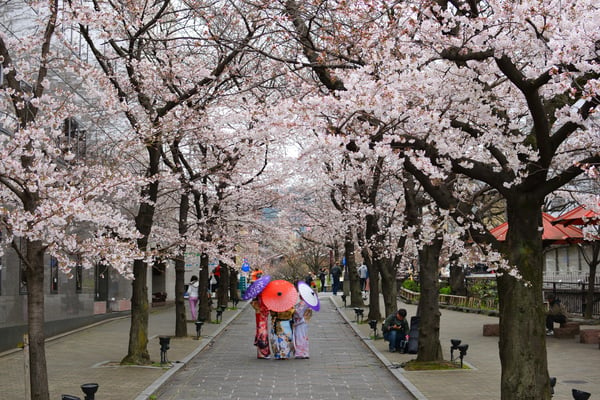
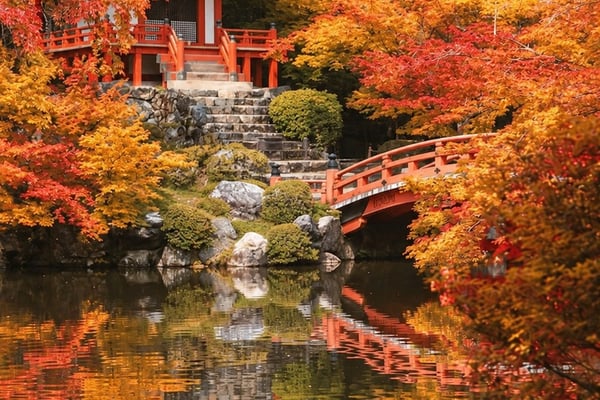
Winter is best understood against cherry blossom season and the autumn foliage weeks, because those are what it is competing with in most people's plans. Spring and late autumn offer the spectacle; winter offers access. The same temple that takes forty minutes of queueing in November is walked into in January.
The trade is clear once stated plainly. You give up the colour, the long evenings and the festival atmosphere. You gain the rooms, the prices, the quiet, and the clarity in the air. For a first trip where the point is to see the country rather than photograph one week of it, that trade is better than its reputation.
What to eat in the cold
Japanese winter food is a genuine reason to come rather than a consolation. Hot-pot cooking at the table is at its best in the coldest months, ramen is a different proposition in freezing weather, and the winter seafood season on the Japan Sea coast is the one most prized domestically. Convenience stores switch to hot counters, and the steamed buns and simmered snacks that appear are a small daily pleasure.
Restaurants are also simply available. The places that require a month's notice in spring take walk-ins in February, which changes what a food-focused trip can realistically include.
Skiing, briefly
Japan's ski regions in Hokkaido and Nagano are genuinely world-class and run on their own economics — they are the one part of the country that is expensive and busy in winter. If skiing is the trip, it is a different plan from the one this article describes. If it is not, avoid the resort towns at peak weekends and the rest of the north is empty.
Choosing winter on purpose
Winter, running December through March, is the clearest example of a season that changes what kind of trip is possible rather than simply changing the weather. It opens the traditional inns, closes the New Year fortnight, shortens the usable day, and makes the famous cities navigable in a way they are not for eight months of the year. The complete Japan trip guide works through how a timing choice like that reshapes the route and the booking order underneath it.
If your dates are flexible and you have already been told to come in spring, winter is the contrarian answer worth taking seriously — provided you know exactly which fortnight to avoid.