Bringing medication into Japan: when you need a Yakkan Shoumei, and what is banned outright
Which American medicines walk into Japan with no paperwork, which need a Yakkan Shoumei import certificate, which are banned outright, and what to do at customs if you forgot.
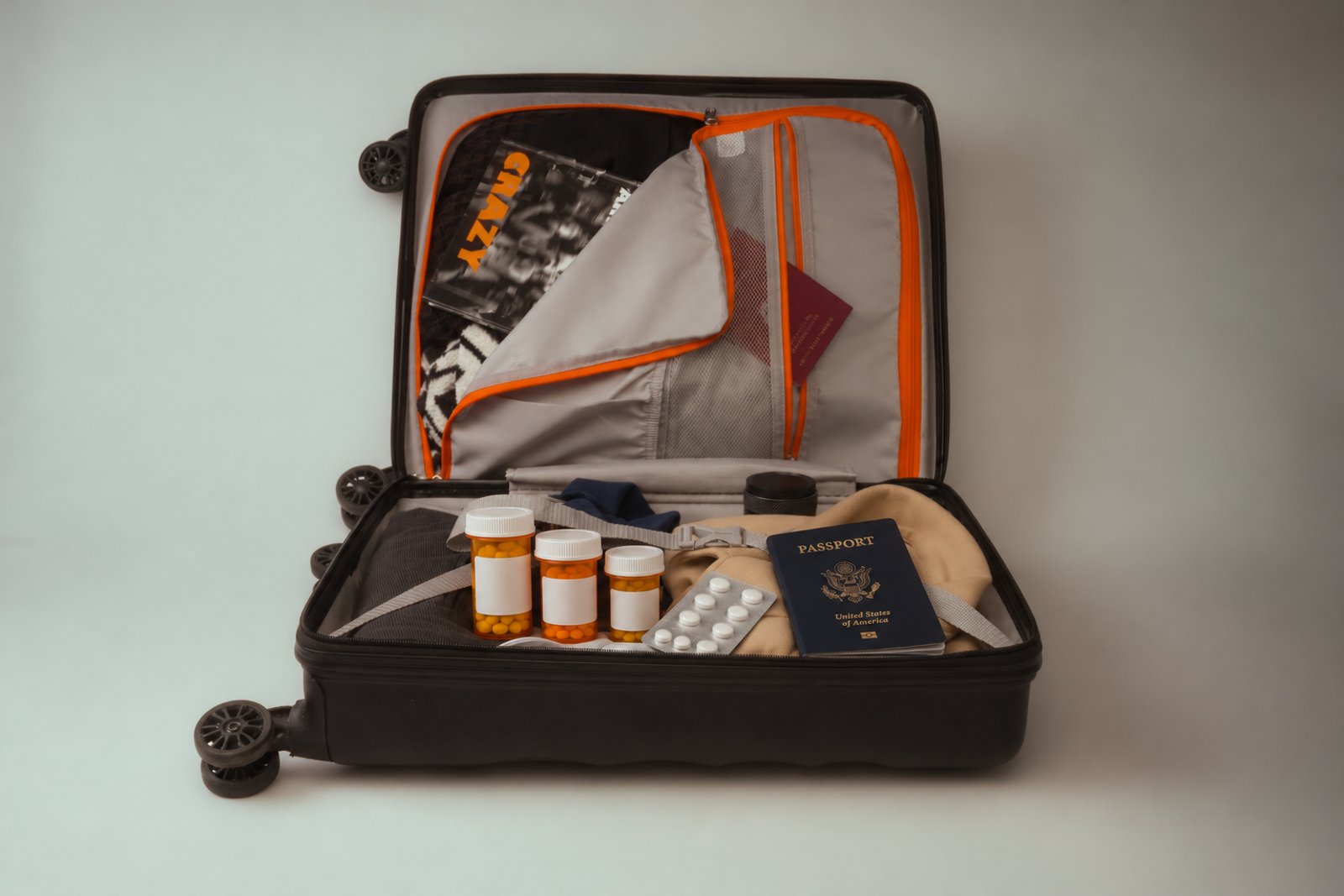
Japan's medicine rules trip up American travelers because the logic runs the opposite way from what most of us assume. A valid US prescription is not the deciding factor. What decides whether your medicine walks in with you, needs a certificate called a Yakkan Shoumei, or cannot come at all is the drug itself: first its legal class in Japan, then the quantity you are carrying. This guide works through both, then the application, then what to do at customs if you forgot.
Who needs a Yakkan Shoumei: the quantity line
A Yakkan Shoumei, now issued as a Yunyu Kakunin-sho or import confirmation certificate, is the Japanese Ministry of Health, Labour and Welfare's advance permission to bring medicine into Japan beyond the personal-use allowance. For ordinary prescription medicine that allowance is roughly a one-month supply, the figure the US Embassy in Tokyo uses in its guidance. Under that amount you carry the medicine in with no paperwork. Over it, you apply for the certificate before you fly.
The certificate exists for medicine that is legal to import but that you want to bring in quantity: a long stay's worth of blood-pressure or thyroid tablets, a full course of anything you cannot refill here. It is not a general permission slip. It does nothing for the banned stimulants below, and controlled narcotics and psychotropics run on a separate permission.
The three questions, in order
Is the drug banned in Japan? If yes, no quantity and no paperwork makes it legal.
Is it a controlled narcotic or psychotropic? If yes, the rules below apply even for a few pills.
How much are you carrying? Only now does the allowance matter, and only now is a Yakkan Shoumei the answer.
Most travelers with an ordinary prescription and a two- or three-week trip never get past the third question, which is why most need nothing at all. The forum threads asking whether someone is "cooked" for declaring nothing at Narita are mostly people who were under the line the whole time.
What is banned outright: the stimulant list
Amphetamine-type stimulants are banned from entering Japan under the Stimulants Control Act, and no certificate, prescription or doctor's letter makes them legal to carry. For American travelers that means Adderall, Vyvanse and Dexedrine, including their generics such as mixed amphetamine salts, lisdexamfetamine and dextroamphetamine. The Yakkan Shoumei process does not apply to these medicines, because the application only covers drugs that are legal to import in the first place.
This rule catches people with real prescriptions and no bad intent, so it deserves a plain statement: there is no workaround, and the US Embassy's advice is to talk to your prescriber well before the trip. Methylphenidate, the active ingredient in Ritalin and Concerta, is in a different legal category, covered next.
Cannabis products, including CBD
Anything containing THC is prohibited under the Cannabis Control Act, which includes edibles and vape products sold legally in many US states. CBD is legal in Japan only within Japan's own THC limits, and a gummy bought in the US carries no proof that it complies. Leave all of it at home.
Controlled medicines that need permission even in small amounts
Japan's Narcotics and Psychotropics Control Act treats opioid painkillers and many sleep, anxiety and ADHD medicines differently from ordinary prescriptions. Narcotics such as oxycodone, hydrocodone, morphine, fentanyl patches and codeine combinations need a narcotics import certificate from the regional bureau of health and welfare before you travel, regardless of quantity. Psychotropics such as Xanax, Ativan, Klonopin, Ambien and methylphenidate are allowed for personal use up to a per-drug quantity set by the same authority, and need permission above it.
A short prescription of a benzodiazepine or a sleep aid for the flight is normally within the personal-use quantity, but check your specific drug against the ministry's current psychotropics list, because the limits are set per substance. Any opioid, even a leftover bottle from dental surgery, is a certificate matter, and the narcotics certificate is a separate application from the Yakkan Shoumei. Keep controlled medicines in the labeled pharmacy bottle with the prescription or a doctor's letter; an officer who can match the pills to the paper has an easy decision.
Over-the-counter medicine: Tylenol, Advil, Sudafed and melatonin
Ordinary American over-the-counter medicine comes into Japan without paperwork. Tylenol (acetaminophen), Advil and Motrin (ibuprofen), Benadryl, Imodium, Pepto-Bismol, antacids and travel-sickness tablets are all allowed for personal use, and the personal-use allowance for non-prescription medicine is more generous than the one for prescription drugs, so a trip's supply in its original packaging sits well inside it. The two exceptions American travelers actually run into are pseudoephedrine products and melatonin.
Pseudoephedrine: the cold-medicine problem
Cold and allergy products containing pseudoephedrine, which includes regular Sudafed and some NyQuil and Advil Cold & Sinus formulas, are allowed only in small quantities and low concentrations for personal use, because pseudoephedrine is treated as a stimulant raw material. Check the current limit before packing a full bottle, or switch to a phenylephrine version such as Sudafed PE.
Melatonin, eye drops and creams
Japan does not sell melatonin over the counter, so the supplement from a US drugstore counts as a prescription medicine at the border: carry a trip's supply in the original bottle and it is not a problem. Medicine you apply rather than swallow has its own allowance, counted in units per product on the ministry's page; one tube or bottle of each is comfortably inside it.
How to apply for the Yakkan Shoumei
The Yakkan Shoumei application goes to the Ministry of Health, Labour and Welfare's regional bureau for the airport you land at, and since 2023 it is filed online through the ministry's import-confirmation system rather than by email or fax. You submit a form listing each medicine with its active ingredient and quantity, a copy of your prescription or a letter from your doctor, and your flight details. The bureau emails back a certificate that you print and present at customs with the medicine.
Narita and Haneda arrivals apply to the Kanto-Shin'etsu bureau; Kansai arrivals apply to the Kinki bureau. There is no fee. What goes wrong is timing: the bureau needs weeks rather than days, and the applications that fail are the ones filed the week before departure. Start as soon as your flights are booked.
What to put in the application
Each medicine's brand name, generic name and strength, exactly as the label reads.
The quantity you will carry and the daily dose, so the bureau can see it matches the trip.
A copy of the prescription, plus a doctor's letter if the medicine is unusual or the quantity is large.
Your arrival airport and date. The certificate is tied to that entry.
At the airport: declaring, carrying and what to do if you forgot
At Japanese customs, medicine within the personal-use allowance needs no declaration and no paperwork beyond its labeled packaging. Medicine covered by a Yakkan Shoumei or a narcotics certificate must be declared: answer yes to the restricted-items question on the paper customs form or in Visit Japan Web, take the red channel, and show the certificate with the medicine. Carry all of it in your cabin bag, because a bag that goes missing cannot be inspected or refilled.
If you discover on the plane that you are over the allowance with no certificate, still declare. Officers at the major airports can refer the question to the health bureau on the spot, and an honest overage usually costs you a conversation and sometimes the excess. Concealing it is the offence.
If you run out: Japanese pharmacies and what they sell
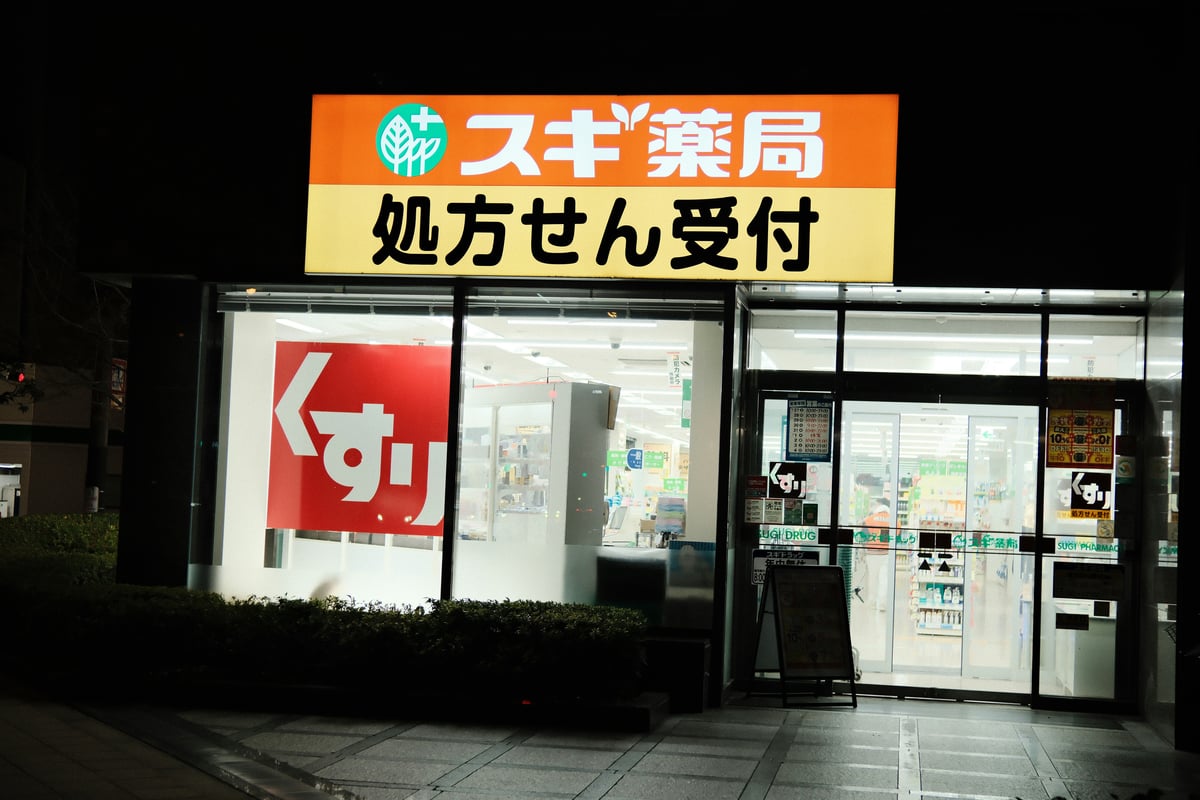
Japanese drugstores, the shops with a 薬 sign and chains such as Matsumoto Kiyoshi, Sugi and Welcia, sell painkillers, cold medicine, allergy tablets and stomach remedies without a prescription, and in city station districts a branch usually stays open into the evening. What they cannot do is fill an American prescription, which has no legal standing in Japan. A refill means seeing a Japanese doctor, who can prescribe a licensed equivalent.
Pharmacists in the big chains will read a translated ingredient name, so photograph the active-ingredient line on your US packaging before you leave. Japanese doses tend to be lower than American ones. Larger hospitals in Tokyo, Osaka and Kyoto run international clinics where a visitor can be seen and pay by card; the emergency numbers and the case for travel insurance are in our guide to whether Japan is safe for American travelers. Which clinic, and how a visitor gets seen quickly on a weekday, is one of the planning questions worked through in Japan, Worked Out.
FAQ
Do I need to declare my prescription medication in Japan?
Not if it is an ordinary prescription medicine within the personal-use allowance of roughly a month's supply. You do need to declare medicine covered by a Yakkan Shoumei or a narcotics certificate, and you present the certificate with the medicine at the red channel.
Can I bring Adderall to Japan with a prescription?
No. Adderall, Vyvanse and Dexedrine are banned under Japan's Stimulants Control Act, and no certificate or prescription makes them legal to import. Talk to your prescriber about a plan for the trip. Methylphenidate (Ritalin, Concerta) is a controlled psychotropic instead and is allowed within set quantities.
What happens if I forgot to get a Yakkan Shoumei?
Declare the medicine anyway. Customs can refer an honest overage to the health bureau at the airport, and the usual outcome is a conversation and possibly losing the excess. The serious cases are concealment, not declaration.
Keep planning
Not sure how it all fits together?
Pick your trip length and we’ll route a real day-by-day plan.