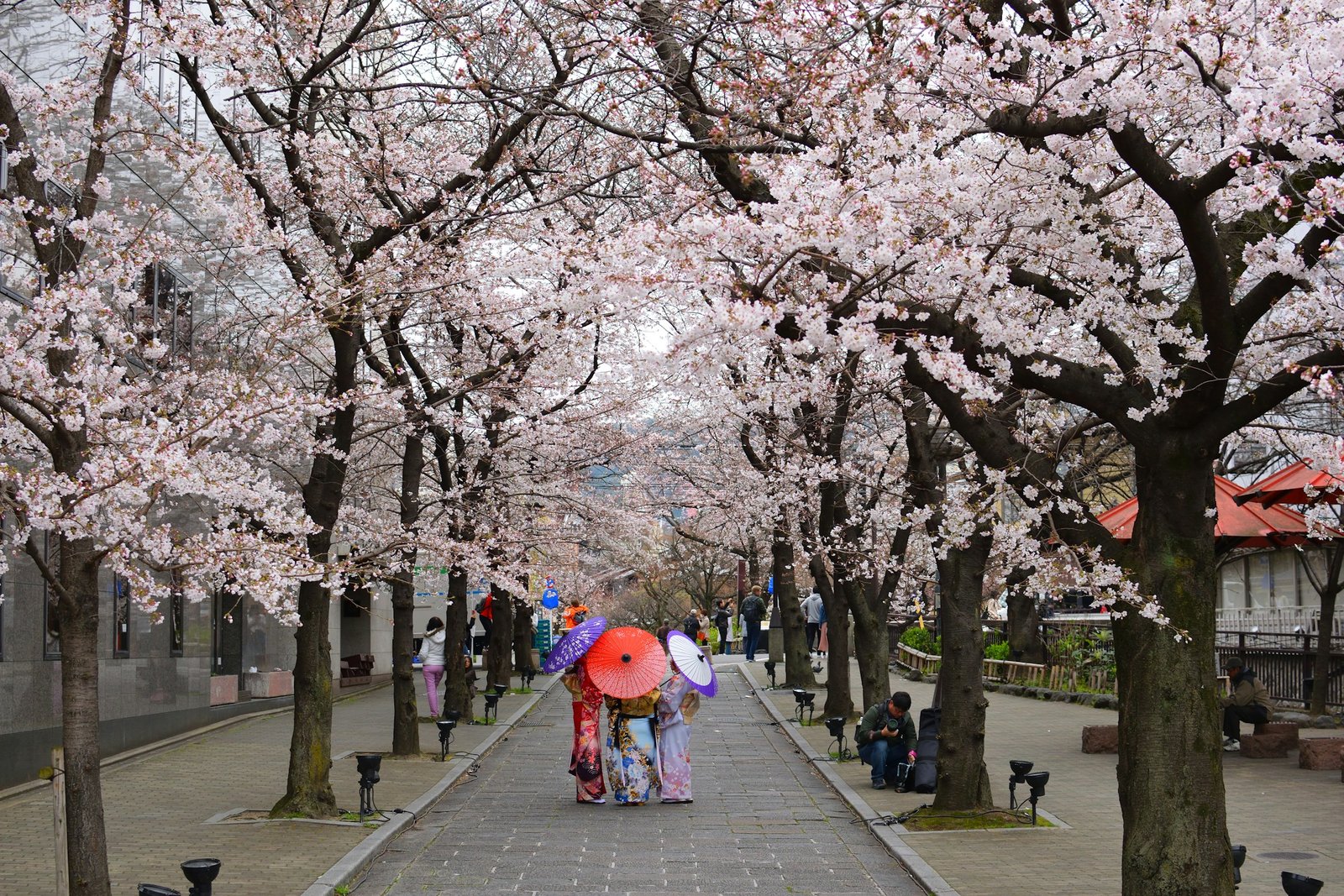
Cherry blossom season is the single most requested time to visit Japan, and also the hardest to plan, because the thing you are travelling for does not keep a schedule. The bloom moves north across the country over several weeks, but in any one city it lasts about a week. This guide covers where the blossom lands and when, what the season does to what you pay, and how to book around a date that nobody can guarantee.
When the blossom actually arrives
Cherry blossom reaches full bloom in Kyushu in late March, in Tokyo, Kyoto and Osaka from late March into the first days of April — most often somewhere around 28 March to 5 April — in Tohoku in mid to late April, and in Hokkaido from late April into early May. The pattern moves south to north and from low ground upward.
The rough regional timetable
Working from that gradient, a first trip usually targets the Tokyo–Kyoto corridor in the first days of April. Both cities sit in the same broad window, and they are close enough that a week spanning the turn of the month gives you a real chance in at least one of them. Travelling further north buys you a second attempt: if Tokyo has already dropped its petals, Tohoku is often still a fortnight away from opening.
Why nobody can promise you a date
Bloom timing depends on the winter that preceded it, and a warm February can pull the opening forward by a week. The Japan Meteorological Agency stopped issuing the official forecast in 2010, and private forecasters now publish the projections quoted everywhere. Those forecasts are useful from February onward — long after you needed to book flights and rooms. You are booking a window, not an event.
What the season does to what you pay
Bloom season is Japan's most expensive domestic travel period outside the New Year holiday. Accommodation in central Kyoto and Tokyo rises sharply for the same rooms, reserved seats on the fast trains fill early, and the better-regarded inns stop taking new bookings months out. The airfare from the US rises too, though less dramatically than the lodging.
How far ahead to book
Rooms in Kyoto and central Tokyo for the bloom window are commonly booked around six months ahead, and the well-regarded traditional inns go earlier still. That is the uncomfortable part of the timing problem: the booking deadline falls months before any forecast exists. Most people resolve it by choosing the first week of April, accepting the odds, and booking something cancellable.
If your dates are fixed by work or school, plan a trip you would enjoy regardless and treat the blossom as a bonus. A first trip built entirely around one week of flowers disappoints when the flowers run early.
Where the crowds actually are
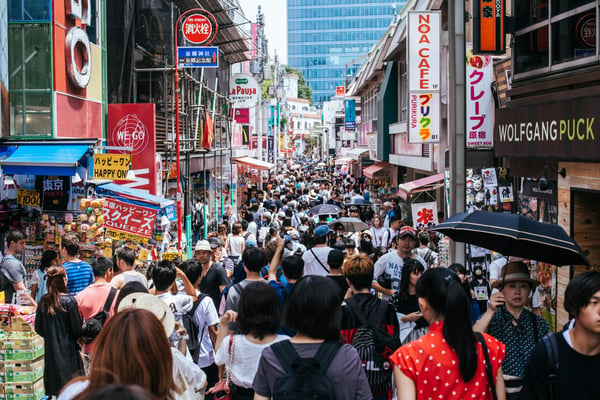
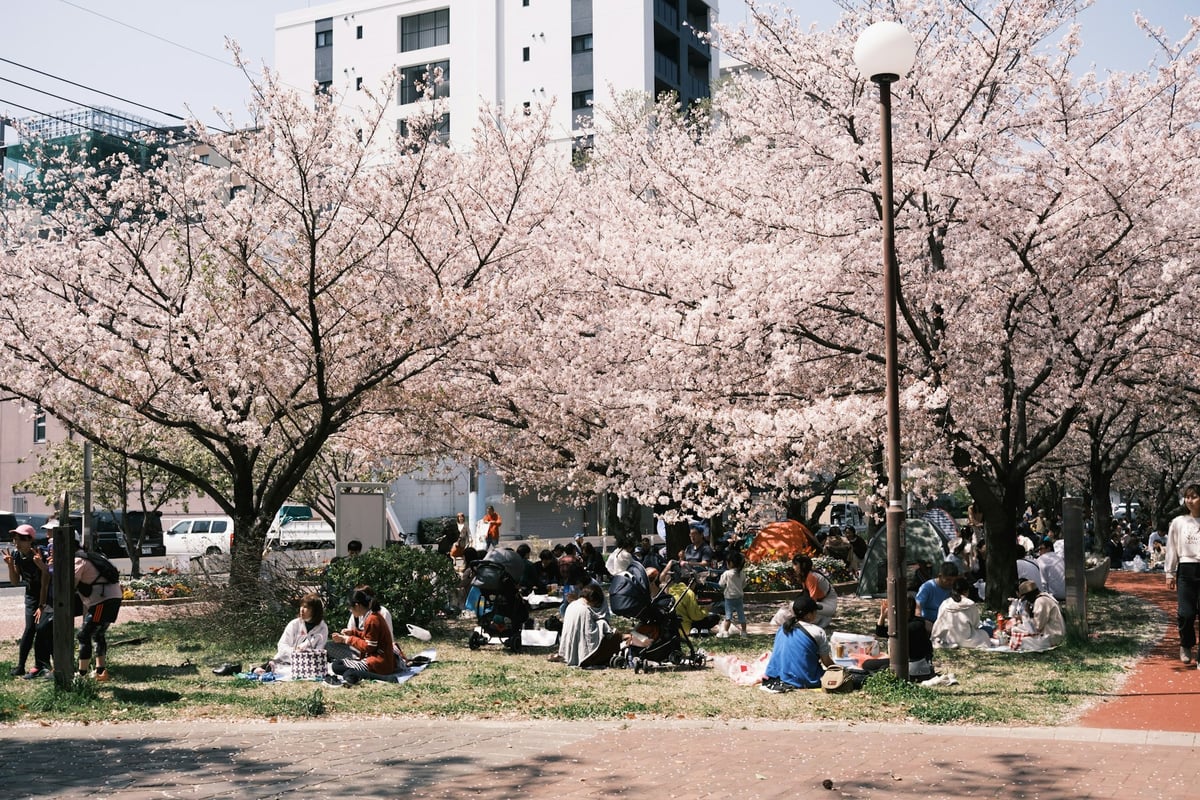
Crowding in Tokyo and Kyoto during the roughly one-week bloom window concentrates in a small number of famous places rather than spreading evenly. The named parks, the photogenic riverside paths and the temple gardens that appear in every forecast article absorb enormous numbers of people, while ordinary neighbourhood streets a few minutes away carry the same trees with a fraction of the crowd.
Japan treats blossom viewing as a social occasion rather than a spectator sport, which is why the busiest spots stay busy from morning until well after dark. Early morning is the reliable answer at the famous sites — as is simply walking, since residential streets, campuses and canal banks carry the same trees and attract almost nobody.
The three ways people actually play it
Given a booking deadline roughly six months out and a bloom forecast that does not appear until February, travellers to Japan converge on three strategies: book the first days of April and accept the odds, travel south to north and take two chances, or book April for the season and treat the flowers as luck. It is worth choosing between them deliberately rather than drifting into one.
Book the first week of April and accept the odds
The most common approach: the Tokyo-Kyoto corridor most often reaches full bloom around the turn of the month, so a week straddling it has a genuine chance. The cost is peak-season prices paid for a probability, and a warm February leaves you late with nothing but green.
Aim north and follow it
Because the bloom climbs the country over several weeks, a trip that starts in the south and moves north converts a single window into several. Arriving in Kyoto in early April and reaching Tohoku a fortnight later means two separate chances rather than one. The trade-off is that you are committing to a lot of ground, which is a real constraint on a first trip where the cities themselves deserve time.
Go for the season, not the flower
The third option is to book April for the weather and the long daylight, and treat any blossom as luck. Late April is one of the most pleasant stretches of the Japanese year and noticeably cheaper — until the holiday cluster at the end of the month, which is a different problem entirely.
What "full bloom" actually means
Full bloom, the stage Japanese forecasts call mankai, is a specific point rather than a general condition, and the gap between the first flowers opening and the trees being fully out is usually several days. Forecasts quote both the opening date and the full-bloom date for each city, and the second is the one worth planning around — a tree at thirty per cent is a tree with some flowers on it, not the thing people travel for.
The end is quicker than the beginning. Once full bloom passes, a single day of rain or wind can strip a street, which is why advice to build in slack at the front of the window is better than assuming you can catch up at the back.
The alternative nobody mentions
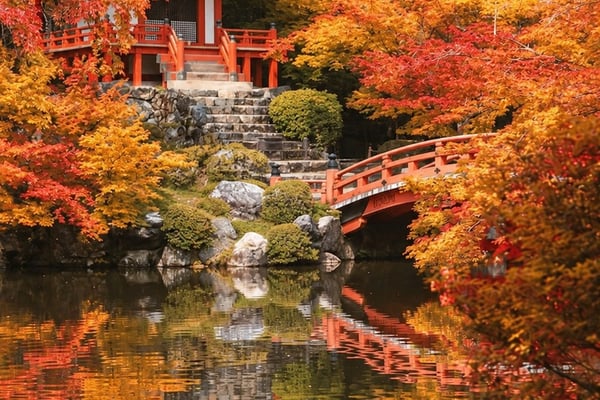
Autumn, which peaks in Kyoto through the second half of November, is Japan's other great season and for a first trip arguably the easier one. Colour holds for weeks rather than days, the weather is more settled, and while it is busy it does not carry bloom season's compressed desperation. If you want Japan at its most beautiful and your dates are flexible, the case for choosing a season deliberately is worth reading before you commit to spring.
Late April is also worth knowing about, once the blossom has passed the main cities. The weather is excellent, prices ease, and the country is green rather than pink — right up until the holiday cluster at the end of the month, which is a different problem entirely.
What the blossom decision is really attached to
Notice what the bloom window has quietly done. A one-week target in Tokyo and Kyoto sets a booking deadline six months out, which fixes how far ahead you commit to rooms, which constrains which cities you can base yourself in, which changes how much of the country you can reach. Chasing the blossom is not a standalone preference — it decides four or five other things, six months before you travel.
That chain is where first trips come apart, usually not because any single decision was wrong but because they were each made separately. Working out how the timing, the bases and the routing between them fit together is what the complete Japan trip guide is built to do.