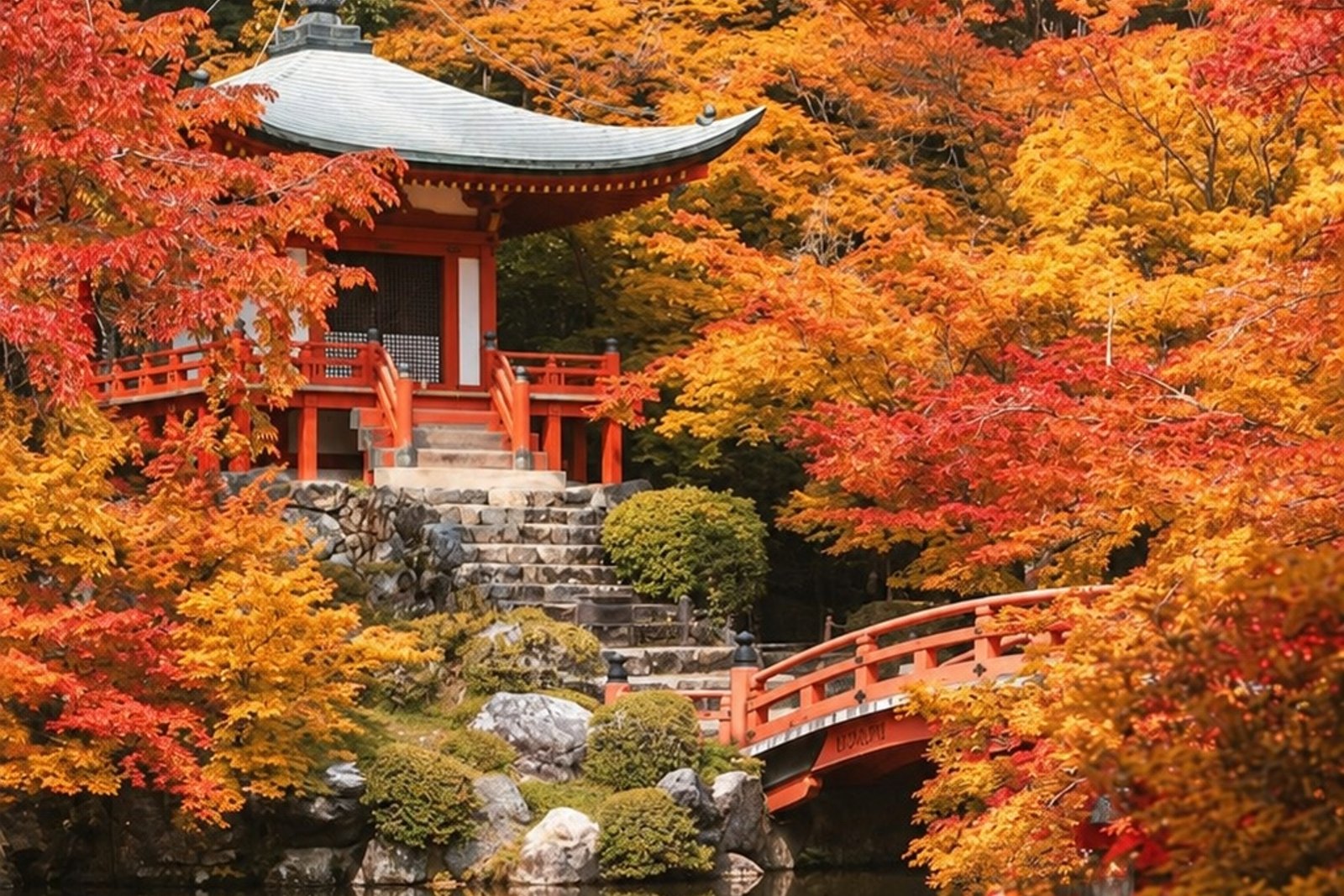
Autumn is Japan's other great season, and for a first trip it is the more forgiving one. The colour lasts weeks rather than days, the weather is settled, and the timing is far more predictable than spring. This guide covers when the colour peaks where, how to plan around it, and where to see it without standing in the worst of the crowds.
When the colour peaks, region by region
Autumn colour peaks in Hokkaido and the Japanese Alps during October, in Kyoto through the second half of November, and in Tokyo from late November into the first days of December. The colour moves in the opposite direction to the cherry blossom — north to south, and from high ground down into the valleys and cities.
Reading the direction of travel
That north-to-south, high-to-low movement is genuinely useful for planning. If you are in Japan in late October, the mountains are already turning while Kyoto is still green. Arrive in the third week of November and the cities are at their best while the high country is bare. A trip that moves from the mountains toward the cities over a fortnight can effectively follow the colour down.
Why autumn is easier to plan than spring
Autumn foliage in Kyoto or Tokyo holds for several weeks in a given place, where cherry blossom holds for roughly one. That difference changes everything about the booking problem. A spring trip is a bet on a seven-day window that nobody can forecast until February; an autumn trip aimed at the back half of November is very likely to land on good colour regardless of how the year has gone.
The weather helps as well. Late autumn in Japan is reliably clear and cool, with far less rain than early summer and none of the heat that makes August walking difficult. For a trip built around being outdoors, it is the most comfortable stretch of the year.
Where the crowds actually are
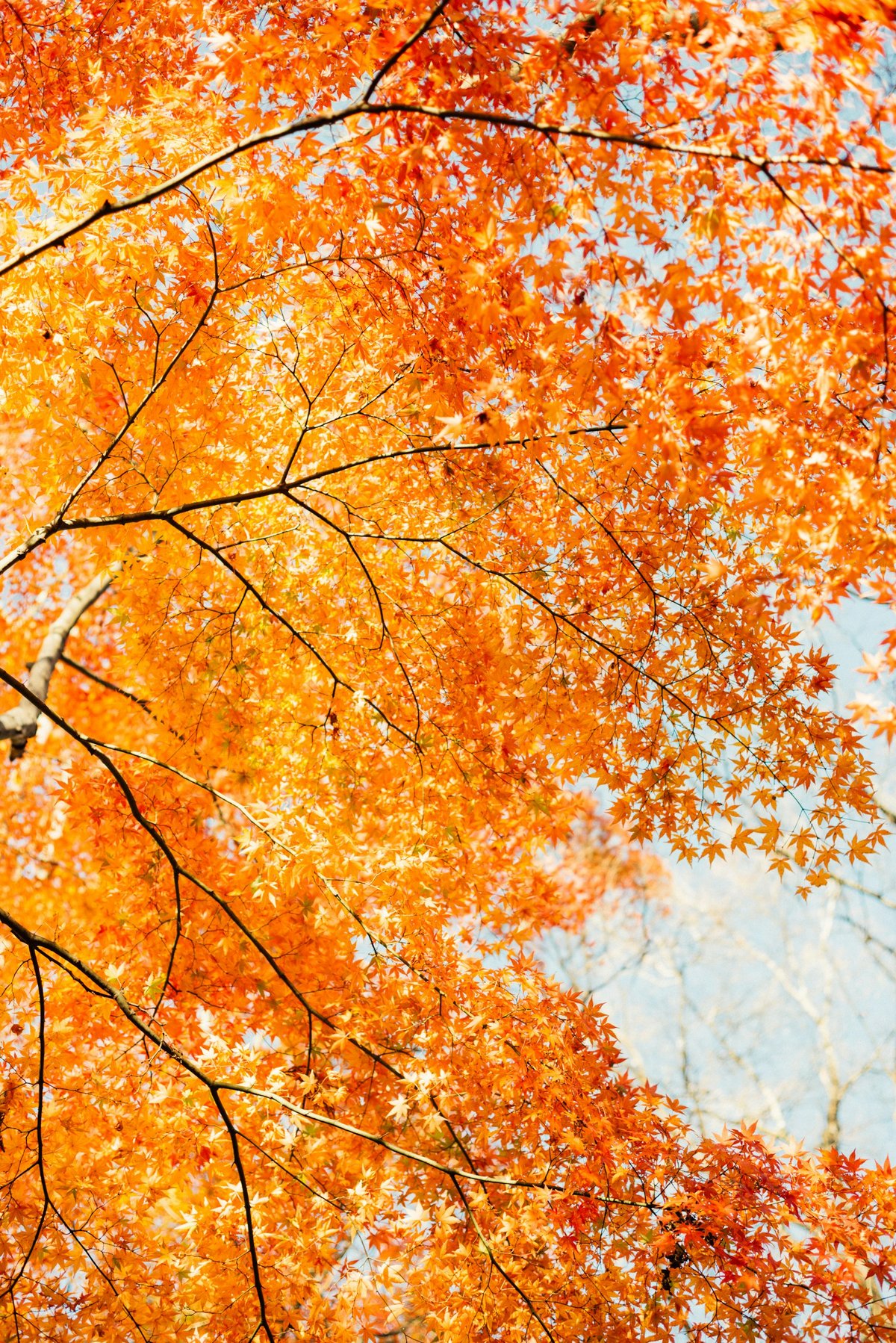
Autumn crowding in Kyoto during the last ten days of November behaves much like spring crowding: it concentrates in a small number of celebrated places rather than spreading out. Kyoto's most famous temple gardens in the last ten days of November are genuinely difficult, with queues at the gate and paths moving at a shuffle. Fifteen minutes away, less-photographed temples carry the same maples and a tenth of the people.
Two things reliably help. Go early, because the famous gardens open before the tour groups reach them. And go up — hillside temples and walking routes thin out quickly, because most visitors will not climb for a view they can photograph from the flat.
The evening illuminations
Many temples run special evening openings during the colour season, lighting the maples after dark. They are beautiful and they are extremely popular, so treat them as their own outing rather than something you append to a full day of sightseeing. If you plan to do one, it is worth building the day around it.
Colour beyond the famous gardens
Autumn colour in Japan is not confined to the temple gardens that appear in every photograph. City parks, riverbanks, university campuses and the approach roads to ordinary shrines carry the same maples, and the mountains around Kyoto and Tokyo are within reach of a half-day walk. A trip that treats the celebrated gardens as one item among several, rather than the whole point, tends to see more colour and stand in fewer queues.
What to book, and when
Autumn does not demand spring's six-month lead, but the back half of November in Kyoto is one of the busiest lodging periods of the year and behaves accordingly. Rooms in central Kyoto get expensive and scarce; reserved seats on the fast trains fill on the main corridors at weekends. Two to three months ahead is usually comfortable, and earlier if you want a specific traditional inn.
Booking pressure is one of several ways the calendar quietly shapes a first trip — how many bases you can use, which cities work at which times, and how much of the route you can commit to before you know the weather. The complete Japan trip guide works through how those pieces interact.
Autumn against spring, as a decision
Put Japan's two peak seasons side by side — a one-week bloom window in late March and early April against several weeks of colour from October to early December — and the choice becomes clearer than the marketing suggests. Spring offers a shorter, more dramatic spectacle on a window nobody can forecast in time to book. Autumn offers a longer, steadier one on a window you can plan around months ahead.
Spring wins on the strength of the image and on the atmosphere — the whole country is out under the trees, and there is nothing else quite like it. Autumn wins on almost everything practical: settled weather, a forgiving timetable, a shorter booking lead, and prices that, while high in Kyoto, do not reach spring's peaks across the board.
For a first trip where the cities and the routing are themselves new, the season that does not also demand a gamble is the easier one to build a plan on. For a return trip with a specific image in mind, spring's risk is worth taking.
Combining colour with the rest of a trip
Autumn's several-week span in Kyoto and Tokyo, against cherry blossom's single week, is what makes November easy to combine with everything else. Because you are not chasing a seven-day window, you can plan a normal route through the country and let the colour meet you along the way. A standard first week through Tokyo and Kyoto needs no adjustment at all in mid-November beyond booking earlier than you otherwise would.
The one date to keep an eye on is the very end of November in Kyoto, when the city is at its absolute peak and at its most crowded. If you would rather have the gardens than the photograph, aim a week either side.