Affiliate disclosure: this guide contains affiliate links. If you book through them we may earn a commission, at no extra cost to you.
Kyoto is Japan's cultural heart — a city of temples, shrines, gardens, and preserved old streets that served as Japan's imperial capital for 1,074 years, from 794 until 1868, longer than most countries have existed in any recognizable form. After the neon and relentless pace of Tokyo, it rewards a slower, more contemplative rhythm, and many travelers come away naming it their favorite single part of a first trip to Japan. This guide gives you the orientation a first-time visitor actually needs: how the city is laid out, what to see, where to stay, how to get around, and how to plan your days without rushing.
Getting your bearings
Unlike Tokyo, Kyoto has no single train loop tying it together. The sights are spread across the city and into the surrounding hills: the eastern districts (Higashiyama and Gion) on one side, Arashiyama to the west, Fushimi Inari to the south, and Kinkaku-ji to the northwest, with Kyoto Station anchoring the south as the main transport hub. You'll get around by a mix of buses, the subway, and walking, all covered by an IC card (Suica, Pasmo, or the local ICOCA). Because the highlights are genuinely scattered across the city, the single smartest strategy is to group sights by area and tackle one zone per day rather than crisscrossing.
Why Kyoto has no single loop line: Kiyomizu-dera · Kinkaku-ji · Arashiyama · Fushimi Inari. (Enable JavaScript for the interactive map.)
What to see
The essentials for a first visit:
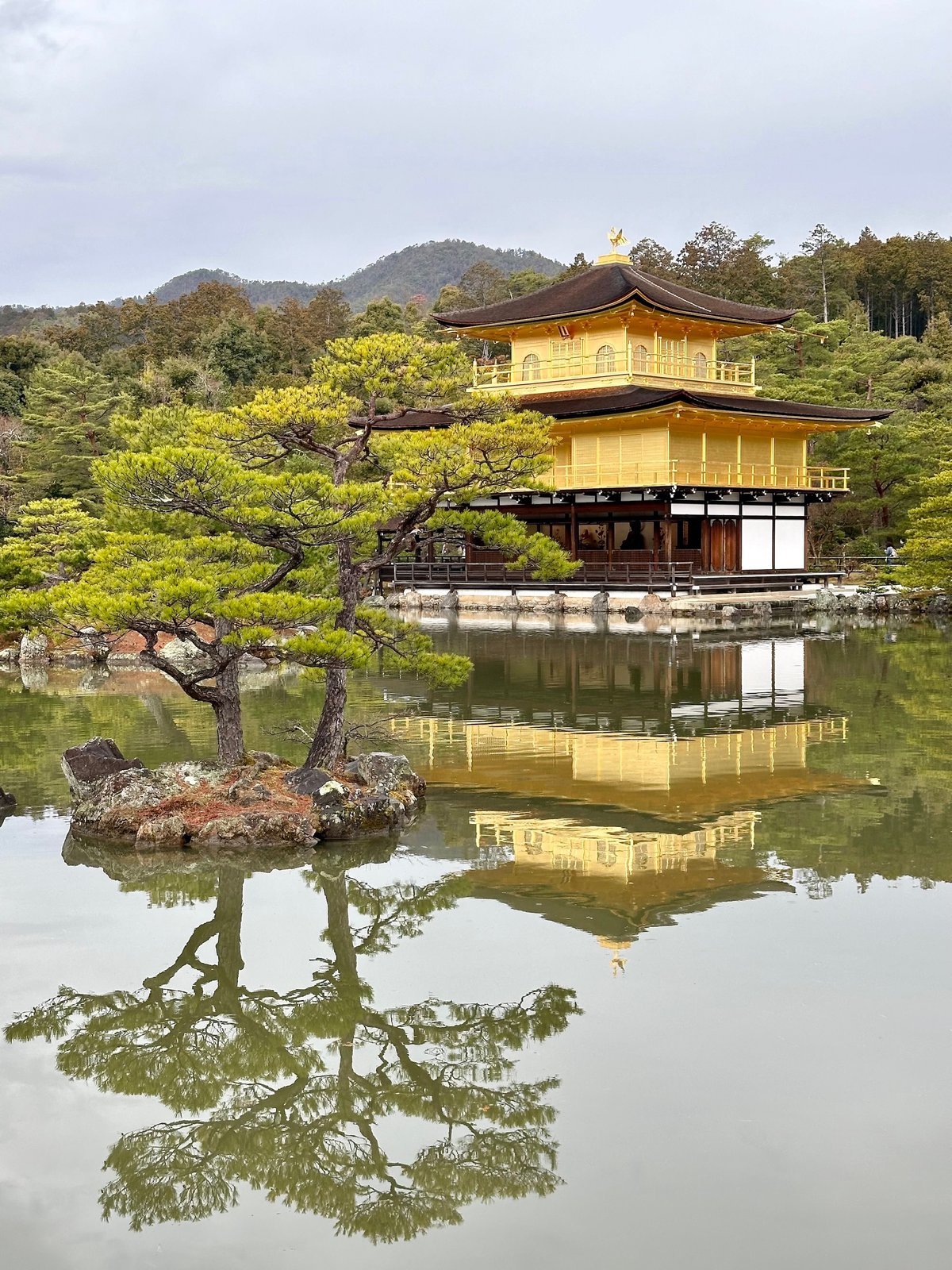
Kinkaku-ji — the Golden Pavilion, gold-leafed and mirrored in its pond.
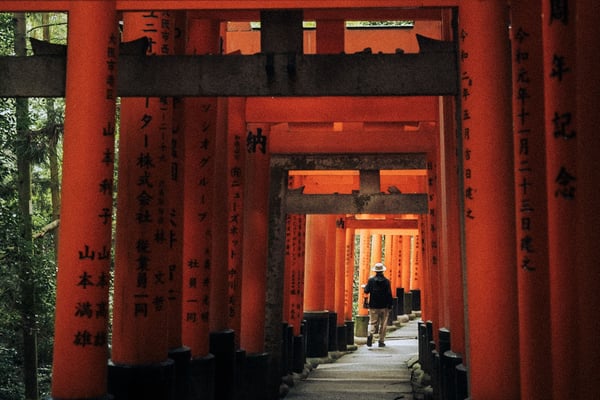
Fushimi Inari — thousands of vermilion torii gates winding up a mountainside (free, and magical at dawn).
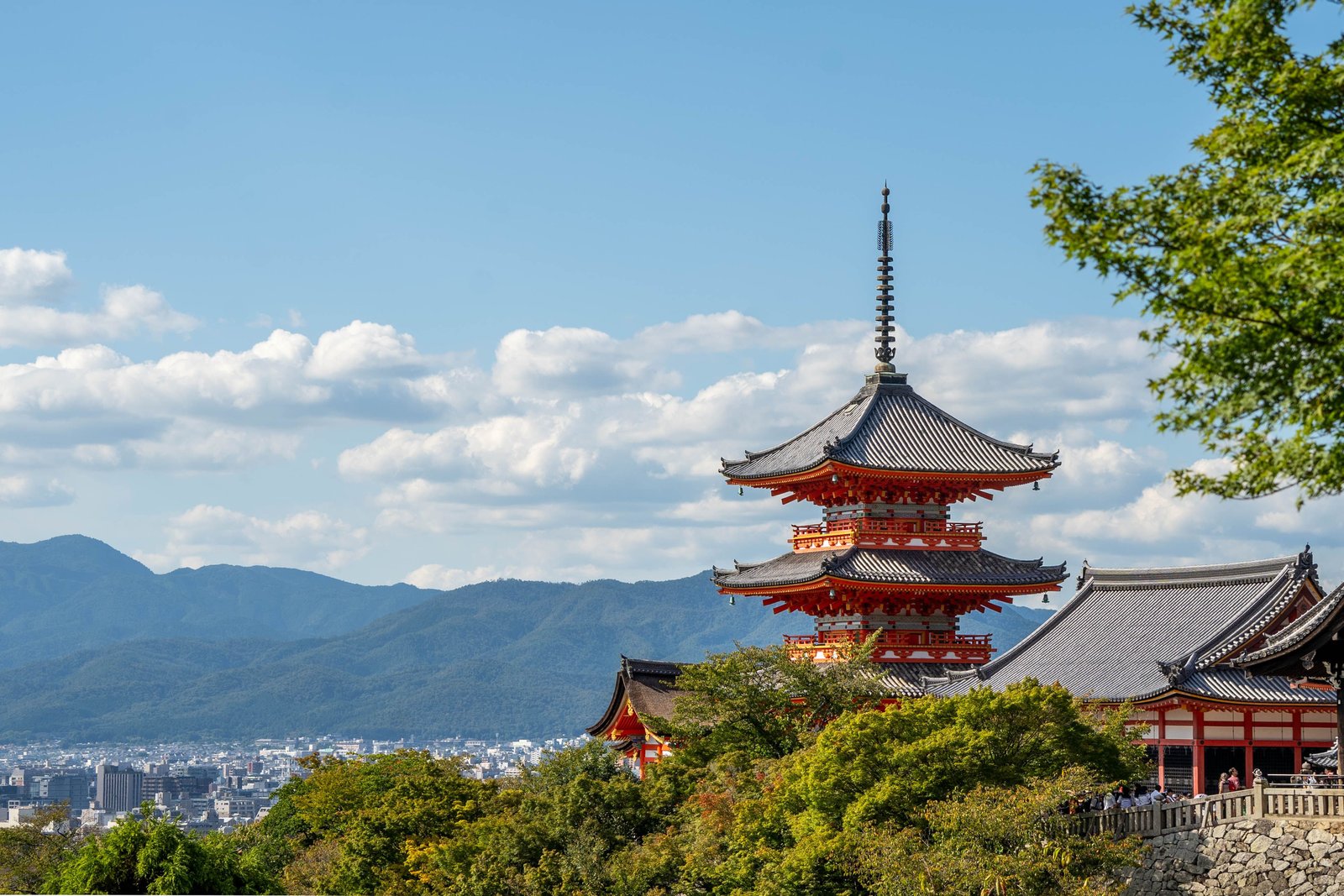
Kiyomizu-dera — a hillside temple with a famous veranda, reached by climbing through the genuinely atmospheric Higashiyama streets.
Arashiyama bamboo grove — the ethereal bamboo path on the city's western edge.
Gion — the historic geisha district, best wandered at dusk.
Beyond these headline names, Kyoto rewards the curious with Zen rock gardens, the Philosopher's Path, Nijo Castle, and countless quieter temples most visitors never make time for.
Where to stay
Your base shapes the trip. For atmosphere, stay in Gion or Higashiyama, within walking distance of major eastern temples and the city's most beautiful old streets — pricier and busier, but unforgettable. For convenience, the Kyoto Station area is the practical transport hub, ideal if you're doing day trips or moving on quickly. Downtown (around Kawaramachi and Nishiki Market) is a lively, central middle-ground, while Arashiyama trades convenience for scenery and calm. Consider at least one night in a traditional ryokan or machiya townhouse for the full Kyoto experience — waking up on tatami here hits differently than in any city hotel.
Give Kyoto at least two to three days — enough for the major temples grouped by area, an evening in Gion, and ideally a day trip to Nara, Osaka, or Himeji. Kyoto genuinely rewards lingering; cramming it into a single rushed day means missing exactly the unhurried atmosphere that makes the city special in the first place. Two focused days cover the essentials, and a third lets you slow down or venture out to the wider Kansai region. Leave room in those days for meals too, because Kyoto's food areas and specialties stretch from Nishiki Market snacks to kaiseki along Pontocho Alley.
Eating in Kyoto
Kyoto has a refined, seasonal food culture shaped by its imperial and Buddhist heritage. Seek out kaiseki (elegant multi-course dining), matcha sweets and cafes (the nearby town of Uji is famous matcha country), yudofu (simmered tofu, tied to temple cuisine), and shojin ryori (Buddhist temple cuisine). Graze the food stalls of Nishiki Market — "Kyoto's Kitchen" — and have dinner along the lantern-lit Pontocho Alley beside the river, where some restaurants set up riverside dining platforms in the warmer months. As everywhere in Japan, there's no tipping.
Practical tips
Wear comfortable shoes — you'll walk a lot, both between sights and within them, often on slopes and stone paths.
Start early at popular temples (Fushimi Inari, Kinkaku-ji, the bamboo grove) to beat the crowds and the heat.
Buses are comprehensive but can be slow and packed at peak times; the subway and trains are faster where they reach.
Be respectful in Gion — don't chase, block, or grab at geiko/maiko, and follow photography rules on private streets.
Many temples charge a small entry fee and close by late afternoon — carry coins and plan your route accordingly.
Plan your days
Group temples and sights by district, start each day early, and balance temple-heavy mornings with relaxed afternoons in old streets, markets, or gardens. Cap yourself at two or three major temples a day to avoid fatigue, and leave room to simply wander. Done right, Kyoto is the soulful counterpoint to Tokyo — a city where, between the gates and gardens, you feel over a millennium of continuous history settle around you in a way few other places on earth can offer. It's often the part of a first trip that travelers remember most.
Unlike Tokyo, Kyoto has no single train loop tying it together. The sights are spread across the city and into the surrounding hills: the eastern districts (Higashiyama and Gion) on one side, Arashiyama to the west, Fushimi Inari to the south, and Kinkaku-ji to the northwest, with Kyoto Station anchoring the south as the main…
Where should you stay in Kyoto?
Your base shapes the trip. For atmosphere, stay in Gion or Higashiyama, within walking distance of major eastern temples and the city's most beautiful old streets — pricier and busier, but unforgettable. For convenience, the Kyoto Station area is the practical transport hub, ideal if you're doing day trips or moving on quickly.…
How many days do you need in Kyoto?
Give Kyoto at least two to three days — enough for the major temples grouped by area, an evening in Gion, and ideally a day trip to Nara, Osaka, or Himeji. Kyoto genuinely rewards lingering; cramming it into a single rushed day means missing exactly the unhurried atmosphere that makes the city special in the first place. Two focused…
Keep planning
Not sure how it all fits together?
Pick your trip length and we’ll route a real day-by-day plan.