Affiliate disclosure: this guide contains affiliate links. If you book through them we may earn a commission, at no extra cost to you.
Osaka is Japan's brash, fun-loving, food-obsessed capital — louder, friendlier, and more laid-back than refined Kyoto or hyper-dense Tokyo. The local word kuidaore, roughly "eat yourself into ruin," sums up the city's spirit better than any single attraction could. It's an easy trip from Kyoto and a great addition to any Kansai itinerary, whether as a day trip for an evening of street food or a base in its own right for a night or two. Here's what to do.
Dotonbori
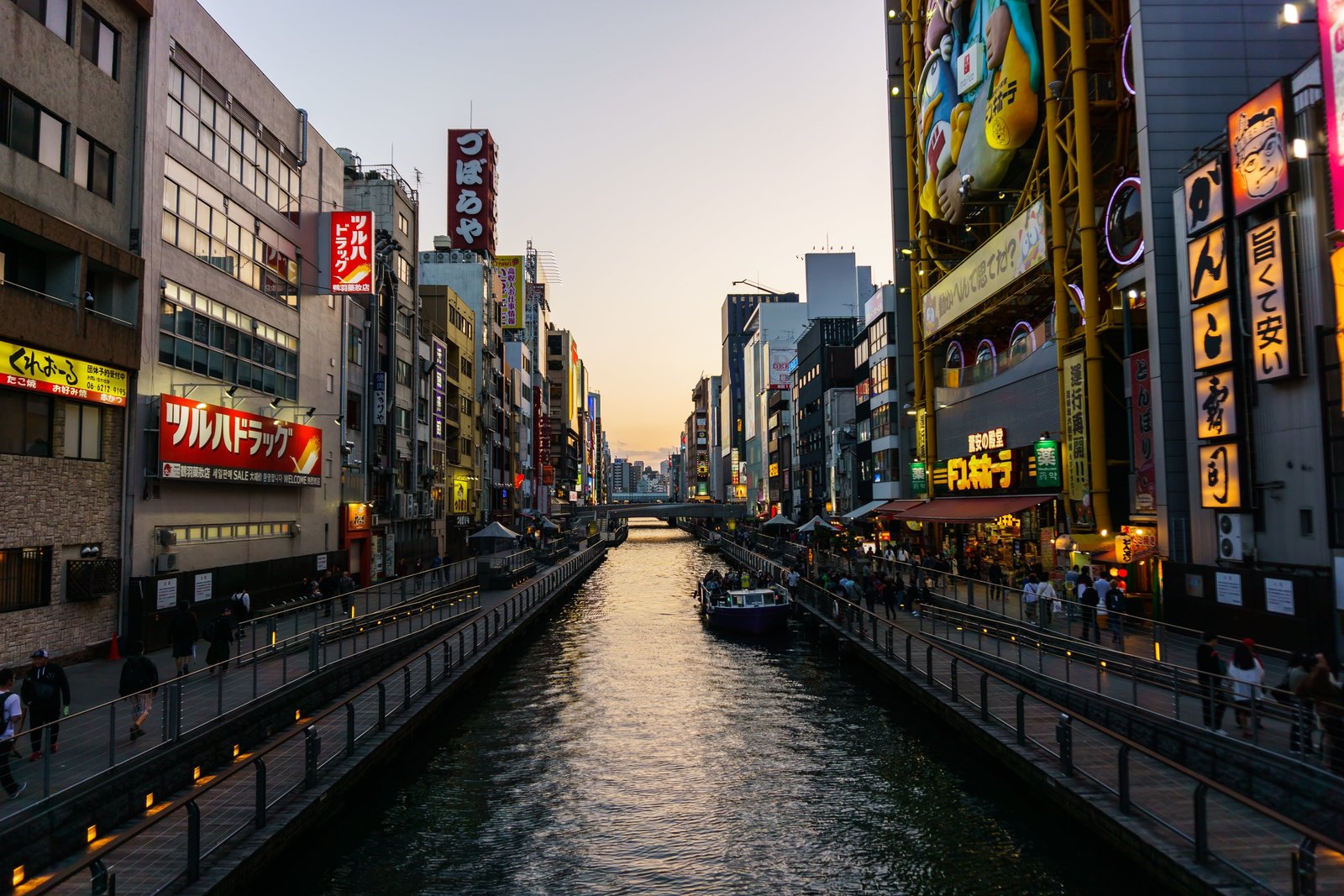
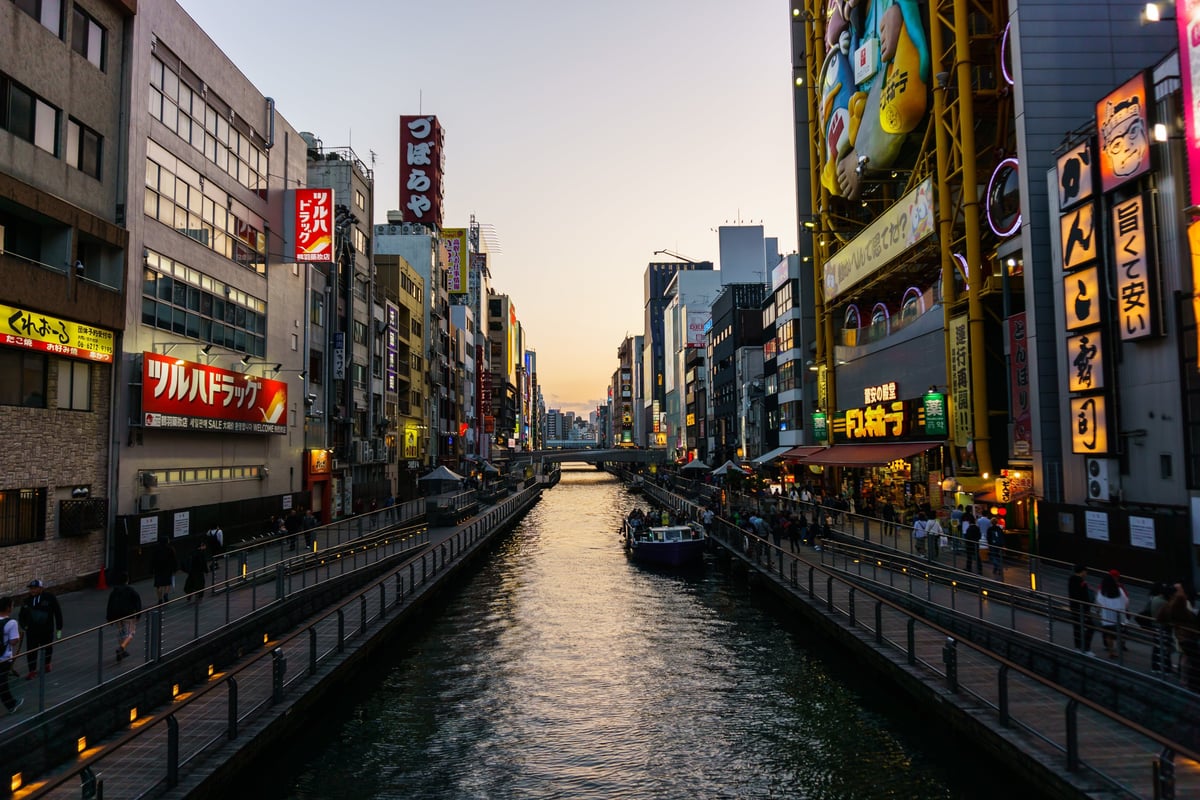
Dotonbori is Osaka's neon heart — a canal-side strip blazing with giant illuminated signs, including the famous running-man Glico billboard (first installed in 1935, updated six times since, now a high-resolution LED display) and an enormous mechanical crab, packed with restaurants and street-food stalls. It's the city's must-see, best experienced after dark when the lights reflect off the water and the crowds are at their liveliest. Come hungry: this is ground zero for Osaka's street food, and simply walking the strip eating as you go is the quintessential Osaka night. Before you go, skim Osaka's must-eat street dishes so you recognize the takoyaki, okonomiyaki and kushikatsu on offer and know where else to find them.
The neon strip and the castle park: Dotonbori · Osaka Castle. (Enable JavaScript for the interactive map.)
Eat the street food
Osaka is nicknamed "the nation's kitchen," and eating is the main event. The three essentials to prioritize if you only have one evening:
Takoyaki — ball-shaped batter dumplings filled with diced octopus, cooked in special molded pans and topped with savory sauce, mayo, bonito flakes, and seaweed. Watching them made and eating them hot off the griddle is essential.
Okonomiyaki — a savory pancake of batter and shredded cabbage with fillings like pork or seafood, grilled and topped with sauce and mayo. Osaka style mixes everything together (versus Hiroshima's layered version), often cooked on a griddle at your table.
Kushikatsu — skewers of meat, seafood, and vegetables, breaded and deep-fried, served with a communal dipping sauce. The famous, strictly enforced rule: no double-dipping in the shared sauce.
Osaka Castle
Osaka Castle is the city's historic landmark, a striking reconstructed fortress set in a large park that's especially lovely in cherry blossom season. Built in 1583 by Toyotomi Hideyoshi as the seat of power from which he completed the unification of Japan, it was later destroyed and rebuilt more than once — today's structure is a 1931 reconstruction in concrete, not the original wooden castle. The museum inside covers that dramatic history, and the top floor offers sweeping city views. It makes a good daytime counterpoint to the neon nights, and the surrounding park — one of the largest green spaces in central Osaka — is a pleasant place to stroll or picnic, especially under cherry blossoms in spring.
Shinsekai and the retro side
Shinsekai ("New World") is a nostalgic, slightly gritty old-school district built over a century ago, crowned by the retro Tsutenkaku tower. It's the home turf of kushikatsu and has a wonderfully down-to-earth, lived-in atmosphere — a great contrast to the gloss of Dotonbori and a fun place to eat and wander, especially in the early evening when the neon starts competing with the last of the daylight.
Markets and views
Kuromon Ichiba Market — a covered market famous for fresh seafood, grilled skewers, fruit, and food stalls, perfect for grazing.
Umeda Sky Building — a futuristic twin-tower structure connected by a floating, open-air observation deck near the top offering panoramic views, especially striking at sunset when the city lights start coming on.
Shinsaibashi — a long covered shopping arcade for retail therapy near Dotonbori.
Beyond the center
Osaka is home to one of the world's most popular theme parks, a major full-day draw for families and thrill-seekers — book tickets and consider express passes ahead in busy periods. The city also makes an excellent, well-connected base for the wider Kansai region: Kyoto, Nara, and even Himeji are all short train rides away, so some travelers base in Osaka and day-trip out.
Osaka works as a day trip from Kyoto — especially for an evening of food in Dotonbori — or as a one-to-two-day base of its own. The central districts are very walkable, with an easy subway and a loop line for longer hops, all covered by your IC card. Dotonbori and the markets are best approached with an empty stomach and no fixed plan; the castle and views suit the daytime, so a natural rhythm is sightseeing by day and grazing by night. As everywhere in Japan, there's no tipping, and carrying some cash helps at street stalls.
Bottom line
Osaka is where you come to eat, wander neon streets, and enjoy a more relaxed, exuberant side of urban Japan. Make a beeline for Dotonbori after dark, eat takoyaki and okonomiyaki hot off the griddle, try kushikatsu in Shinsekai, and embrace the kuidaore spirit — it's one of the most fun, flavorful, and unpretentious experiences in the country.
FAQ
What is Dotonbori?
Dotonbori is Osaka's neon heart — a canal-side strip blazing with giant illuminated signs, including the famous running-man Glico billboard (first installed in 1935, updated six times since, now a high-resolution LED display) and an enormous mechanical crab, packed with restaurants and street-food stalls. It's the city's must-see,…
What street food should you eat in Osaka?
Osaka is nicknamed "the nation's kitchen," and eating is the main event. The three essentials to prioritize if you only have one evening:
Takoyaki — ball-shaped batter dumplings filled with diced octopus, cooked in special molded pans and topped with savory sauce, mayo, bonito flakes, and seaweed. Watching them made and eating them hot off the griddle is essential.
Okonomiyaki — a savory pancake of batter and shredded cabbage with fillings like pork or seafood, grilled and topped with sauce and mayo. Osaka style mixes everything together (versus Hiroshima's layered version), often cooked on a griddle at your table.
Kushikatsu — skewers of meat, seafood, and vegetables, breaded and deep-fried, served with a communal dipping sauce. The famous, strictly enforced rule: no double-dipping in the shared sauce.
Is Osaka Castle worth visiting?
Osaka Castle is the city's historic landmark, a striking reconstructed fortress set in a large park that's especially lovely in cherry blossom season. Built in 1583 by Toyotomi Hideyoshi as the seat of power from which he completed the unification of Japan, it was later destroyed and rebuilt more than once — today's structure is a…
Keep planning
Not sure how it all fits together?
Pick your trip length and we’ll route a real day-by-day plan.