Affiliate disclosure: this guide contains affiliate links. If you book through them we may earn a commission, at no extra cost to you.
Nara is one of Japan's most delightful day trips — easy to reach from Kyoto or Osaka, compact, and home to a giant bronze Buddha plus a park full of famously friendly deer. As Japan's capital even before Kyoto (in the 8th century), it's rich in history, with several of the country's oldest and most important temples. It's a favorite of travelers of every age. Here's how to do it.
The deer of Nara Park
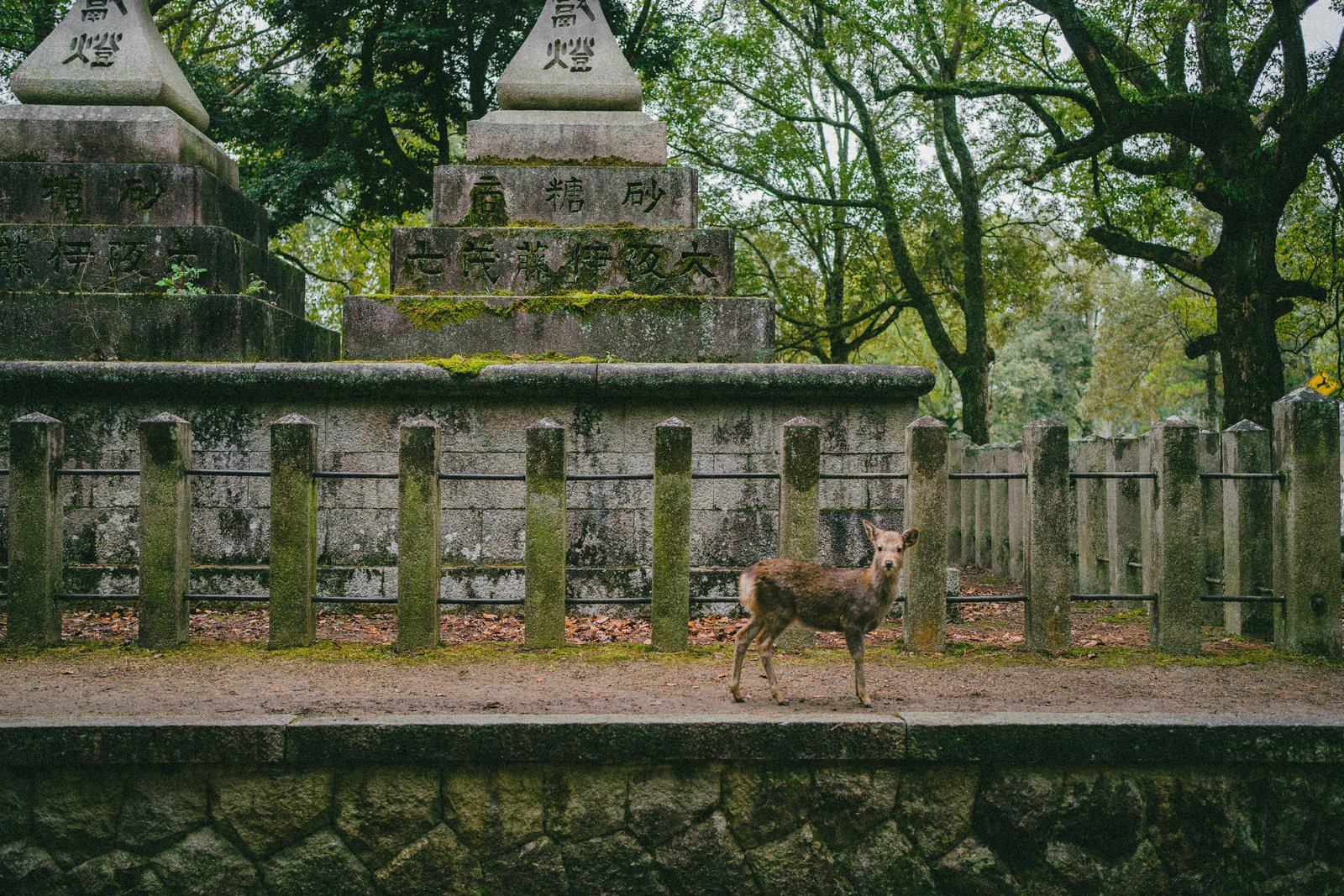
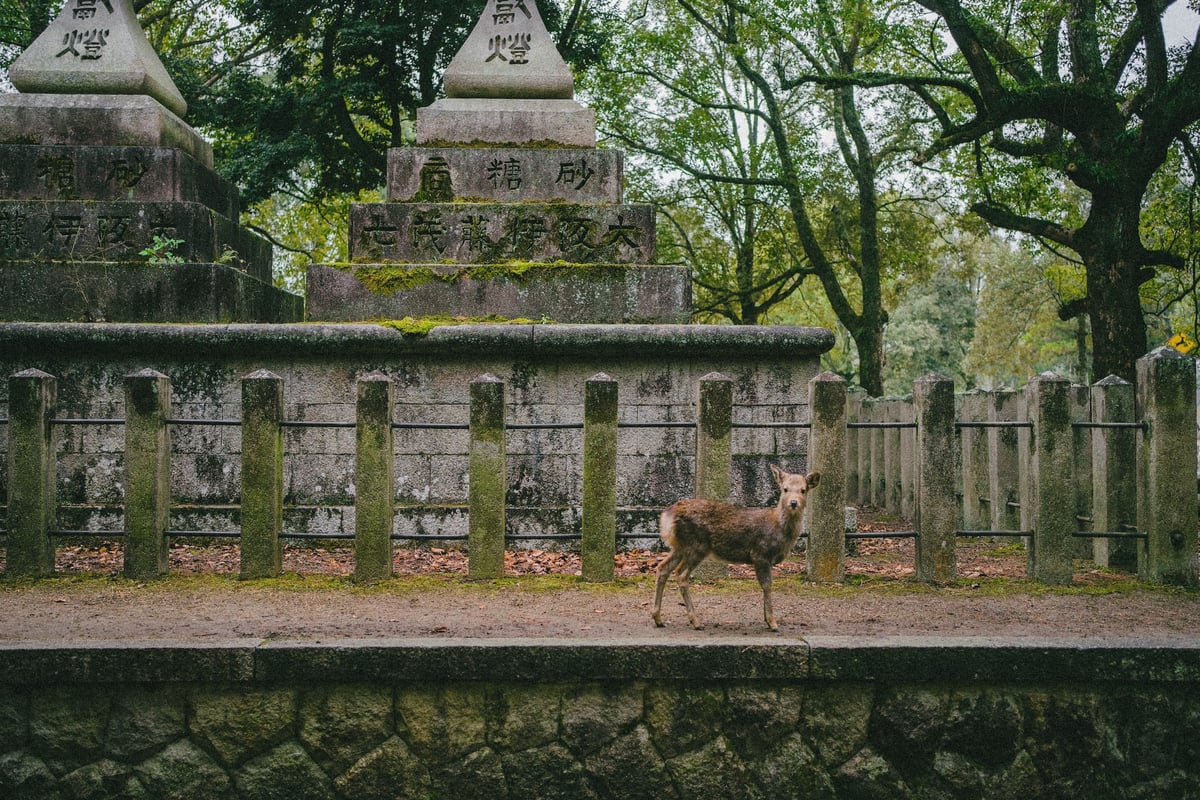
Nara's most beloved attraction is its free-roaming deer, which wander the large central park and are considered sacred messengers of the gods. You can buy special deer crackers (shika senbei) from vendors to feed them, and many of the deer have famously learned to bow in exchange for a treat. They're wild animals, so be gentle and follow the posted guidance — they can get pushy when they smell crackers — but interacting with them is a genuine highlight, especially for families and kids.
Map: Kyoto, Nara.
Todai-ji and the Great Buddha
Todai-ji is Nara's crowning sight — a vast wooden temple housing an enormous bronze Buddha (Daibutsu), one of the largest in Japan, seated over 15 meters tall. The main hall is itself one of the largest wooden buildings in the world, and the scale of both hall and statue is genuinely awe-inspiring. It's an easy, pleasant walk through the deer park to reach it, and it's the centerpiece of any Nara visit. Look for the "Buddha's nostril" pillar with a hole said to grant good fortune to those who can squeeze through.
More to see
Kasuga Taisha: a beautiful, atmospheric shrine famous for its hundreds of bronze and stone lanterns, set in the forest at the edge of the park.
Kofuku-ji: a historic temple near the park, one of Nara's most important. Note that its landmark five-story pagoda is currently undergoing major restoration and is covered by scaffolding (and not visible) until around 2034 — but the temple's National Treasure Museum and other halls remain well worth seeing.
Nara Park itself: lovely for a relaxed stroll, with grassy expanses, woodland, and ponds.
Naramachi: a preserved old merchant district of traditional machiya houses, now full of shops, cafes, and small museums.
Where to eat
Naramachi's cafes and small restaurants are the best bet for a sit-down meal — look for kakinoha-zushi (sushi wrapped in persimmon leaves), a Nara specialty that traveled well before refrigeration and is still a signature regional dish. Nara is also known for producing narazuke, vegetables pickled in sake lees with a distinctive sharp flavor — a good, portable souvenir if you want to bring a taste of the trip home.
How to do it
Nara is the easiest and closest of the Kansai day trips, reachable in well under an hour by train from Kyoto or Osaka — the JR Nara Line runs direct from Kyoto Station in about 45 minutes, and the Kintetsu Nara Line from Osaka's Namba Station in a similar window, with the Kintetsu-Nara Station actually closer to the park than the JR one. Slotting an easy day like this alongside a longer or more demanding one elsewhere is part of pacing a trip well, something Japan, Worked Out gets into. Most of the main sights are clustered around Nara Park within easy walking distance of one another, so it's a low-stress, mostly on-foot day. A half-day covers the highlights (deer, Todai-ji, a shrine or two); a full day lets you add Naramachi and explore at a relaxed pace.
Start in the morning to enjoy the park before it gets busy and the deer are most active.
Buy deer crackers from official vendors, and don't feed the deer other food; keep maps, tickets, and snacks tucked away, as the deer will nibble at bags and paper.
Be calm and gentle around the deer — bow back to them for a fun interaction, but supervise small children.
Wear comfortable shoes; it's a walkable but spread-out park with some gentle hills toward Kasuga Taisha.
Most sights are close together, so you'll need little transport once you arrive — though a bus helps reach the park from JR Nara Station, since it's a longer walk than from the Kintetsu station.
If you're coming from Kyoto and holding a JR Pass, the JR Nara Line makes sense even though it's the slightly longer walk; if you're not pass-holding or coming from Osaka, the Kintetsu line's proximity to the park often wins out.
Bottom line
For history, a giant Buddha, and the simple joy of bowing deer, Nara is an easy and rewarding day trip that almost every first-timer loves. If you have a spare day from Kyoto or Osaka, it's the one to choose — just plan around the pagoda being under wraps for now (scaffolding is expected to stay up until around 2034), and let the deer and the Daibutsu steal the show.
FAQ
What are the deer of Nara Park?
Nara's most beloved attraction is its free-roaming deer, which wander the large central park and are considered sacred messengers of the gods. You can buy special deer crackers (shika senbei) from vendors to feed them, and many of the deer have famously learned to bow in exchange for a treat. They're wild animals, so be gentle and…
What is Todai-ji?
Todai-ji is Nara's crowning sight — a vast wooden temple housing an enormous bronze Buddha (Daibutsu), one of the largest in Japan, seated over 15 meters tall. The main hall is itself one of the largest wooden buildings in the world, and the scale of both hall and statue is genuinely awe-inspiring. It's an easy, pleasant walk through…
Where should you eat in Nara?
Naramachi's cafes and small restaurants are the best bet for a sit-down meal — look for kakinoha-zushi (sushi wrapped in persimmon leaves), a Nara specialty that traveled well before refrigeration and is still a signature regional dish. Nara is also known for producing narazuke, vegetables pickled in sake lees with a distinctive sharp…