Affiliate disclosure: this guide contains affiliate links. If you book through them we may earn a commission, at no extra cost to you.
Hakone is the go-to mountain and hot-spring escape from Tokyo, famous for its onsen, dramatic volcanic scenery, and — on clear days — postcard views of Mt Fuji. It's close enough for a day trip, though an overnight in a ryokan makes it even better. Part of its charm is that getting around is an experience in itself: a loop of scenic mountain transport that strings the sights together. Here's how to do it.
What makes Hakone special
Hakone combines several attractions into one compact, scenic area: natural hot springs (onsen), steaming volcanic valleys, a beautiful lake, world-class art museums, and Mt Fuji views. It's long been a favorite weekend retreat for Tokyoites, and for visitors it delivers a concentrated dose of mountain Japan within easy reach of the capital.
Map: Tokyo, Hakone.
The classic Hakone loop
A typical day strings together a series of charming transport modes — itself the highlight for many:
Hakone Tozan mountain railway that switchbacks up the forested hillside.
Hakone Ropeway (cable car) gliding over Owakudani, a steaming, sulphurous volcanic valley where you can try the famous black eggs (kuro-tamago) cooked in the hot springs — said to add years to your life.
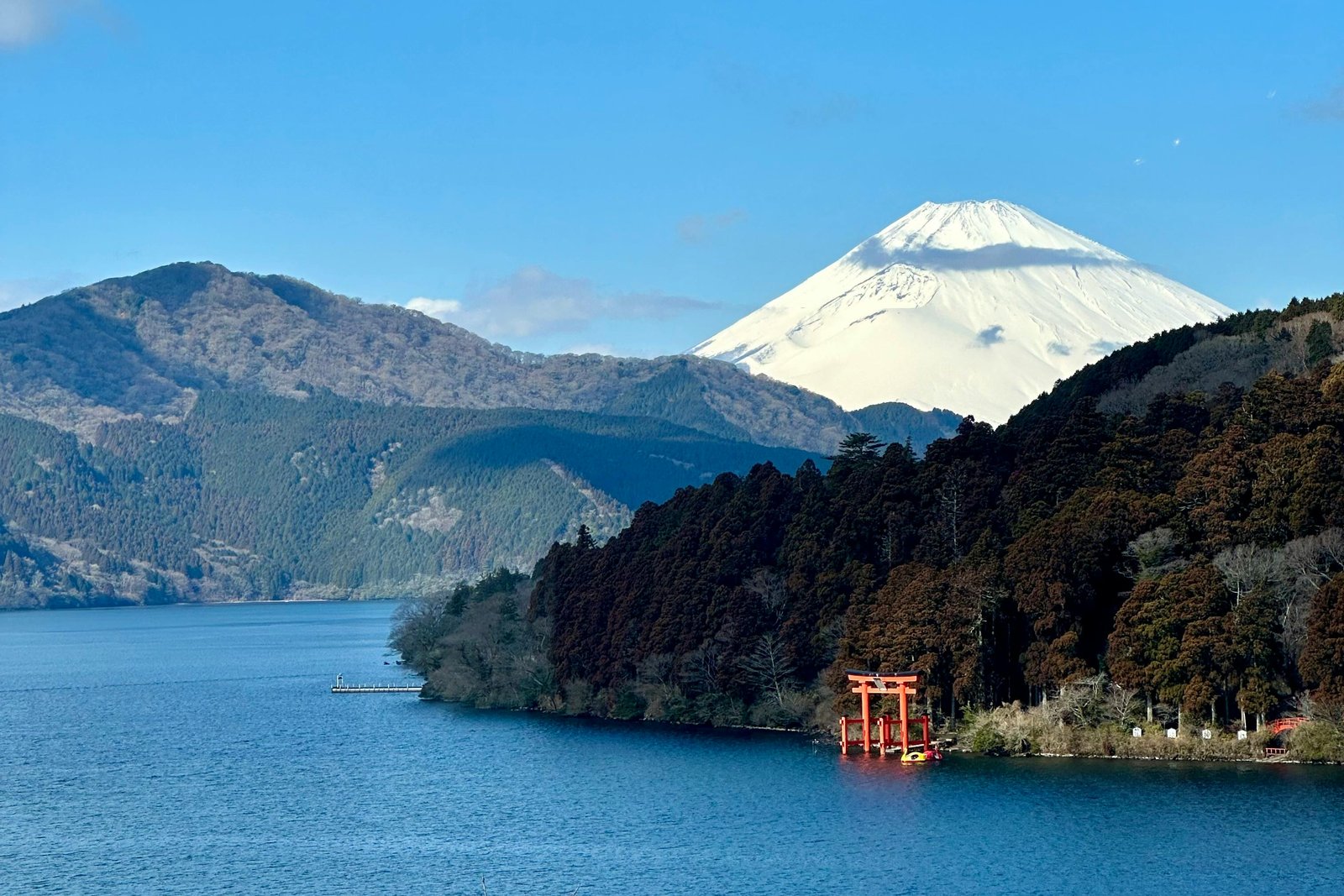
Sightseeing boat (often pirate-ship themed) across scenic Lake Ashi, with Mt Fuji views on clear days.
Buses and a cable car connecting the pieces into a full loop.
The Hakone Free Pass covers this transport for a set number of days and saves both money and hassle if you're doing the full circuit.
Getting there
The most comfortable way in is the Odakyu Romancecar, a reserved-seat limited express running direct from Tokyo's Shinjuku Station to Hakone-Yumoto (the loop's starting point) in about 85 minutes — worth booking the seat in advance on busy weekends. It's a separate ticket from the Hakone Free Pass, though combined tickets bundling both are commonly sold at Shinjuku's Odakyu ticket counters and are usually the best value if you're doing the full loop.
Highlights to add
Soak in an onsen — the whole point of Hakone for many; numerous ryokan and day-use bathhouses are available, some with Fuji or valley views.
Hakone Open-Air Museum — a celebrated sculpture park blending modern art with mountain scenery, with a notable Picasso collection.
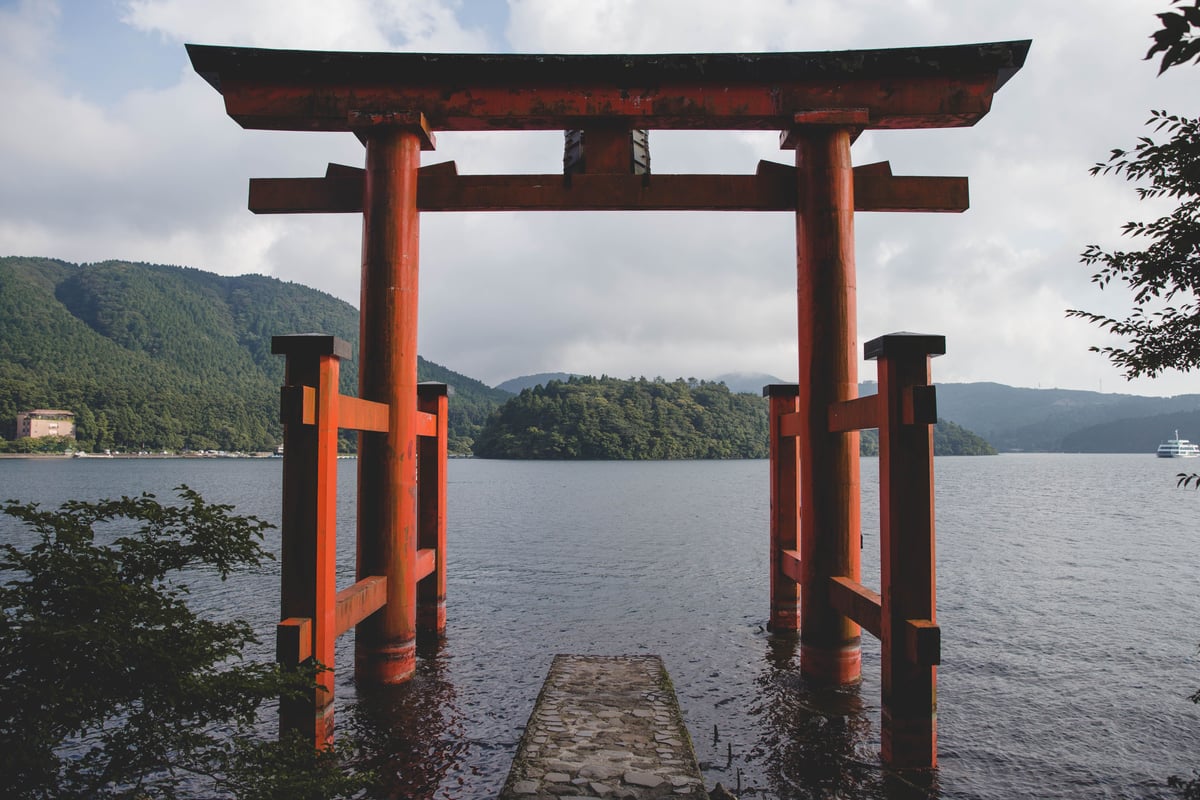
Hakone Shrine — with its iconic red torii gate standing in the waters of Lake Ashi, one of the area's most photographed spots.
Owakudani — the dramatic volcanic valley, its black eggs, and views.
Day trip or overnight?
Hakone is doable as a day trip from Tokyo, especially if you focus on the scenic loop and a day-use onsen. But to truly relax — and to maximize your Fuji-viewing chances across both evening and morning — an overnight ryokan stay is wonderful, with a kaiseki dinner and a soak under the stars. If your schedule allows, one night in a Hakone onsen ryokan is a trip highlight in itself. Hakone isn't the only choice, either: onsen towns near Tokyo and Kyoto let you add a hot-spring night on whichever side of your route suits you.
Mt Fuji is famously shy, often hidden by cloud. To improve your odds, check the weather forecast and aim for a clear day; mornings and the colder, clearer months (late autumn through winter) tend to offer the best visibility. Don't count on the view — but when it appears across Lake Ashi, it's unforgettable. Hakone is also just one of several places on a Tokyo-based trip that promise a Fuji glimpse (the Shinkansen and some Tokyo skyscraper observation decks are others on a clear day), so if it clouds over here, you're not necessarily out of chances — deciding how much of your itinerary to build around chasing the mountain is exactly the kind of trade-off Japan, Worked Out weighs in.
Practical notes
Start early to fit the full loop into a day — it takes several hours to complete.
Consider the Hakone Free Pass for the railways, ropeway, cable car, and boat.
Bring layers — it's noticeably cooler in the mountains than in Tokyo.
Occasionally the ropeway over Owakudani closes due to volcanic activity; check on the day, as there are bus alternatives.
Guided tours exist if you'd rather not navigate the connections yourself.
Try more than the eggs — Hakone-Yumoto's main street has plenty of soba noodle shops and yosegi-zaiku (marquetry woodwork) souvenir stores worth a browse while you wait for a train or bus connection — yosegi-zaiku dates to the Edo period and uses only the natural colors of different woods, no paint or stain, to build its intricate geometric patterns.
Bottom line
Hakone packs hot springs, volcanic drama, lake scenery, art, and Mt Fuji into one scenic loop within easy reach of Tokyo. Do it as a full day or, ideally, an overnight ryokan stay — and hope for clear skies to catch Fuji across the lake, though even a cloudy day here is still a genuinely good day out.
FAQ
What makes Hakone worth a day trip?
Hakone combines several attractions into one compact, scenic area: natural hot springs (onsen), steaming volcanic valleys, a beautiful lake, world-class art museums, and Mt Fuji views. It's long been a favorite weekend retreat for Tokyoites, and for visitors it delivers a concentrated dose of mountain Japan within easy reach of the capital.
What is the classic Hakone loop?
A typical day strings together a series of charming transport modes — itself the highlight for many:
Hakone Tozan mountain railway that switchbacks up the forested hillside.
Hakone Ropeway (cable car) gliding over Owakudani, a steaming, sulphurous volcanic valley where you can try the famous black eggs (kuro-tamago) cooked in the hot springs — said to add years to your life.
Sightseeing boat (often pirate-ship themed) across scenic Lake Ashi, with Mt Fuji views on clear days.
Buses and a cable car connecting the pieces into a full loop.
How do you get to Hakone from Tokyo?
The most comfortable way in is the Odakyu Romancecar, a reserved-seat limited express running direct from Tokyo's Shinjuku Station to Hakone-Yumoto (the loop's starting point) in about 85 minutes — worth booking the seat in advance on busy weekends. It's a separate ticket from the Hakone Free Pass, though combined tickets bundling…