Affiliate disclosure: this guide contains affiliate links. If you book through them we may earn a commission, at no extra cost to you.
Fushimi Inari Taisha in Kyoto is one of Japan's most iconic and photographed sights — a shrine famous for its thousands of vermilion torii gates forming glowing tunnels up a wooded mountainside. Walking through them is an unforgettable experience, and one of the defining images of a trip to Japan. Here's how to make the most of a visit.
What makes it special
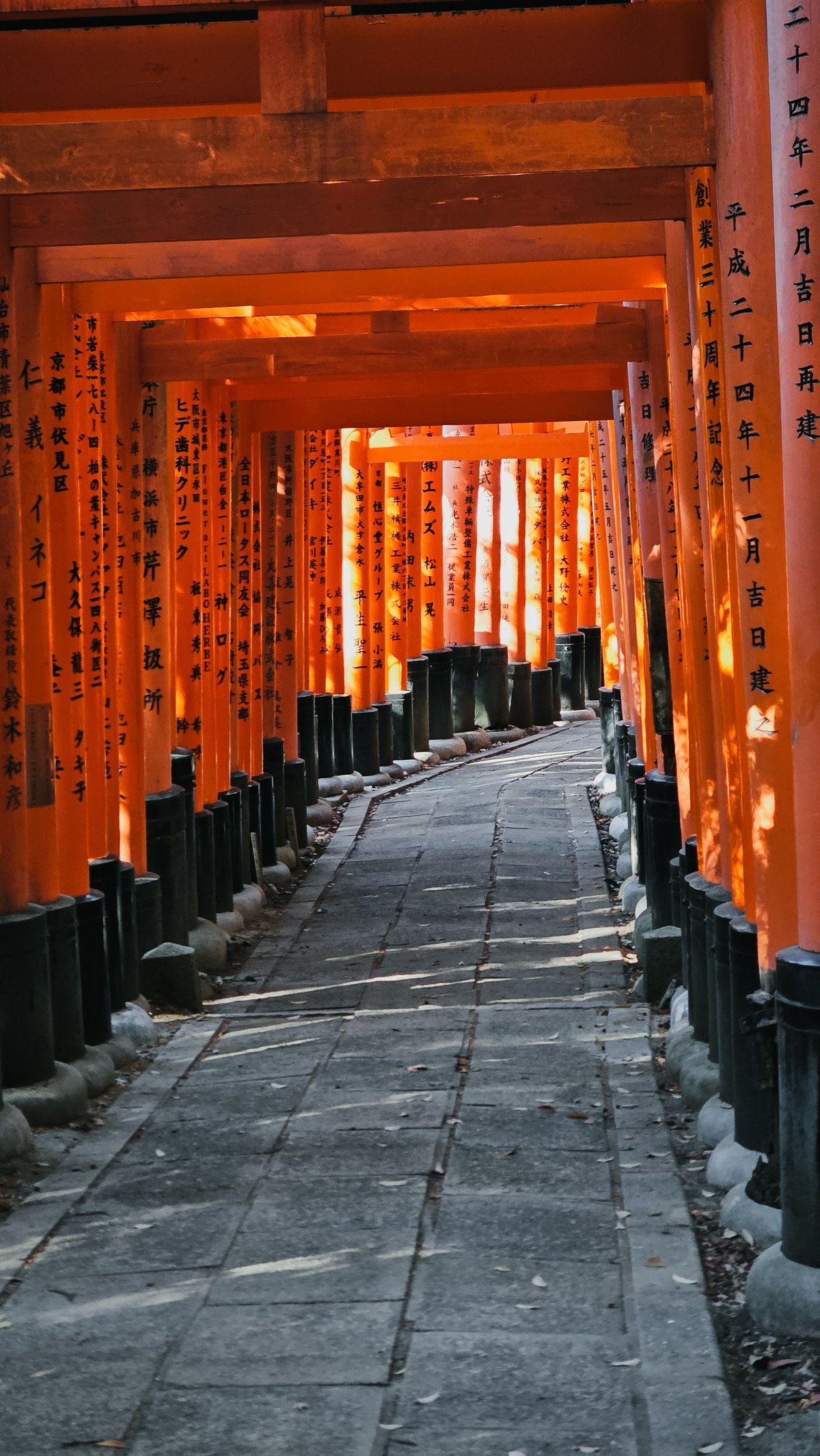
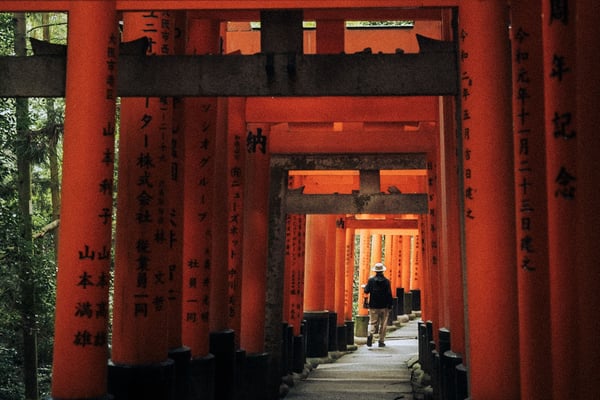
Fushimi Inari is the head shrine of Inari, the Shinto deity of rice, prosperity, and business — which is why companies and individuals have donated the gates over the years, each inscribed with the donor's name. The result is roughly 10,000 torii gates in total across the mountain, winding in bright orange-red tunnels up the slopes — the famous "Senbon Torii" ("thousand gates") stretch near the base is actually just one section, named long before anyone counted the full number. The effect of walking beneath them, the light filtering through, is mesmerizing and unlike anywhere else. Throughout the grounds you'll also see statues of foxes, regarded as Inari's messengers, often holding a key or a sheaf of rice in their mouths. The shrine dates back over a thousand years, and its atmosphere blends the sacred and the spectacular.
Two stops south of Kyoto Station: Fushimi Inari · Kyoto. (Enable JavaScript for the interactive map.)
The hike up the mountain
The full trail climbs Mt Inari and takes roughly two to three hours round trip, passing through gate corridors, dozens of smaller sub-shrines, mossy stone foxes, and viewpoints over Kyoto. The most famous and densest stretch of gates — the Senbon Torii ("thousands of gates") — comes early, splitting into two parallel tunnels not far above the main shrine buildings. You do not have to do the whole climb: many visitors go as far as the Yotsutsuji intersection partway up, which offers a fine city view, then turn back. Go as far as your time and energy allow; the higher you climb, the thinner the crowds become, and the upper reaches are peaceful even when the base is packed.
When to go
Fushimi Inari is extremely popular, so timing makes a big difference. Visit early in the morning (it's one of the best dawn experiences in Kyoto) or later in the evening to experience the gates with fewer people — the shrine is open and accessible at all hours, and parts of the path are lit after dark, giving an atmospheric, almost mystical feel. Midday, especially in the lower sections, can be shoulder-to-shoulder. It's also completely free to enter, with no closing time for the grounds, which is part of why early and late visits are so rewarding.
Wear comfortable shoes — the mountain trail is a real hike with many steps and uneven stone paths.
Bring water, especially in warm weather; there are some vending machines and small shops partway up, but prices climb with the altitude.
Go early to beat both the crowds and the summer heat and humidity.
Allow at least an hour even for a partial visit, or half a day for the full summit loop.
There are small restaurants near the base serving Inari-themed dishes like kitsune udon and inari-zushi (sweet tofu-wrapped sushi).
Getting there and combining your day
Fushimi Inari is on the southeastern side of Kyoto and is very easy to reach by train — it sits right beside its own station, just a few minutes from Kyoto Station, so it's often the first or last stop of a day. It pairs naturally with a day exploring the eastern Higashiyama district and Kiyomizu-dera, since they're on the same side of the city. A classic plan is to start at Fushimi Inari at dawn, then work north through the eastern sights, ending in Gion as evening falls.
Etiquette
As an active Shinto shrine, a few courtesies apply: bow slightly when passing through the large entrance torii, and avoid blocking the gate tunnels for long photo sessions when it's busy — step to the side so others can pass. At the main hall you can make a small offering and pray (two bows, two claps, one bow). Be respectful of worshippers, and keep your voice down in the quieter upper reaches.
Why the gates keep multiplying
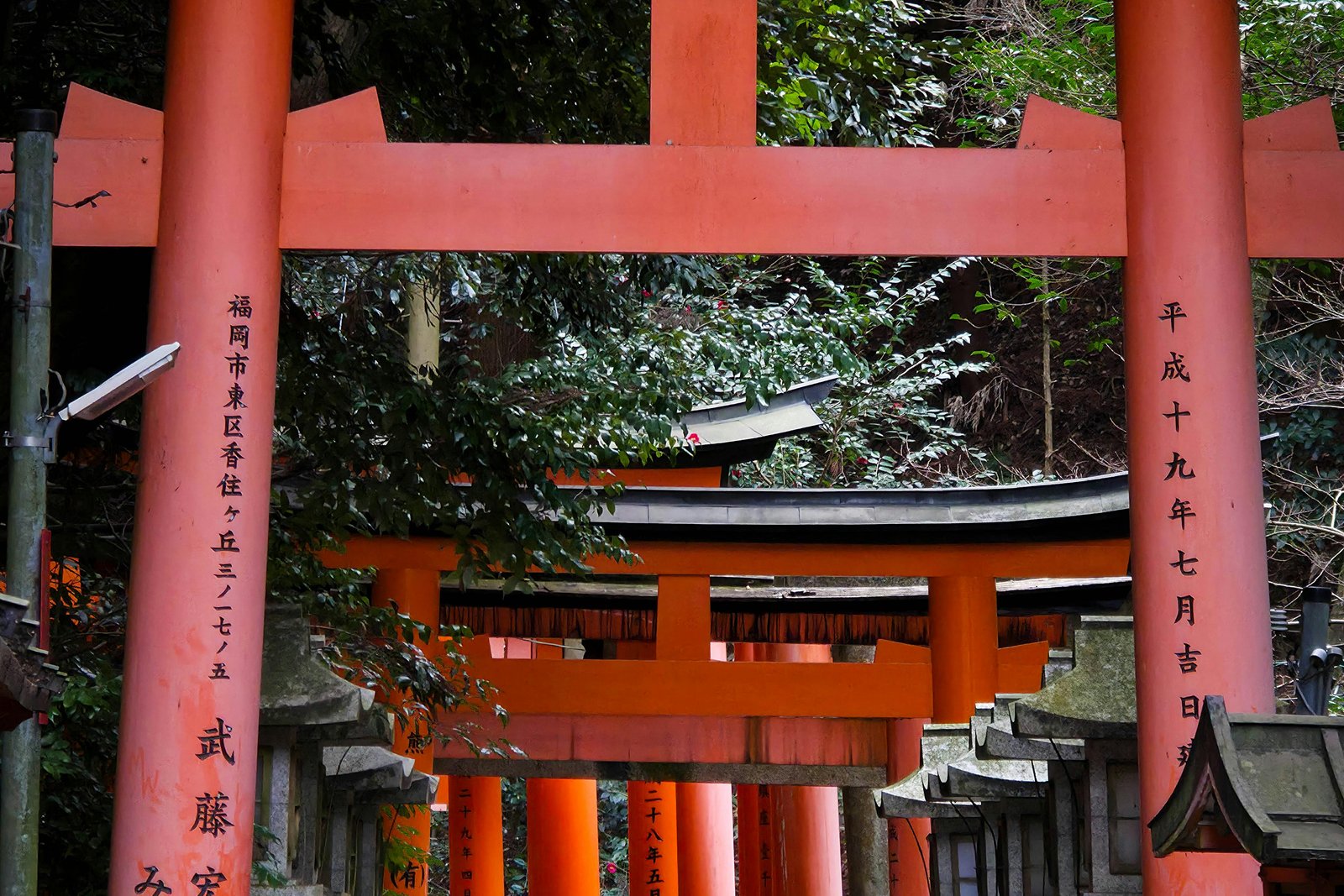
Each torii is a private donation, not a fixed historical installation — businesses and individuals sponsor a gate (roughly $2,500 for a small one, upwards of $15,000 for a large one) as an offering for prosperity, and the donor's name and the date are inscribed in black down the back of the post. That's why the count keeps growing gate by gate rather than being a fixed number from some point in history, and why walking through slowly and reading a few inscriptions adds a layer most visitors rushing to the next photo spot miss entirely.
Bottom line
The torii-gate tunnels of Fushimi Inari are a quintessential Japan experience and a first-trip essential. Go early or late to avoid the crush, walk as far up the mountain as you like, wear good shoes, and enjoy one of the country's most magical sights — entirely for free, at any hour you choose.
FAQ
What makes Fushimi Inari special?
Fushimi Inari is the head shrine of Inari, the Shinto deity of rice, prosperity, and business — which is why companies and individuals have donated the gates over the years, each inscribed with the donor's name. The result is roughly 10,000 torii gates in total across the mountain, winding in bright orange-red tunnels up the slopes —…
How long does the Fushimi Inari hike take?
The full trail climbs Mt Inari and takes roughly two to three hours round trip, passing through gate corridors, dozens of smaller sub-shrines, mossy stone foxes, and viewpoints over Kyoto. The most famous and densest stretch of gates — the Senbon Torii ("thousands of gates") — comes early, splitting into two parallel tunnels not far…
When is the best time to visit Fushimi Inari?
Fushimi Inari is extremely popular, so timing makes a big difference. Visit early in the morning (it's one of the best dawn experiences in Kyoto) or later in the evening to experience the gates with fewer people — the shrine is open and accessible at all hours, and parts of the path are lit after dark, giving an atmospheric, almost…
Keep planning
Not sure how it all fits together?
Pick your trip length and we’ll route a real day-by-day plan.