Affiliate disclosure: this guide contains affiliate links. If you book through them we may earn a commission, at no extra cost to you.
Sushi in Japan is a genuine revelation — fresher, more varied, and often far cheaper than what you may know from home, available everywhere from fun conveyor-belt spots to hushed master's counters. For beginners the types and etiquette can feel daunting, but the essentials are simple. Here's how to understand, order, and enjoy sushi like you know what you're doing.
Know the basic types
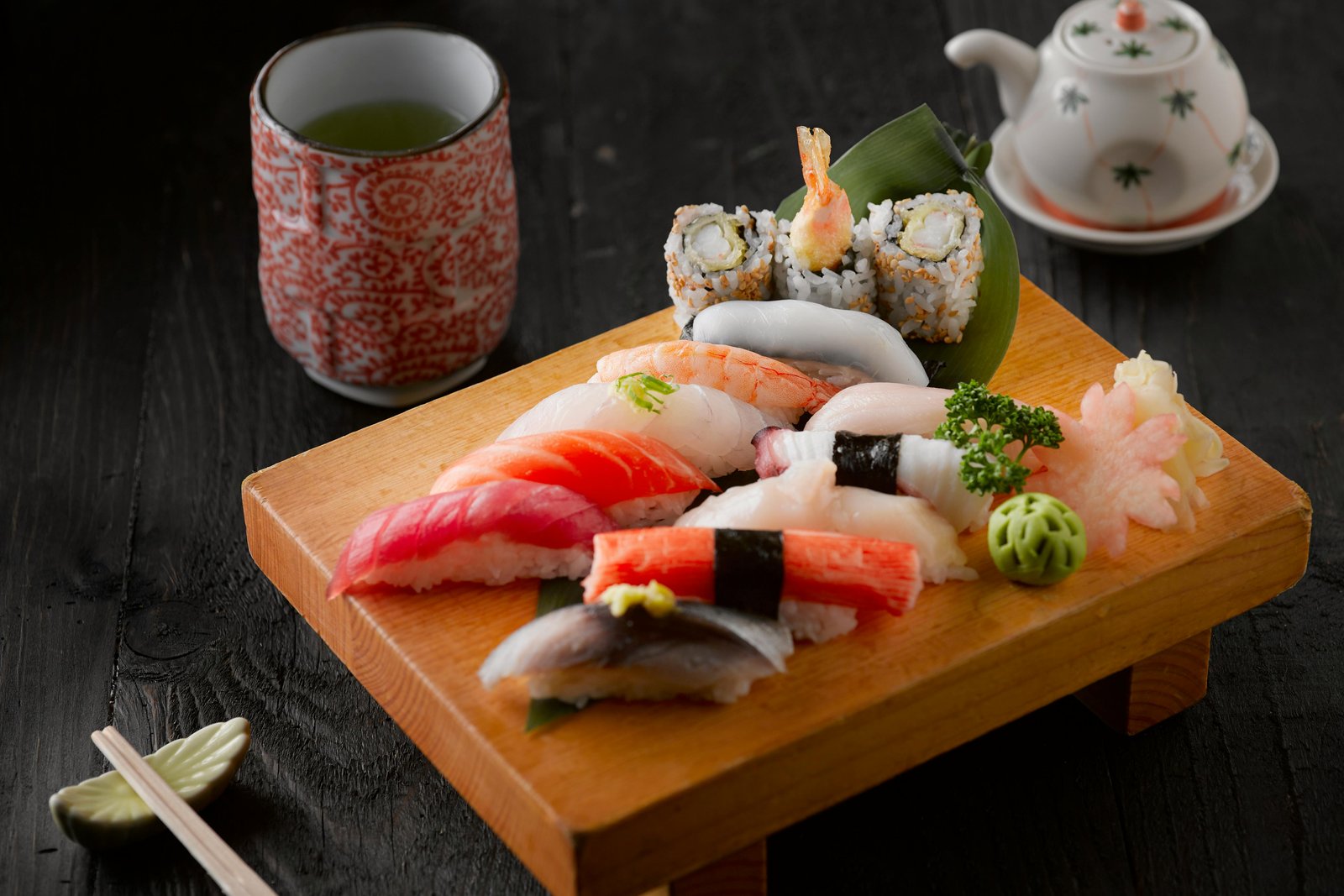
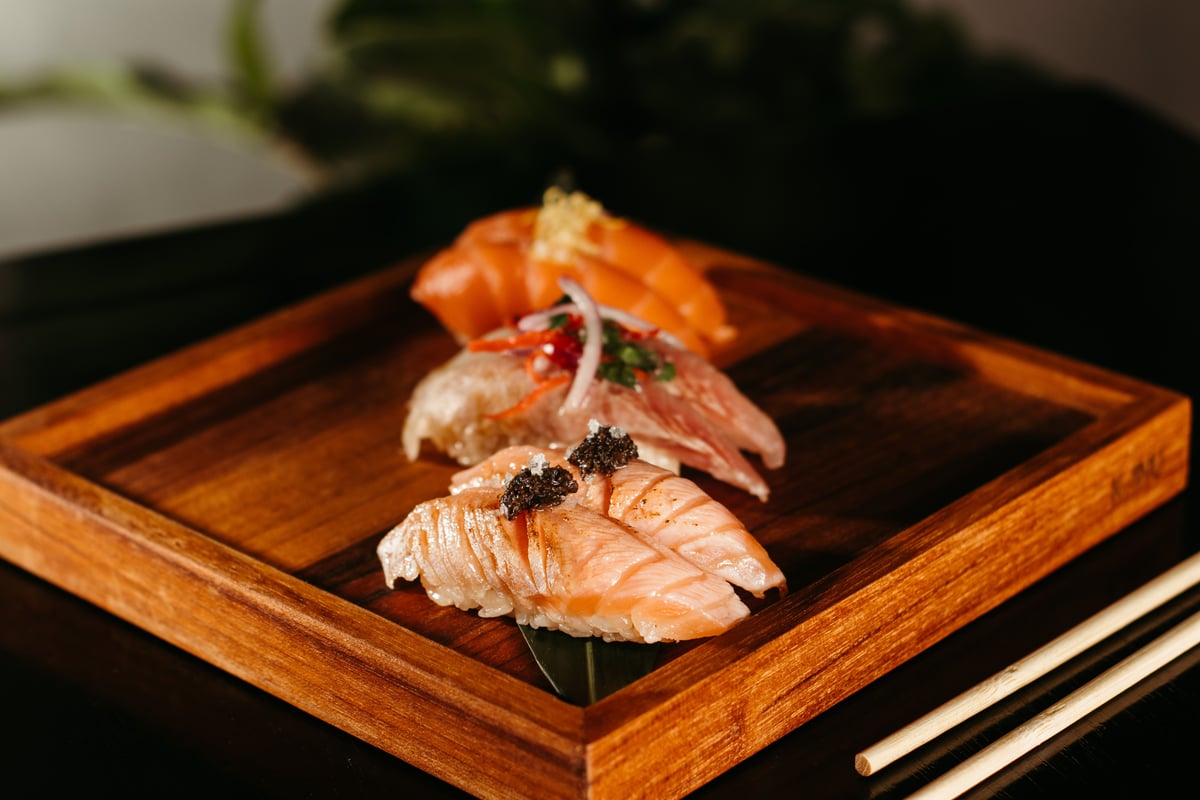
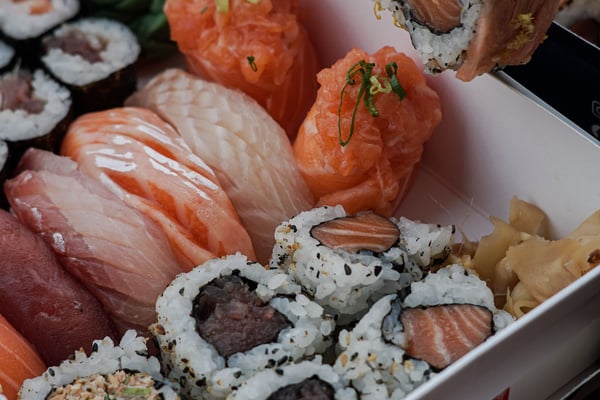
Nigiri: a slice of fish (or other topping) pressed over a small mound of vinegared rice — the classic, and the heart of a sushi meal.
Maki: rolled sushi with rice and fillings wrapped in seaweed, cut into pieces.
Sashimi: slices of raw fish served without rice (technically not sushi, but often eaten alongside).
Gunkan: "battleship" sushi, a seaweed wrap holding soft toppings like fish roe or sea urchin.
Temaki: hand-rolled cones of seaweed, rice, and fillings.
Chirashi: a bowl of sushi rice scattered with assorted toppings — a great value choice.
Common toppings include tuna (maguro), fatty tuna (toro), salmon (sake), shrimp (ebi), eel (unagi), squid (ika), scallop (hotate), egg (tamago), and many seasonal fish.
Where to eat sushi
Conveyor-belt sushi (kaiten-zushi)
Fun, cheap, and the most beginner-friendly option: plates circulate on a belt (or arrive by touchscreen order and express lane), color-coded by price. Grab what looks good or order from a tablet, and stack your plates to be tallied at the end. Great for families, the budget-conscious, and a low-pressure way to try lots of types. Quality at the better chains is genuinely good.
Standard sushi restaurants
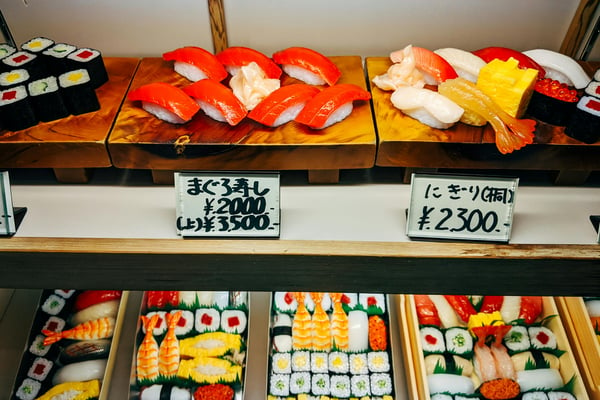
Mid-range neighborhood spots offer sets and à la carte ordering in a relaxed setting, often with picture menus — a comfortable middle ground between the belt and the high-end counter.
High-end sushi counters
For a special experience, an omakase ("I'll leave it to you") meal at a counter is sublime — the chef serves pieces one at a time, at their peak, often with guidance on how to eat each. These can be expensive and frequently require reservations, but they're a culinary highlight and worth it once.
Nigiri can be eaten by hand or with chopsticks — both are perfectly acceptable.
Dip the fish side (not the rice) lightly in soy sauce — dipping the rice makes it fall apart and over-salts the piece.
Eat each piece in one bite if you can; it's designed that way.
Ginger (gari) is a palate cleanser between pieces, not a topping to pile on.
Use wasabi sparingly — good sushi is often already seasoned with the right amount by the chef, so taste before adding, and don't stir wasabi into your soy sauce at high-end places.
At an omakase counter, eat each piece promptly after it's served, while it's at its best.
Ordering tips
At conveyor spots, watch the color-coded plates for pricing and stack them for the final tally.
At counters, you can ask the chef for recommendations ("osusume?") or simply go omakase.
Green tea is usually free and self-serve (a powder dispenser plus a hot-water tap at your seat).
Order a few pieces at a time rather than everything at once, especially at a counter.
No tipping, as always.
Why the rice matters as much as the fish
Sushi obsessives will tell you the rice (shari), not the fish, is what actually separates a great sushi restaurant from a mediocre one — it's seasoned with a specific vinegar blend, held at a precise body-warm temperature, and pressed with just enough tension to hold together but fall apart the instant it hits your tongue. A skilled chef spends years — traditional apprenticeships can run five to ten — perfecting rice technique before being trusted with the fish at all. Tamago (sweet egg) is a related test of skill for a different reason: getting its heat control and texture right is notoriously difficult, so insiders often judge a sushi counter by how good its tamago is, not just its fish.
A note on freshness and safety
Japan's sushi is held to high standards, and eating raw fish here is very safe at reputable establishments — part of why it tastes so good. Seasonal fish are often the best value and flavor, so ask what's in season. If you're not keen on raw fish, there's plenty to enjoy: cooked eel, egg, shrimp, and various rolls and cooked toppings.
Bottom line
Whether you start with affordable conveyor-belt plates or splurge on an omakase counter, sushi in Japan is unmissable. Dip the fish not the rice, eat each piece in one bite, cleanse with ginger between types, go easy on the wasabi, and savor some of the freshest seafood you'll ever taste — at prices that, across most of the range from conveyor belt to counter, may pleasantly surprise you compared to sushi back home.
FAQ
What are the basic types of sushi?
Common toppings include tuna (maguro), fatty tuna (toro), salmon (sake), shrimp (ebi), eel (unagi), squid (ika), scallop (hotate), egg (tamago), and many seasonal fish.
Where should you eat sushi in Japan?
Fun, cheap, and the most beginner-friendly option: plates circulate on a belt (or arrive by touchscreen order and express lane), color-coded by price. Grab what looks good or order from a tablet, and stack your plates to be tallied at the end. Great for families, the budget-conscious, and a low-pressure way to try lots of types.…
Why does the rice matter as much as the fish?
Sushi obsessives will tell you the rice (shari), not the fish, is what actually separates a great sushi restaurant from a mediocre one — it's seasoned with a specific vinegar blend, held at a precise body-warm temperature, and pressed with just enough tension to hold together but fall apart the instant it hits your tongue. A skilled…
Keep planning
Not sure how it all fits together?
Pick your trip length and we’ll route a real day-by-day plan.