Affiliate disclosure: this guide contains affiliate links. If you book through them we may earn a commission, at no extra cost to you.
Japan offers lodging styles that go well beyond the standard hotel, and understanding them helps you pick the right mix for your trip — and even turn where you sleep into part of the experience. From efficient business hotels to centuries-old inns to futuristic sleeping pods, here's a rundown of the main types and who each one suits.
Western-style hotels
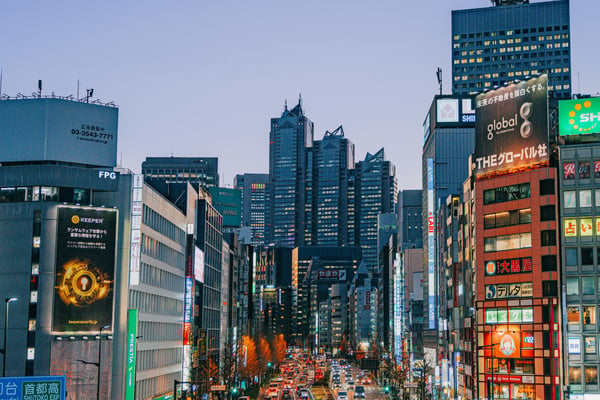
Familiar international and Japanese hotel brands operate across the cities, from luxury towers with skyline views to reliable mid-range chains. Rooms are comfortable and predictable, with English-speaking staff at larger properties, full amenities, and Western beds. They're the safe choice if you want zero surprises — especially welcome for your first night after a long flight, or for travelers who prefer the familiar. The trade-off is that they're often pricier than local equivalents and less distinctively "Japanese."
Business hotels
Business hotels are Japan's mid-range workhorse — compact, clean, efficient rooms at reasonable prices, almost always near train stations. Rooms run small by American standards but are thoughtfully designed, with everything you need (en-suite bathroom, often a little work desk, free WiFi, and amenities). Chains are found nationwide and are remarkably consistent. They're excellent value for travelers who'll be out exploring most of the day and just need a clean, convenient, comfortable base to sleep. For many first-timers doing a city-focused trip, business hotels are the practical default.
Ryokan
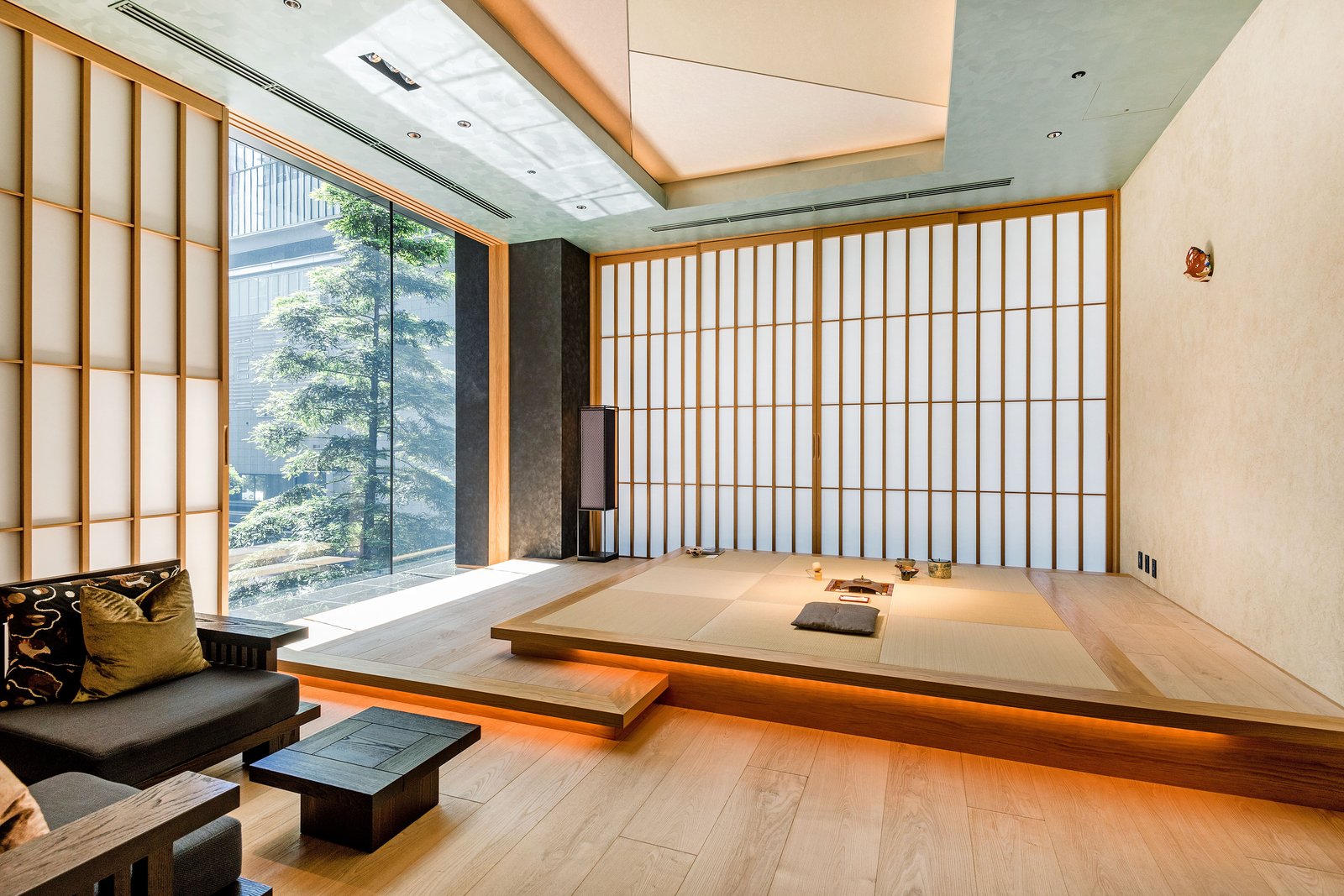
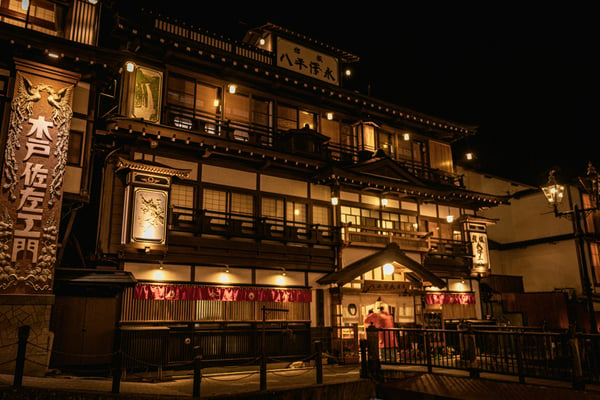
A ryokan is a traditional Japanese inn — tatami-mat floors, futon bedding laid out on the floor, sliding paper screens, often a shared or private hot-spring bath, and frequently a multi-course kaiseki dinner and breakfast included. Staying in one is a cultural experience in itself, not just a place to sleep, complete with yukata robes and traditional hospitality. They range from simple, affordable family-run inns to opulent luxury retreats. Worth doing for at least one night, ideally in an onsen town or in Kyoto, where the setting matches the culture.
A minshuku is a family-run guesthouse — a more casual, budget-friendly cousin of the ryokan, often with home-cooked meals and a warm personal touch, common in rural areas and small towns. Modern guesthouses and hostels are also widespread in the cities, ranging from basic dorms to stylish private rooms, popular with younger and budget travelers and a great way to meet people and get local tips. Both offer character and value, with shared facilities the main trade-off.
Capsule hotels
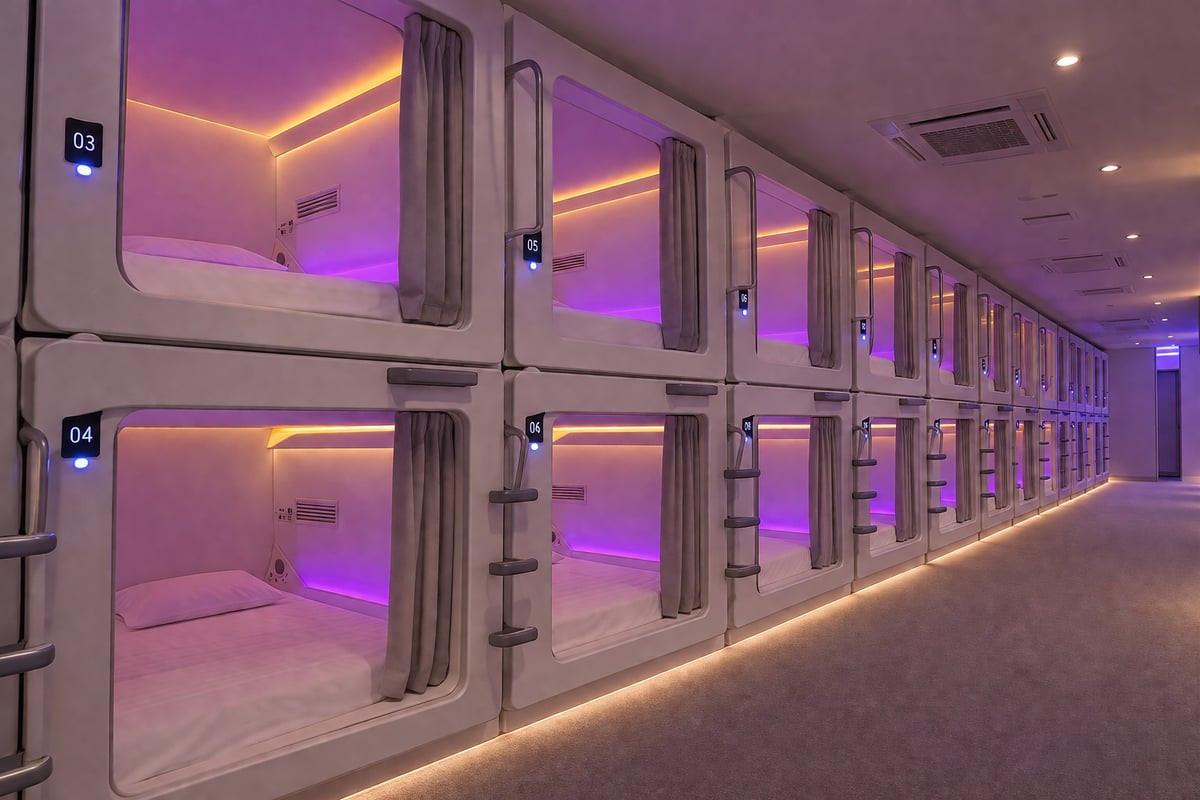
The famously Japanese capsule hotel offers a single sleeping pod — bed-sized, with a light, outlet, and sometimes a small TV — stacked in rows, with shared bathrooms, lounges, and lockers. They're inexpensive, surprisingly comfortable for a night, and a genuinely fun novelty, with modern "pod hotel" versions now quite stylish. The trade-offs: very little space (not for the claustrophobic), shared facilities, and that many are gender-separated. Great for a solo traveler, a budget night, or simply the experience.
Temple lodging (shukubo)
At some temples — particularly at Koyasan (Mount Koya), a sacred Buddhist mountain — you can stay overnight in temple lodging, sharing the monks' simple vegetarianshojin ryori meals and sometimes joining morning prayers or meditation. Rooms are typically traditional and tatami-floored, similar to a ryokan but more austere. It's a serene, contemplative, and unusual experience for travelers seeking something spiritual and off the beaten path.
Other options
Machiya: restored traditional wooden townhouses, especially in Kyoto, often rented as private accommodations — atmospheric and great for families or groups.
Vacation rentals (minpaku): available and regulated; handy for longer stays or groups, though rules vary.
Love hotels: short-stay hotels that also rent overnight, occasionally a quirky budget option.
Manga/internet cafes: technically not lodging, but a real (if spartan) option in a pinch — private reclining booths with a screen, rented by the hour, sometimes used as a cheap late-night crash spot after missing the last train.
What actually differs beyond the room
The bigger differences between these categories aren't just the bed — it's what's included and how much flexibility you get. A business hotel gives you total independence (come and go anytime, no set meal times) at the cost of character; a ryokan trades that flexibility for a fixed rhythm (set dinner, set breakfast, sometimes an early check-in cutoff) in exchange for an experience you can't get from a chain. Neither is "better" — matching the type to what a specific night of your trip actually needs is the real skill.
How to mix them
A common and rewarding approach for first-timers: business or Western hotels in the big cities for convenience and easy transit access, plus one or two nights in a ryokan — especially in an onsen town — for the traditional experience, and perhaps a capsule hotel or temple stay for novelty or budget. That blend gives you comfort and convenience where you need it and culture and memory where it counts. Whatever you choose, book early for cherry blossom and fall foliage season, when the best places of every type fill up fast.
Familiar international and Japanese hotel brands operate across the cities, from luxury towers with skyline views to reliable mid-range chains. Rooms are comfortable and predictable, with English-speaking staff at larger properties, full amenities, and Western beds. They're the safe choice if you want zero surprises — especially…
What is a Japanese business hotel?
Business hotels are Japan's mid-range workhorse — compact, clean, efficient rooms at reasonable prices, almost always near train stations. Rooms run small by American standards but are thoughtfully designed, with everything you need (en-suite bathroom, often a little work desk, free WiFi, and amenities). Chains are found nationwide…
What is a ryokan?
A ryokan is a traditional Japanese inn — tatami-mat floors, futon bedding laid out on the floor, sliding paper screens, often a shared or private hot-spring bath, and frequently a multi-course kaiseki dinner and breakfast included. Staying in one is a cultural experience in itself, not just a place to sleep, complete with yukata robes…
Keep planning
Not sure how it all fits together?
Pick your trip length and we’ll route a real day-by-day plan.