Japan's rail network is the gold standard, and for most American visitors it's the easiest, fastest, and most enjoyable way to get around — no rental car required. Bullet trains link the major cities at extraordinary speed, while IC cards make local transit effortless. Here's how the pieces fit together into one of the world's best transport systems.
The Shinkansen (bullet train)
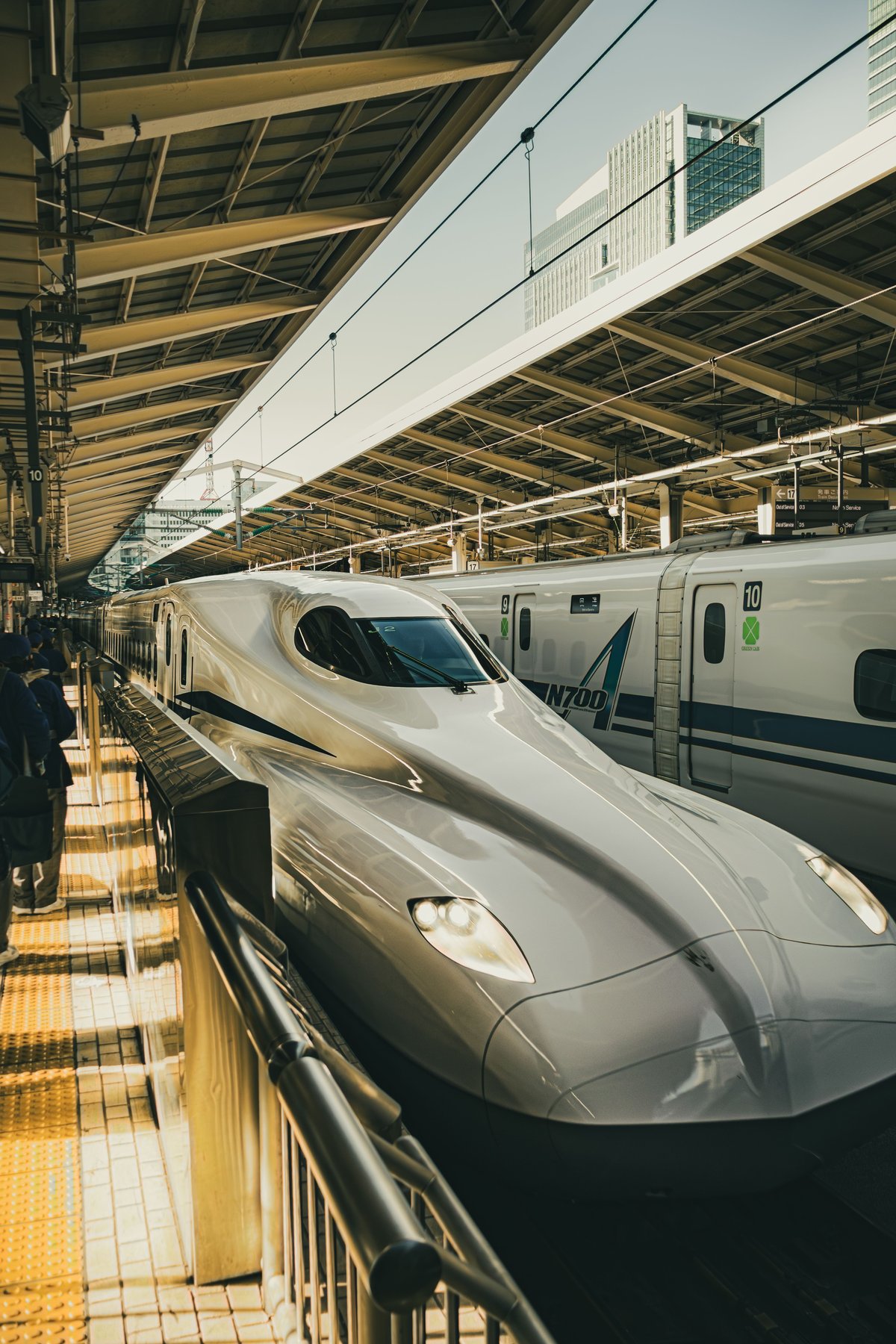
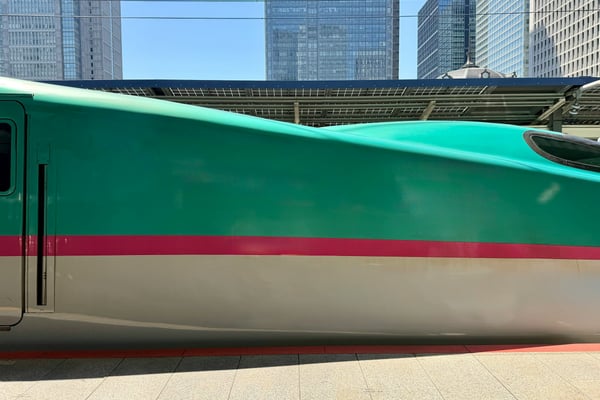
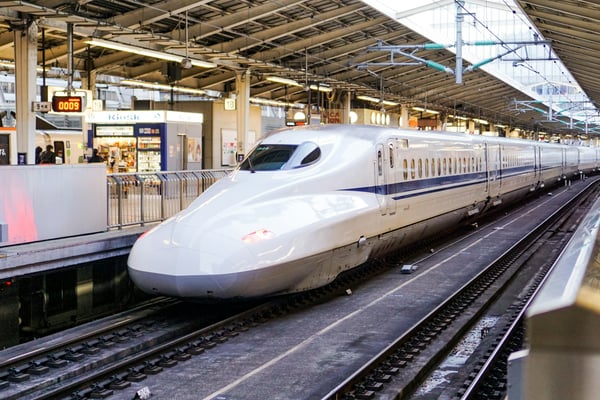
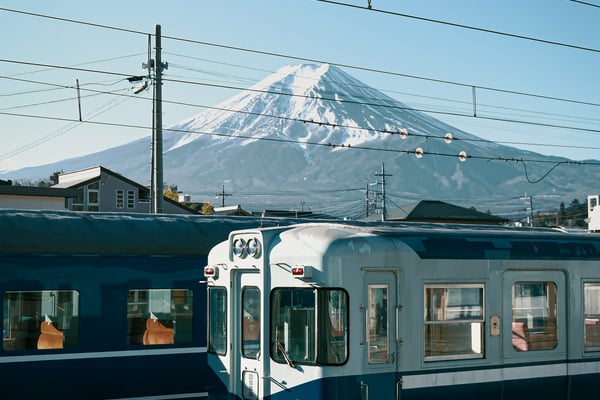
The Shinkansen is Japan's high-speed rail, and it's a genuine highlight of any trip. It's punctual to the minute, spotless, comfortable, and remarkably fast — the classic Tokyo to Kyoto run takes about 2 hours 15 to 2 hours 30 minutes, city center to city center, with none of the airport hassle of security and distant terminals. You buy a ticket (or use a rail pass), line up at your marked car number on the platform, and glide off exactly on time. Many travelers rate the ride itself — countryside and the occasional Mt Fuji view sliding past — as a bucket-list experience. Grab an ekiben (station bento) to enjoy on board.
The Shinkansen spine: Tokyo → Kyoto → Osaka → Hiroshima. (Enable JavaScript for the interactive map.)
Should you get a Japan Rail Pass?
The Japan Rail Pass gives unlimited travel on most JR trains, including many Shinkansen, for a set number of consecutive days. Whether it pays off comes down to your route — and since a major price increase (the nationwide 7-day pass is now around ¥50,000), it pays off less easily than it used to. A simple Tokyo–Kyoto round trip alone no longer covers the cost of a 7-day pass (that round trip runs roughly ¥28,000, only about half the pass price), so the pass makes sense mainly if you're doing a lot of long-distance JR travel — say a wider multi-city loop adding Hiroshima or beyond. For a trip that stays mostly in one city, or the classic Tokyo-plus-Kyoto route with a single round trip, individual tickets are usually cheaper. Price your specific itinerary against the current pass cost before deciding, and consider regional passes too; both the pass and fares change over time (overseas prices rise again in October 2026).
IC cards for local transit
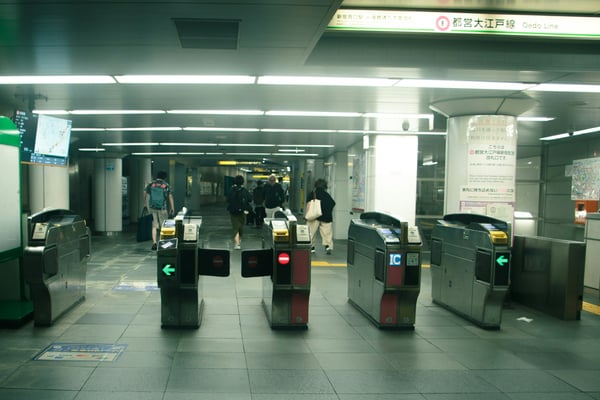
Within cities, you'll rely on an IC card — Suica, Pasmo, or the Kansai ICOCA — a rechargeable tap card for subways, local trains, and buses. Just tap in and tap out; no need to figure out fares in advance. You can also use it to buy things at convenience stores and vending machines. Pick one up at any station machine when you arrive (they're easy to buy again now that the past production shortage has ended). In Tokyo, the JR Yamanote line loop plus the Tokyo Metro covers most of what you'll want to see. Note the card covers ordinary local trains, not the Shinkansen or limited-express airport trains, which need separate tickets.
Other ways to travel
Buses
Long-distance highway buses are reliable and cheaper than the train, though slower — a reasonable option for budget travelers or overnight routes that save a night's accommodation. Cities also have extensive local bus networks; in Kyoto especially, buses are a primary way to reach the temples, and your IC card works on them.
Domestic flights
For long distances — reaching the far north (Hokkaido) or south (Kyushu, Okinawa) — domestic flights are efficient, and low-cost carriers can be very cheap if booked ahead. For the core Tokyo–Kyoto corridor, though, the Shinkansen usually wins on total convenience once you factor in airport time.
Taxis and ride-hailing
Taxis are clean, safe, and metered, but expensive. Ride-hailing apps exist in big cities but largely just hail regular metered taxis rather than offering the cheaper rides Americans may expect — fine for a late night after the trains stop, not for everyday transport.
Do you need to rent a car?
For a typical Tokyo–Kyoto trip, no. Japan is rail-centric and city driving is more hassle than help, with expensive, scarce parking. If you do rent — usually only worthwhile for rural regions trains don't reach well — note that Japan drives on the left, you'll need an International Driving Permit (obtained in your home country before you arrive) alongside your home license, and drink-driving limits are zero-tolerance and strict. Confirm the current IDP and alcohol rules before relying on a car.
Reading the timetable and platform signs
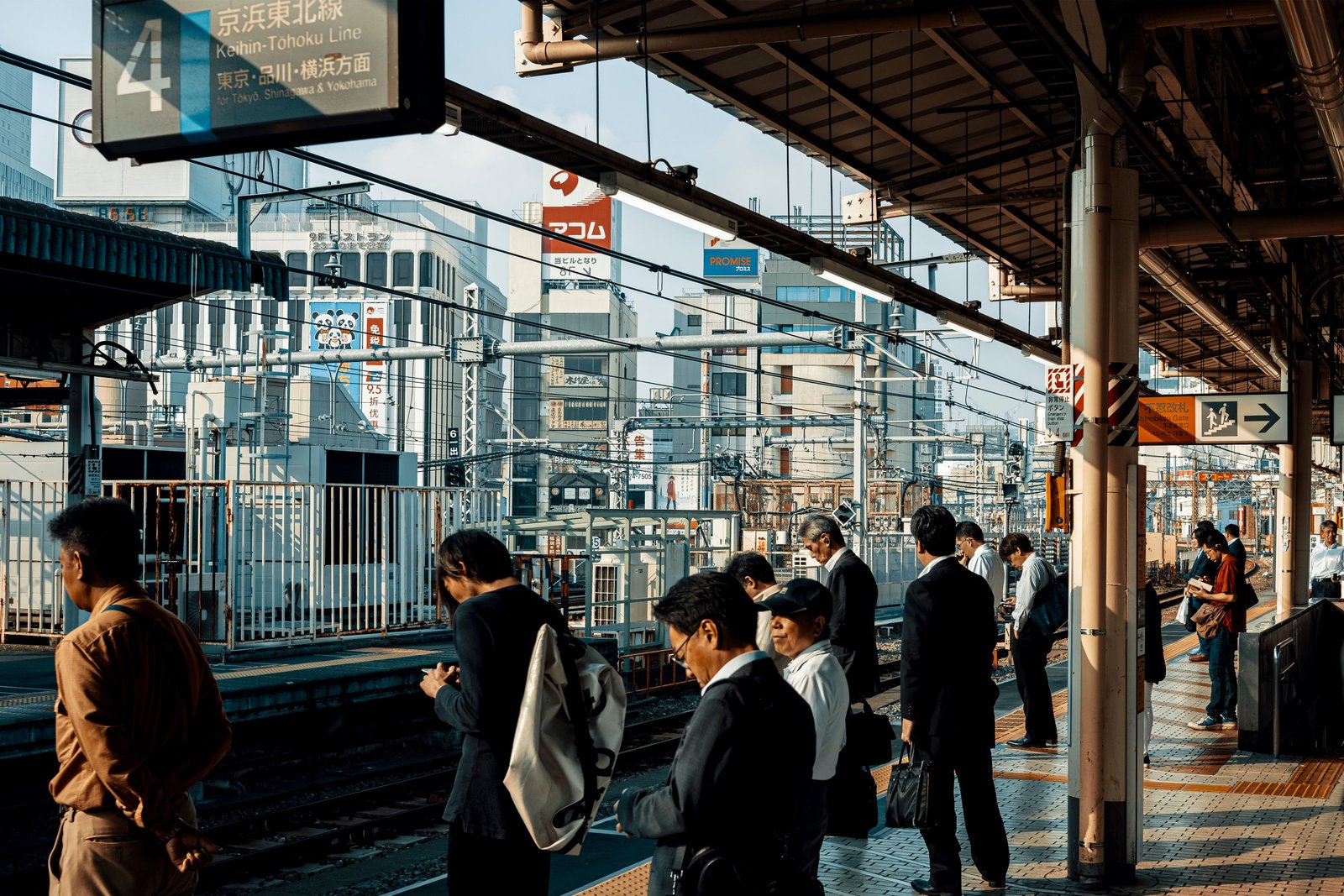
Japanese stations are more navigable than they look once you know the pattern: platform signs list the next few departures with car-number markers painted on the platform floor matching where each car will stop, so you can line up in the right spot before the train even arrives. Major stations post signage in English alongside Japanese, and station staff at ticket gates are used to helping confused travelers — don't hesitate to ask, even with minimal shared language, by pointing at your ticket or a map.
Bottom line
Get an IC card on arrival, take the Shinkansen between cities, and weigh a Japan Rail Pass carefully against your specific route rather than buying it by default — for many first trips, individual tickets now win. Master the trains and the whole country opens up, starting with its two essential cities, Tokyo and Kyoto — and how you sequence time between them is worth working out before you lock in transport, something Japan, Worked Out helps with.
FAQ
What is the Shinkansen?
The Shinkansen is Japan's high-speed rail, and it's a genuine highlight of any trip. It's punctual to the minute, spotless, comfortable, and remarkably fast — the classic Tokyo to Kyoto run takes about 2 hours 15 to 2 hours 30 minutes, city center to city center, with none of the airport hassle of security and distant terminals. You…
Should you get a Japan Rail Pass?
The Japan Rail Pass gives unlimited travel on most JR trains, including many Shinkansen, for a set number of consecutive days. Whether it pays off comes down to your route — and since a major price increase (the nationwide 7-day pass is now around ¥50,000), it pays off less easily than it used to. A simple Tokyo–Kyoto round trip alone…
What is an IC card and do you need one?
Within cities, you'll rely on an IC card — Suica, Pasmo, or the Kansai ICOCA — a rechargeable tap card for subways, local trains, and buses. Just tap in and tap out; no need to figure out fares in advance. You can also use it to buy things at convenience stores and vending machines. Pick one up at any station machine when you arrive…