Affiliate disclosure: this guide contains affiliate links. If you book through them we may earn a commission, at no extra cost to you.
Two days in Kyoto is enough to experience its essentials if you plan smartly — and the single most important rule is to group sights by area so you're not crisscrossing a spread-out city. Kyoto's highlights cluster on the eastern side (Higashiyama, Gion, Fushimi Inari) and the western/northern side (Arashiyama, Kinkaku-ji), so a clean two-day plan tackles one zone each day. Here's a focused, first-timer itinerary that captures the best of the city without rushing.
Day 1: Eastern Kyoto — Fushimi Inari, Higashiyama, and Gion
Spend your first day on the atmospheric eastern side, working roughly south to north.
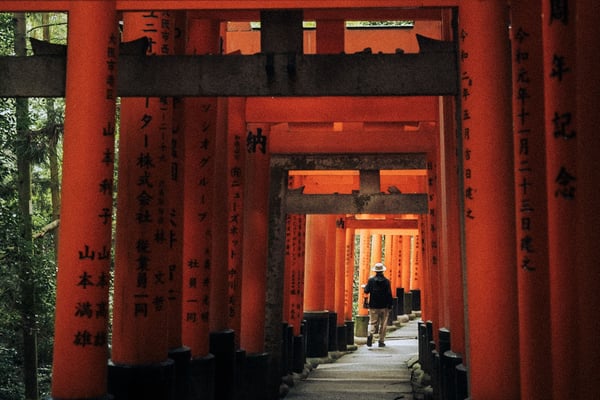
Morning — Fushimi Inari. Start as early as you can at Fushimi Inari Taisha, walking up through its mesmerizing tunnels of vermilion torii gates before the crowds build. You don't need to climb the whole mountain — going as far as the partway viewpoint and back gives you the iconic gate corridors. It's free and open at all hours, so dawn here is one of Kyoto's great experiences.
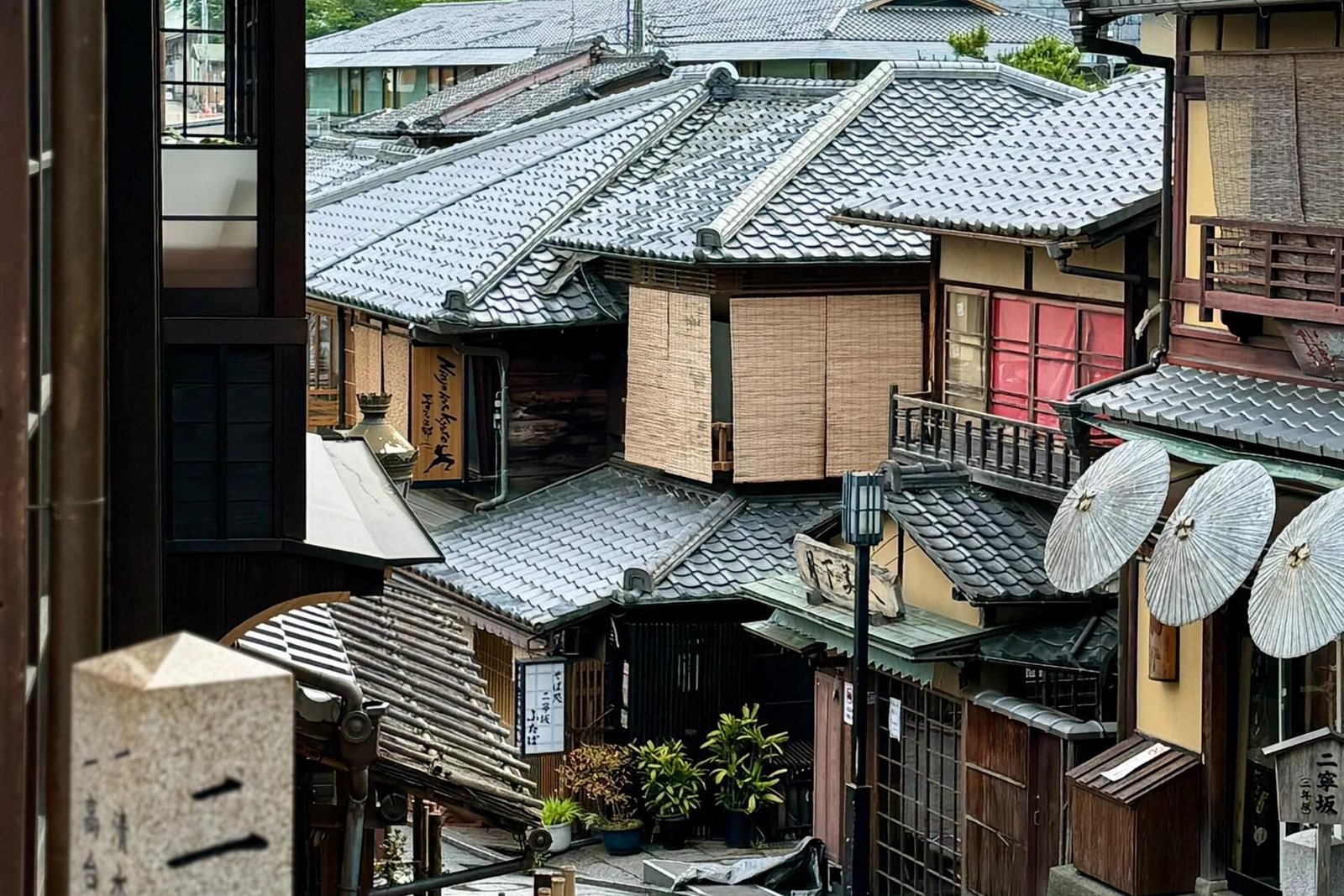
Midday — Higashiyama and Kiyomizu-dera. Head north to the Higashiyama district and wander the preserved sloping lanes of Ninenzaka and Sannenzaka, lined with wooden shops, teahouses, and street-food stalls, up to Kiyomizu-dera — the grand hillside temple with its famous veranda and sweeping views over the city. Browse, snack, and soak up the old-Kyoto atmosphere as you go.
Evening — Gion and Pontocho. As the afternoon fades, explore Gion, the historic geisha district, with its lantern-lit lanes and wooden machiya houses; you may glimpse a geiko or maiko heading to an appointment (observe respectfully, don't chase or block them). Have dinner along the riverside Pontocho Alley, a narrow, atmospheric lane of restaurants. This day captures old Kyoto at its most beautiful.
Two days: the eastern hills, then west and north: Fushimi Inari → Kiyomizu-dera → Arashiyama → Kinkaku-ji. (Enable JavaScript for the interactive map.)
Day 2: West and north — Arashiyama and Kinkaku-ji
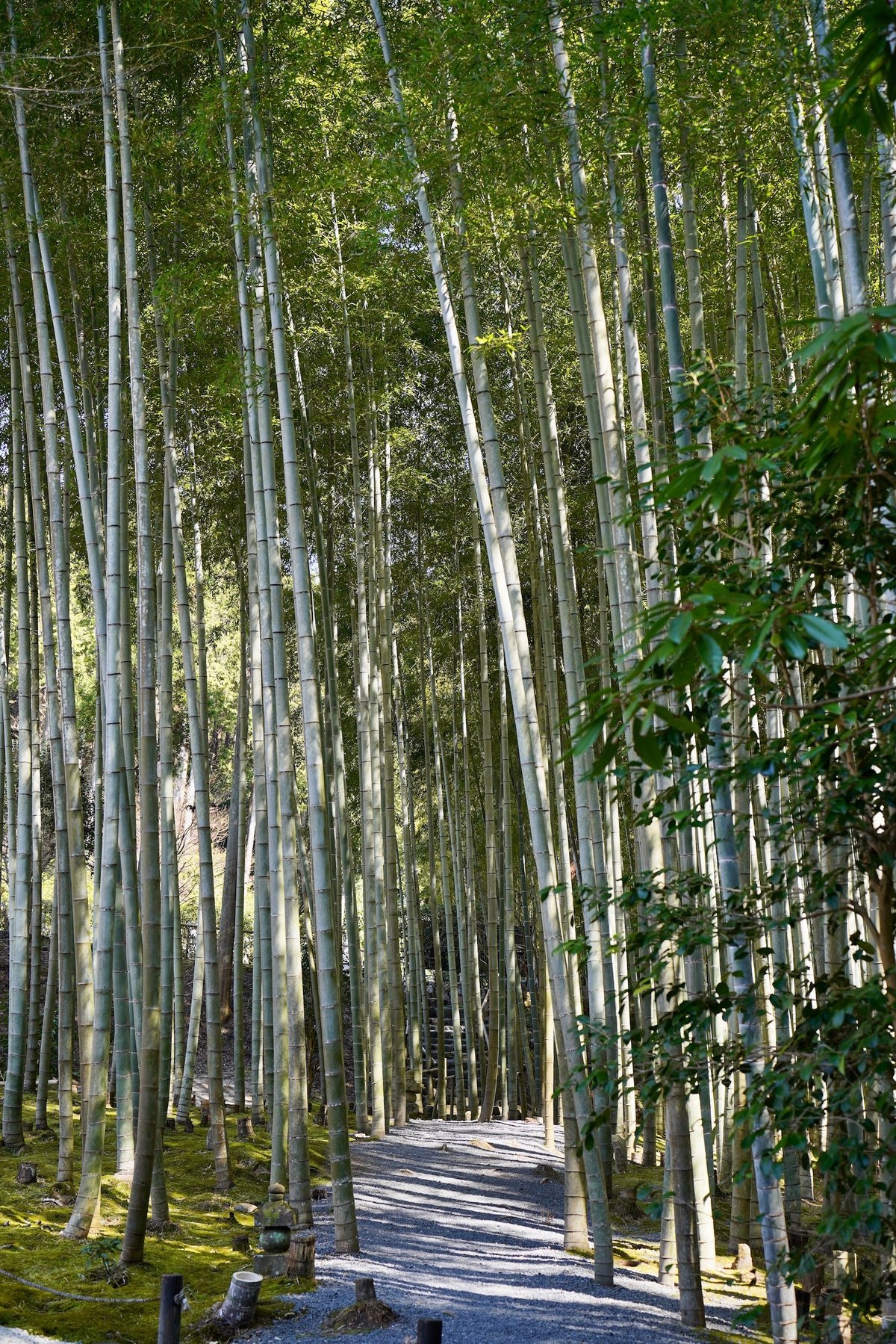
Morning — Arashiyama. Begin early on the western edge in Arashiyama. Walk the famous bamboo grove first, before the crowds, then enjoy the riverside scenery around the Togetsukyo Bridge, the celebrated garden at Tenryu-ji (a UNESCO Zen temple right by the grove), and — if you like — the hillside monkey park with its city views.
Afternoon — Kinkaku-ji and Ryoan-ji. Cross to the northwest to see Kinkaku-ji, the dazzling Golden Pavilion mirrored in its pond — Kyoto's most iconic image. The visit is short, so if you have energy, the nearby Ryoan-ji and its famous Zen rock garden makes a serene complement. This day pairs Kyoto's natural beauty with its most famous temple.
Making two days work
Get an IC card (Suica, Pasmo, or the local ICOCA) for the buses, subway, and trains you'll use to move between zones.
Start each day early — the headline sights (Fushimi Inari, the bamboo grove, Kinkaku-ji) are far more pleasant and photogenic before mid-morning.
Group by area — east one day, west/north the next — to minimize travel time across the city.
Wear comfortable walking shoes; you'll cover a lot of ground on foot, much of it on slopes and stone paths.
Buses can be slow and crowded at peak times; the subway and trains are faster where they reach.
If you have a third day
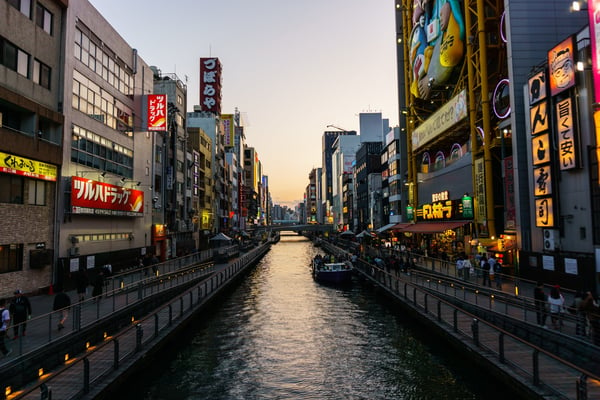
A third day opens up excellent options. Take a day trip to Nara for the giant bronze Buddha at Todai-ji and the friendly free-roaming deer (under an hour away), to Osaka for street food and big-city energy, or to Himeji for Japan's finest original castle by Shinkansen. Alternatively, slow down and add central Kyoto sights you missed — Nijo Castle with its "nightingale" floors, the Philosopher's Path and Ginkaku-ji, or the Nishiki Market for a food crawl. Even in two well-planned days, though, you'll come away having seen the very best of Kyoto.
Mixing east and west on both days feels like it would "balance" the itinerary, but that trades a real amount of transit time for very little actual benefit — Kyoto's public transport connects each side of the city fine, but not instantly, and a single-direction day means every walk between sights is short rather than a cross-town trek. The east/west split also happens to separate the city's two distinct moods cleanly: day one's dense, historic streets and temple-hopping versus day two's more open, scenic pace at Arashiyama before returning to a single, iconic stop at Kinkaku-ji. Keeping those characters on separate days, rather than blending them, is part of why the two-day version works as well as it does.
A note on pacing
Resist the urge to cram in more temples than this. Kyoto rewards a measured pace — two or three major sights a day, with time to wander old streets, sip matcha, and simply absorb the atmosphere, beats a checklist sprint that leaves the temples blurring together. Build in a relaxed lunch and let the city's rhythm carry you.
FAQ
What should you see on your first day in Kyoto?
Spend your first day on the atmospheric eastern side, working roughly south to north.
What is the best plan for a second day in Kyoto?
Morning — Arashiyama. Begin early on the western edge in Arashiyama. Walk the famous bamboo grove first, before the crowds, then enjoy the riverside scenery around the Togetsukyo Bridge, the celebrated garden at Tenryu-ji (a UNESCO Zen temple right by the grove), and — if you like — the hillside monkey park with its city views.
What can you add if you have a third day in Kyoto?
A third day opens up excellent options. Take a day trip to Nara for the giant bronze Buddha at Todai-ji and the friendly free-roaming deer (under an hour away), to Osaka for street food and big-city energy, or to Himeji for Japan's finest original castle by Shinkansen. Alternatively, slow down and add central Kyoto sights you missed —…
Keep planning
Not sure how it all fits together?
Pick your trip length and we’ll route a real day-by-day plan.