Affiliate disclosure: this guide contains affiliate links. If you book through them we may earn a commission, at no extra cost to you.
Meiji Shrine (Meiji Jingu) is one of Tokyo's most important and serene Shinto shrines, set in a vast forested sanctuary right beside the bustle of Harajuku and Shibuya. The contrast — deep, hushed calm a stone's throw from the city's busiest, most neon-lit youth district — is exactly what makes it special, and it's one of the easiest genuinely meaningful experiences to fit into a busy Tokyo day. Here's how to visit, and what makes the forest itself worth knowing about.
A forest in the heart of the city
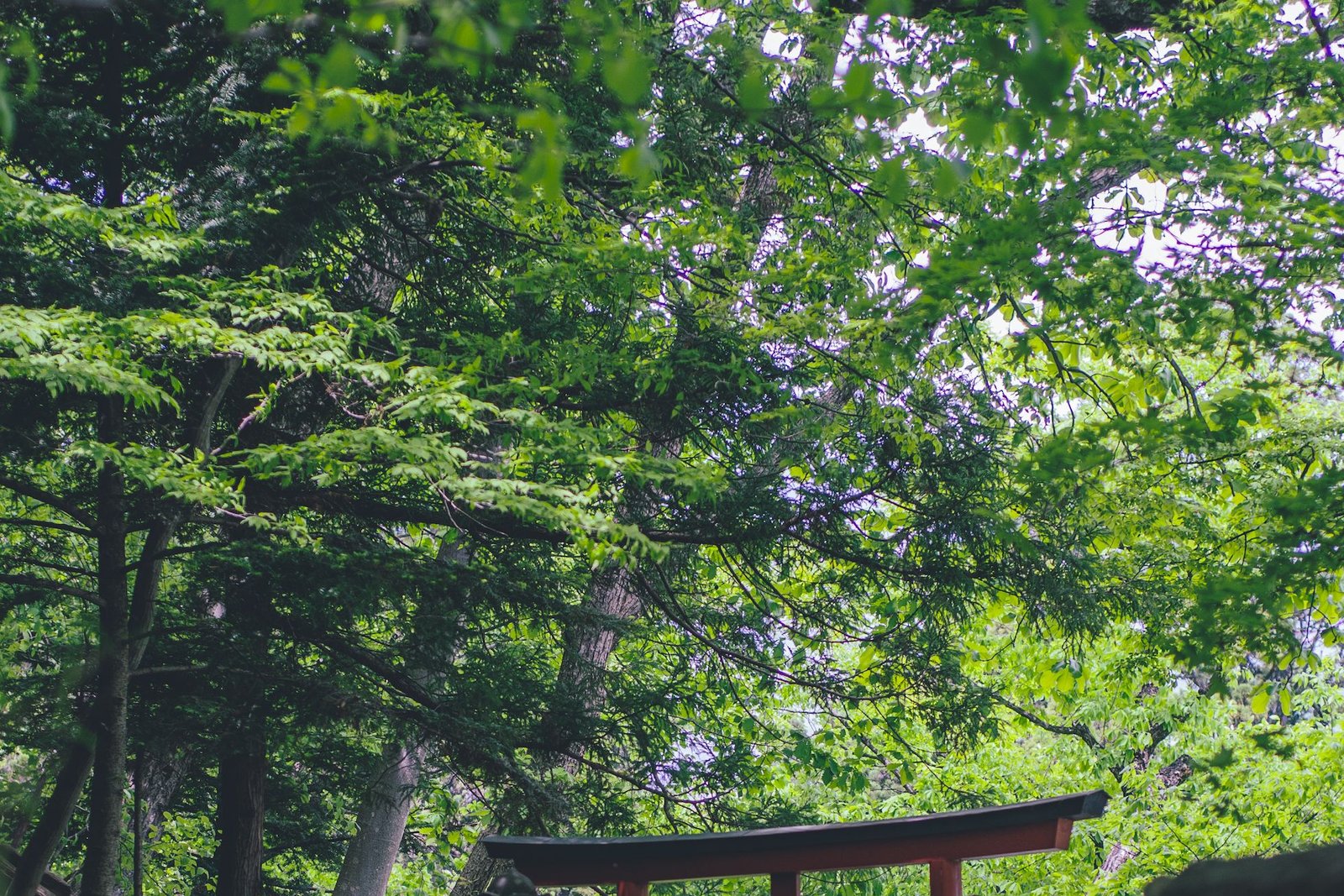
The shrine was built in the early 20th century to honor Emperor Meiji and Empress Shoken, and it sits within an enormous wooded area whose roughly 100,000 trees were donated from across Japan and planted to create a permanent, self-sustaining forest. The approach takes you along wide gravel paths beneath a towering canopy and through grand wooden torii gates, the city noise fading with every step. The walk through the forest to the shrine — about ten minutes from the entrance near Harajuku Station — is a meditative experience in itself, and a striking reminder of how Tokyo balances the frenetic and the tranquil.
A forest shrine next to the busiest crossing in Tokyo: Meiji Jingu · Shibuya Crossing. (Enable JavaScript for the interactive map.)
What to see
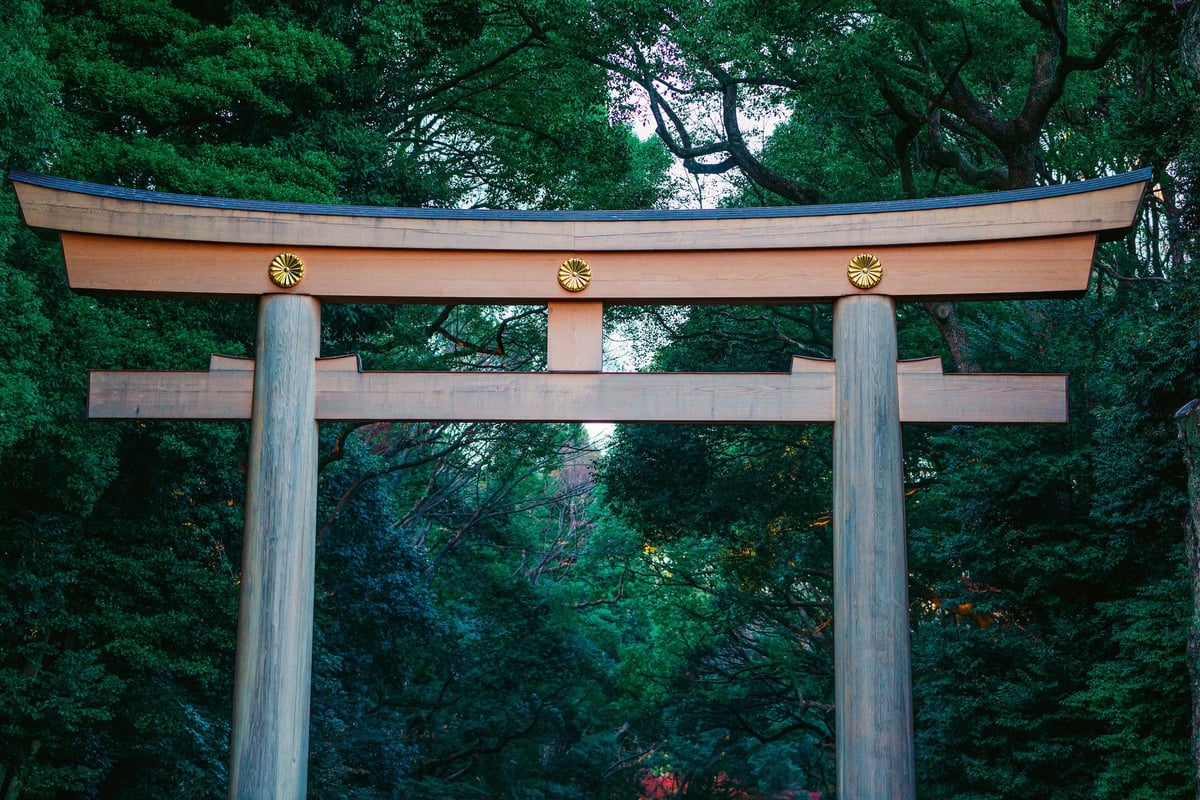
The grand torii gates: some of the largest wooden torii in Japan, marking the sacred approach and beautifully framing the forest path.
The main shrine buildings: elegant and understated, in classic Shinto style, set around a peaceful gravel courtyard where you can make an offering and pray.
Sake and wine barrel displays: a famous wall of decorated sake barrels (offerings from brewers across Japan) on one side of the approach, and a matching display of French wine barrels on the other — a nod to Emperor Meiji's role in opening Japan to the West.
The Inner Garden (Gyoen): a tranquil landscaped garden (small separate fee) that's especially lovely in June when the irises bloom.
Ema plaques and wishes: wooden tablets where visitors write prayers and wishes, hung near a sacred camphor tree.
Experience the customs
Meiji Shrine is a living place of worship, and on weekends you may witness traditional Shinto wedding processions in formal dress crossing the courtyard — a memorable and photogenic sight (observe respectfully and from a distance). Visitors are warmly welcome to take part in the customs: cleanse your hands at the temizuya water pavilion before approaching, make a small offering at the main hall, and pray in the Shinto manner — two bows, two claps, a moment of prayer, and a final bow. You can also buy a charm (omamori), draw a fortune, or write a wish on an ema plaque.
When to go and how to combine it
The shrine is free to enter (only the Inner Garden has a small fee) and open from around dawn to dusk, with hours shifting by season. Mornings are especially peaceful, before the day-trippers arrive. Its location is the great convenience: it's right next to Harajuku, so you can pair the forest calm of the shrine with the riotous color of Takeshita Street, the upscale boulevard of Omotesando, and busy Shibuya — all within walking distance. A natural plan is to start with the shrine in the morning, then emerge into Harajuku's energy. Allow an hour to ninety minutes for the forest walk and grounds.
Etiquette and tips
Bow slightly when passing through the torii gates if you'd like to observe custom, and avoid walking down the exact center of the path (traditionally reserved for the gods).
Follow the hand-purification ritual at the temizuya before praying.
Keep your voice down and behave calmly, especially near the main hall and during ceremonies.
Photography is generally fine in the grounds, but be discreet around worshippers and weddings, and watch for signs restricting photos near the main sanctuary.
Wear comfortable shoes for the long gravel paths.
A forest that was planted, not inherited
What looks like ancient old-growth woodland is actually a deliberately engineered forest, established in 1920 and planned in phases spanning 150 years to mature into a genuinely self-sustaining woodland without ongoing human maintenance — planners chose sturdy evergreen broadleaf species like oak, camphor, and zelkova specifically because they'd out-compete weaker trees and build their own soil over time, rather than the showy ornamentals a lesser design might have favored. A century later, studies of the forest confirm it's tracking exactly as its designers predicted, and most visitors walking through it have no idea it's younger than some of Tokyo's other surviving buildings, not older.
Bottom line
Meiji Shrine offers a serene, spiritual counterpoint to Tokyo's energy, and its location beside Harajuku makes it effortless to fold into a day. Take the peaceful forest walk, observe or join the customs respectfully, admire the sake barrels and grand torii, and enjoy one of the city's most tranquil and meaningful sights — free, central, and unforgettable.
The shrine was built in the early 20th century to honor Emperor Meiji and Empress Shoken, and it sits within an enormous wooded area whose roughly 100,000 trees were donated from across Japan and planted to create a permanent, self-sustaining forest. The approach takes you along wide gravel paths beneath a towering canopy and through…
What might you see happening at Meiji Shrine?
Meiji Shrine is a living place of worship, and on weekends you may witness traditional Shinto wedding processions in formal dress crossing the courtyard — a memorable and photogenic sight (observe respectfully and from a distance). Visitors are warmly welcome to take part in the customs: cleanse your hands at the temizuya water…
Is Meiji Shrine free, and when should you go?
The shrine is free to enter (only the Inner Garden has a small fee) and open from around dawn to dusk, with hours shifting by season. Mornings are especially peaceful, before the day-trippers arrive. Its location is the great convenience: it's right next to Harajuku, so you can pair the forest calm of the shrine with the riotous color…
Keep planning
Not sure how it all fits together?
Pick your trip length and we’ll route a real day-by-day plan.