A few simple customs go a long way in Japan. Here are the etiquette basics every American traveler should know before arriving, from queuing and shoes to the onsen tattoo rule.
Japanese etiquette can feel intimidating from afar, but the essentials are simple, and locals are genuinely gracious with visitors who make an effort. None of this requires memorizing a rulebook — just absorbing a handful of habits that differ from American norms. Get these down and you'll move through Japan comfortably and respectfully, and you'll likely find the social smoothness one of the trip's quiet pleasures. Here are the ones that matter most.
1. Don't tip
Tipping is the big one for Americans. It simply isn't customary anywhere in Japan — not in restaurants, taxis, hotels, or salons. Good service is the standard, included in the price, and leaving extra cash often causes genuine confusion (staff may chase you down to return it). It's not rude to skip the tip; it's the expected norm. Forget the 15–20% reflex entirely.
2. Don't eat while walking
Eating on the go is generally frowned upon. If you buy street food or a snack, the polite move is to stand near the stall or step to the side and finish it there before walking on, rather than wandering down the street eating. The same goes for drinking — pause, enjoy, then continue. (This is part of why the streets stay so clean.)
3. Be quiet on public transit
Trains and subways are notably hushed, even when packed. Keep phone calls off entirely (set your phone to silent, "manner mode"), keep conversations low, and avoid loud music through headphones. It's one of the most noticeable cultural differences for visitors and one of the easiest to honor — just match the calm around you.
4. Queue properly
Japan runs on orderly lines — for trains, buses, elevators, shops, taxis, everything. On train platforms, look for the painted floor markings showing where doors open and line up there, letting passengers off before boarding. Cutting in line is a real faux pas that will draw quiet disapproval. When in doubt, find the end of the line.
5. Take your shoes off indoors
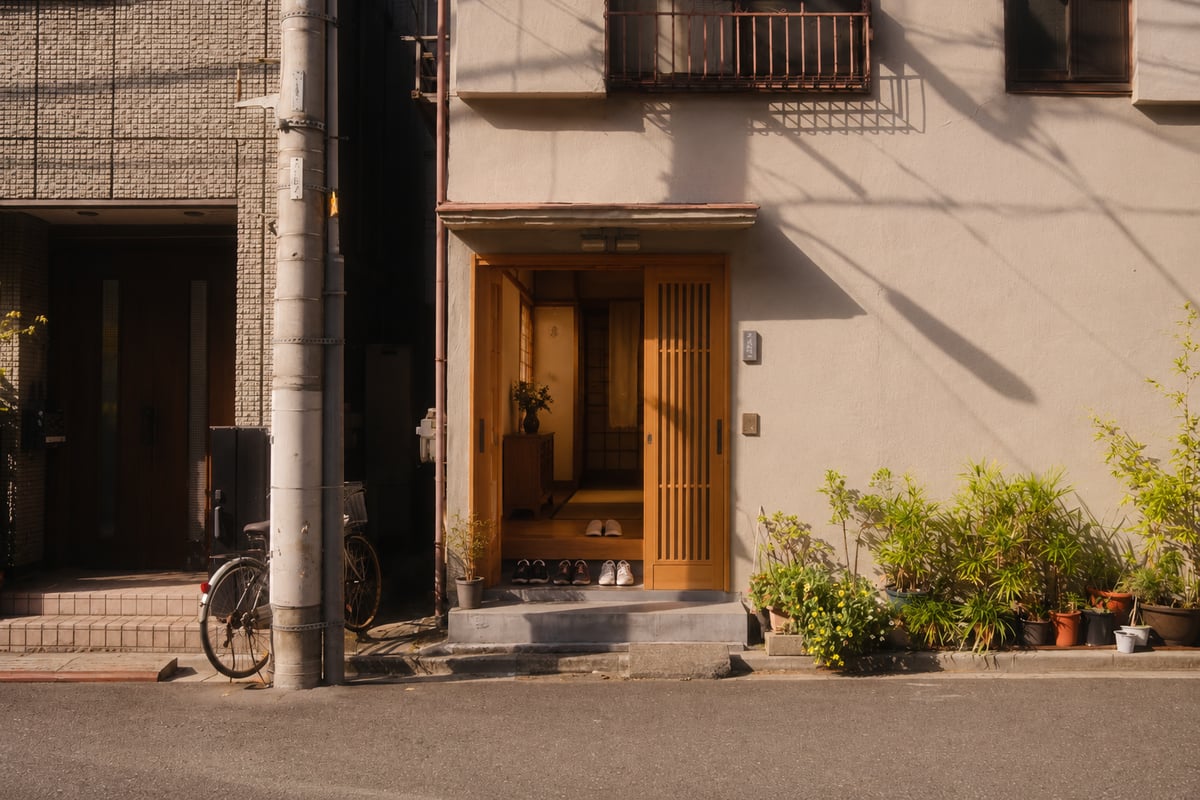
Remove your shoes when entering homes, traditional ryokan inns, some restaurants (especially tatami-floored ones), temple buildings, and certain changing rooms. Your cue is a step up (genkan), a shoe rack, or slippers laid out. Wear the provided slippers on regular floors, switch to the separate toilet slippers in the bathroom (and remember to switch back), and step onto tatami in just socks or bare feet.
6. Dress respectfully at temples and shrines
Japan has no strict everyday dress code, and casual clothing is fine almost everywhere. But at temples and shrines, lean a little more conservative — covered shoulders and avoiding very revealing clothing shows respect at these sacred, active places of worship. You don't need to cover up dramatically; just be mindful. This applies a step further at a ryokan's onsen (hot spring bath), where a firmer rule shows up: most onsen still refuse entry to visitors with visible tattoos, though some now offer cover-up stickers or private baths as a workaround — worth confirming with a specific property before you book, which Japan, Worked Out covers alongside choosing a ryokan in the first place.
7. Handle cards and money with both hands
When paying, you'll usually see a small tray at the register for your cash or card, rather than handing it directly to the cashier — place it there. More broadly, using both hands to give and receive money, cards, gifts, and especially business cards (meishi) is a sign of politeness and attentiveness. Receiving a business card with both hands and a moment's respectful look is good manners in any semi-formal setting.
8. Bow when greeting
A slight bow is the standard greeting and a sign of thanks or respect. As a visitor you don't need to get the angles or depth perfect — a small, sincere nod of the head is warmly received and appreciated. You'll find yourself naturally bowing back to staff and others within a day. A handshake isn't expected, though some may offer one to foreigners.
9. Carry your trash
Public trash cans are surprisingly rare on the streets (a legacy of past security concerns), yet the streets are spotless — because the norm is to carry your garbage with you until you find a bin (often by convenience stores or vending machines) or get back to your hotel. Pack a small bag for wrappers, bottles, and receipts, and you'll be set. Don't litter, ever.
10. Mind the small courtesies
A few final habits: don't blow your nose loudly in public (step away or sniff discreetly), don't point at people (gesture with an open hand), avoid loud or boisterous behavior in public, and don't stick chopsticks upright in rice or pass food chopstick-to-chopstick at meals. When unsure, simply observe what those around you are doing and follow suit — attentiveness is itself the core courtesy.
Bottom line
None of this is hard, and locals sincerely appreciate the effort even when you don't get everything perfect. Master these ten habits — above all, don't tip, stay quiet on trains, queue politely, and carry your trash — and you'll move through Japan comfortably, respectfully, and like a considerate guest. The effort is repaid many times over in the warmth you'll encounter.
FAQ
Should you tip in Japan?
Tipping is the big one for Americans. It simply isn't customary anywhere in Japan — not in restaurants, taxis, hotels, or salons. Good service is the standard, included in the price, and leaving extra cash often causes genuine confusion (staff may chase you down to return it). It's not rude to skip the tip; it's the expected norm.…
Can you eat while walking in Japan?
Eating on the go is generally frowned upon. If you buy street food or a snack, the polite move is to stand near the stall or step to the side and finish it there before walking on, rather than wandering down the street eating. The same goes for drinking — pause, enjoy, then continue. (This is part of why the streets stay so clean.)
How quiet do you need to be on Japanese trains?
Trains and subways are notably hushed, even when packed. Keep phone calls off entirely (set your phone to silent, "manner mode"), keep conversations low, and avoid loud music through headphones. It's one of the most noticeable cultural differences for visitors and one of the easiest to honor — just match the calm around you.